
Cold Snap Ahead for the U.S.-Australian Alliance
Last updated 04:48 PM EDT • Read time: 4m
U.S. President Donald Trump’s memorandum on Safeguarding U.S. National Interests in the Arctic and Antarctic Regions is a roadmap for protecting and promoting U.S. polar interests. This directive will place further pressure on the fragile Antarctic governance system, and the usual suspects, Beijing and Moscow, may now be off the hook for sinking the ATS.
The directive is ultimately about modernizing and enhancing the U.S.’s polar icebreaking capability to maintain pace with rival polar states. A brand new fleet is a prerequisite for Trump’s vision of “persistent presence” in the regions. There are evident challenges to executing this plan (like building an operationally sound and deployable fleet of icebreakers in 9 years and finding the money to do so). The directive does provide insight into U.S. policy trajectories for the polar regions.
The problem is the directive indicates Washington’s inability to discern between the differences of the Arctic and the Antarctic. Treating the two polar regions as one operational theater will result in strategic competition for the U.S. and the usual suspects, but it will also inject tension into the U.S.-Australia alliance.
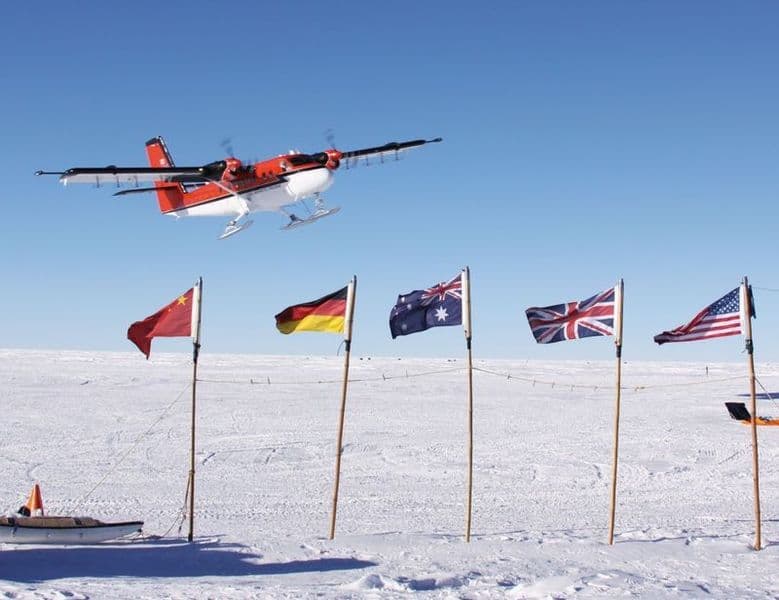
Under the Antarctic Treaty System (ATS), the question of who owns Antarctica is frozen suspended while the Treaty is in force. Canberra maintains its 42% claim to the continent, and despite ‘mateship,' Washington refuses to recognize Australian sovereignty. For some-60 years, both have agreed to disagree and work together to foster international scientific cooperation on the continent. This directive signals a misunderstanding of the divergences in the geopolitical and governance structures of the two polar regions, laying the groundwork for the erosion of the ATS itself.
Ironically, despite the existence of U.S. bases, including year-round McMurdo, Trump is seeking ‘persistent presence’ in the Antarctic. The directive calls for ‘at least two’ new international basing locations for U.S. icebreakers. Assuming one at each pole, it appears Washington is pushing for a maritime base in Antarctica. Further, Trump calls for new U.S. bases to be considered as ‘burden-sharing opportunities’ for allies. It is hard to envision a setting in which Antarctic stakeholders (all 54 of them), including U.S. allies with frozen territorial claims such as Norway, New Zealand, Australia, France, or the United Kingdom, would welcome this initiative.
Of course, claiming that any development of U.S. Antarctic capabilities will be within 'accordance' with the ATS signals that Trump does not understand the Treaty. All activities on the continent must be scientific. Yet, the directive explicitly leaves off the National Science Foundation and its Office of Polar Programs (the agencies responsible for U.S. Antarctic research programs) from the distribution list. The directive frames icebreaking capability in terms of supporting 'national and economic security missions’ in Antarctica. There is no basis provided in terms of the general scientific purpose served by bolstering U.S. presence in the Antarctic.
Potential challenges to the Treaty are also found in Trump’s shopping list of operational capabilities for the new fleet. The most obvious – his call for an assessment of the fleet’s defensive armament components. The Treaty bans the militarization of the Antarctic or the use of military hardware (if not in support of scientific activities). As one of the principal architects of the ATS and the self-appointed guarantor of the rules-based global order, it is troubling to see the foundations of a new U.S. Antarctic strategy emerge in Trump’s directive. This effort to safeguard U.S. national interests in the Antarctic will no doubt erode the Treaty and kick-start a race to conquer the last unclaimed continent. By pushing back against any assertive development of the U.S.’s Antarctic footprint, traditional ally Canberra adds itself to Washington’s list of competitors in the polar regions.
Elizabeth Buchanan is Lecturer of Strategic Studies with Deakin University for the Defence and Strategic Studies Course (DSSC) at the Australian War College and a Fellow of the Modern War Institute at West Point. Dr. Buchanan holds a Ph.D. in Russian Arctic strategy from the Australian National University and was recently the Visiting Maritime Fellow at the NATO Defense College.
This article reflect the views of the author and not The Australian War College or the Modern War Institute at West point.

In Pursuit of Nuclear Abolition
By Peter Huessy • RealClearDefense
Innovation Alone Won’t Prepare the U.S. for the Future Battlefield
By Joshua Segal • RealClearDefense
The sUAS Tactical Trifecta
By Bryan T. Woody • RealClearDefense
The Revolutionary War: When Strategic Options Share the Same Weakness
By Henry Yep • RealClearDefense
The Houthis Are Testing the Limits of Collective Defense
By Saima Afzal • RealClearDefense

Navy Civilianizes Six Former Flag Billets, Reduces Six to Captains
By Mongilio, USNI N.
Raytheon's $8B Contract for Strategic Comms Terminal Modernization
By M+A El
America’s Maritime Moment Will Not Wait
By CDR Salamander
Armor Up?
By Marine Corps Compass Points
Who Shoots Down the Drone Over the Shipyard?
By John Ferrari & Dillon Prochnicki • RealClearDefense