

U.S. Bipartisanship on Asia
Published April 9, 2019 • Read time: 4m
Look beyond the reality show coverage of the Trump presidency, the bipartisanship on regional initiatives is striking.
Two recently passed laws pertaining to U.S. policy to Asia challenge a well-entrenched negative narrative about the Trump administration, and serve as reassuring reminders about how the U.S. government and legislative process actually works.
The Trump
administration is not
as isolationist and
Congress is not as
paralysed by partisan
gridlock as claimed.
In June last year, the BUILD Act, which had only been tabled in February, easily passed a House of Representatives voice vote with only one dissenting voice. In October, the Senate passed the BUILD Act by an overwhelming 93–6 vote during the peak of the Kavanagh confirmation imbroglio. Two days later, President Donald Trump signed it into law.
The BUILD Act more than doubles the U.S. government’s commitment to overseas development financing and replaces the Overseas Private Investment Corporation (OPIC) with the larger International Development Finance Corporation. IDFC will be the central and now more capable U.S. organisation for the trilateral development financing cooperation agreed to by the U.S., Australia and Japan in July 2018.
The swift progress of the BUILD Act is anomalous with the assertion that the Trump administration and the President himself is isolationist. Rather, it indicates that the Trump administration’s determination that China is a strategic rival will mean more U.S. overseas engagement in many areas. Likewise, the overwhelming votes in both houses of Congress for this act show that bipartisanship on key international policy issues is far from dead.
Masters of Command
South Korea's OPCON Debate Is a Test of Alliance Readiness
Washington Built the Hub-and-Spokes – Australia and Japan Are Rewiring It
By Prodding Taiwan, Russia Takes Its Alignment With China to New Heights
There is strong bipartisan support in Congress for greater U.S. engagement in Asia (Photo: John Brighenti/Flickr)
In December, the U.S. Senate also passed the Asia Reassurance Initiative Act (ARIA) with a 96-0 vote. The following week, the House of Representatives passed it by a decisive voice vote with minor amendments approved by the Senate. Trump then signed ARIA into law on 31 December.
ARIA is a legislative component of the U.S.’s Free and Open Indo-Pacific policy framework. It extends with funding a number of well-received programs started during the Obama administration including the State Department-run Young Southeast Asian Leaders Initiative (YSEALI).
ARIA goes further and requires the Trump administration to develop a strategic framework to engage ASEAN and to report to Congress annually on its implementation. ARIA calls for more U.S. engagement with Southeast Asian states than their governing regimes may want. The Act calls on the U.S. to encourage Southeast Asian states to reaffirm the July 2016 ruling against Chinese infringements on Philippine sovereign rights in the South China Sea, and calls for a new U.S. strategy to improve ASEAN’s capacity to address human rights, democracy and good governance issues.
As with the BUILD Act, ARIA reaffirms strong bipartisan support for greater U.S. engagement in Asia and is another anomaly for the Trump isolationist narrative. ARIA was clearly developed cooperatively between Congress and the bureaucracy and signed into law by the President. Looking beyond the reality show nature of the Trump presidency that dominates so much of the coverage and analysis, the Trump administration is not as isolationist and Congress is not as paralysed by partisan gridlock as claimed.
Malcolm Cook is a Nonresident Fellow at the Lowy Institute. From 2003 to 2010, he was the Institute’s inaugural East Asia Program Director. He completed a Ph.D. in International Relations from the Research School of Pacific and Asian Studies at the Australian National University. He also holds a Masters degree in International Relations from the International University of Japan and an honours degree from McGill University in Canada, his country of birth. Before moving to Australia in 2000, Malcolm lived and worked in the Philippines, South Korea and Japan. In 2011, Malcolm became the inaugural Dean of the School of International Studies at Flinders University of South Australia and in 2014, became a Senior Fellow at the ISEAS – Yusof Ishak Institute in Singapore.
This article appeared originally at Lowy Institute's the interpreter.

When Losing Control of AI Becomes a Weapon
By Yunus Emre Tumen • RealClearDefense
International Allied Reliability of States: Criteria and Evolution
By Sergey E. Ivashchenko • RealClearDefense
Your Military Paycheck Has an End Date
By Sean Ofeldt • RealClearDefense
Masters of Command
By Travis A. Karnes • RealClearDefense
A Sweet American Original
By Greg Maresca • RealClearDefense
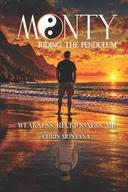
Monty: Riding the Pendulum
By Zachery Thomas, DODReads
Sign of the Times: CCAs Dominate a Major Fighter Conference
By Bill Sweetman • The Strategist (ASPI)
Marines Want Naval Strike Missiles With Double The Range
By The WarZone
U.S. Navy Targets 79 New Cutter-Based FF(X) Frigates
By A. Servaes, Global Defense
The Hegseth Grenade: A Sea Change at Newport
By Robert C. Rubel, CIMSEC