
Indo-Pacific/Asia
RealClear Context
Click below to continue reading this story, discover more Indo-Pacific/Asia stories from over 25 years of RealClear archives, or follow this topic to stay in the know.
Japan, Australia, U.S. Should Build a Second-Island-Chain Air Bridge
Japan and Australia, with the United States and other partners, should build an air bridge between them in peacetime. This would be a set of regular...
1h agoRead it on The Strategist (ASPI)Pulling Back to the Second Island Chain Would Be Strategic Folly
The case against a recent proposal to fundamentally reshape the U.S. military posture in East Asia...
1h agoRead it on Responsible StatecraftU.S. Army Pacific Plans for Possibility of War Over Taiwan Next Year
U.S. Army Pacific has prepared the Indo-Pacific theater under the assumption that China will have the capacity — and possibly the intent — to seize...
1h agoRead it on Stars and StripesOPCON: Washington Wants Flexibility, Seoul Wants Control
A South Korean push for operational control won’t give it a say over how the U.S. uses its forces beyond the Peninsula. Lieutenant General Joseph...
1h agoRead it on The Interpreter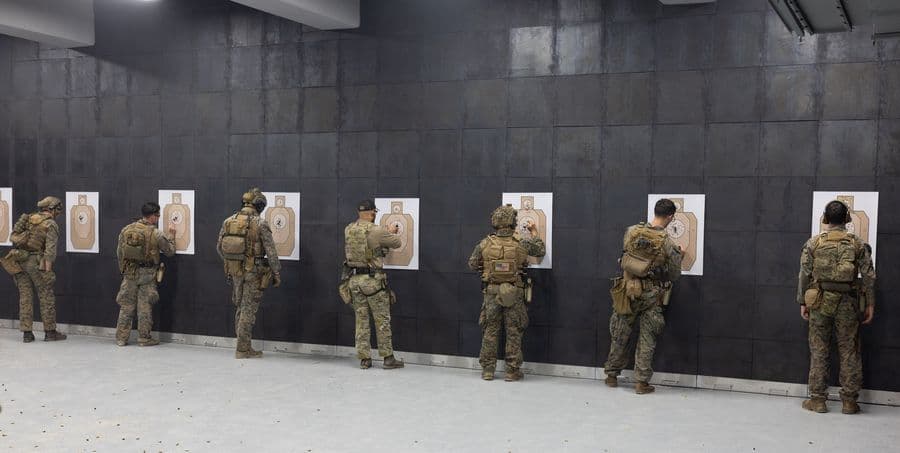
OPCON: Washington Wants Flexibility, Seoul Wants Control
Lieutenant General Joseph Hilbert, commander of the US 8th Army in South Korea, recently argued that it would be “irresponsible” for American troops stationed on the Korean Peninsula to focus exclusively on threats there. While reaffirming Washington’s commitment to defending South Korea, Hilbert stressed that U.S. forces must remain prepared for missions beyond the Peninsula. His remarks revived a longstanding debate over the strategic flexibility of U.S. Forces Korea (USFK), which gained prominence when Washington redeployed approximately 3,600 U.S. troops from South Korea to Iraq in 2004, raising concerns about both weakened deterrence and unwanted involvement in overseas conflicts.

Japan, Australia, U.S. Should Build a Second-Island-Chain Air Bridge
Japan and Australia, with the United States and other partners, should build an air bridge between them in peacetime. This would be a set of regular air corridors with settled overflight and landing rights, refuelling routes and dispersed supply and maintenance sites.
In a crisis, it would carry supplies to dispersed forces, especially those along the second island chain, which runs from Japan’s home islands to its outlying Pacific islands and through Guam to Palau and New Guinea.
South China Sea is Key to Invigorate Positive U.S.–Malaysia Relations
Reality is coming home to roost for many in southeast Asia regarding the implications of China’s emboldened claims in the South China Sea ......
2d agoRead it on RealClearDefense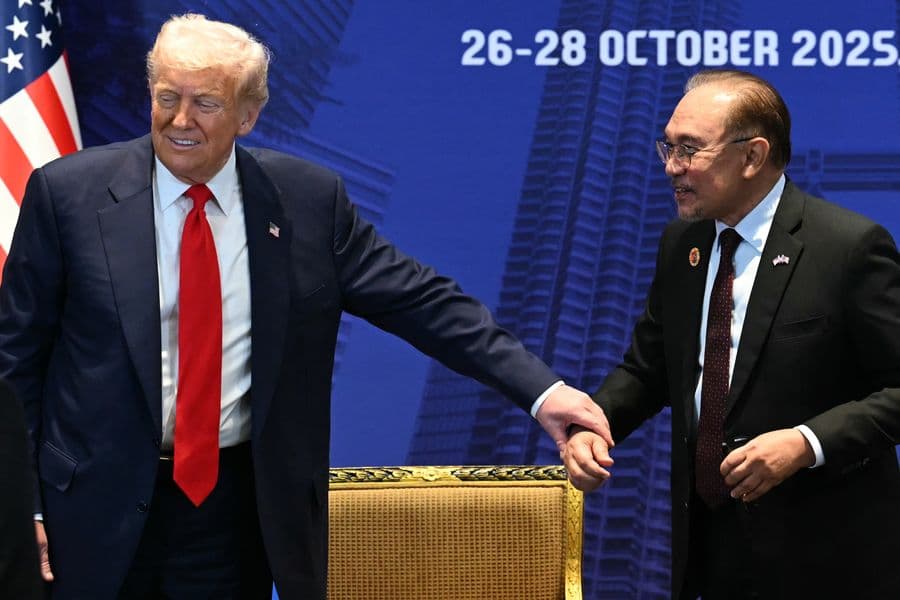
South China Sea is Key to Invigorate Positive U.S.–Malaysia Relations
Reality is coming home to roost for many in southeast Asia regarding the implications of China’s emboldened claims in the South China Sea, which would place all of the seabed resources and fish stocks within its Ten-Dash-Line. Acquiescence to this would cost Malaysia dearly. Fortunately, it’s awakening to the fact that a new approach is needed.
At the 9th South China Sea Conference hosted by Maritime Institute of Malaysia in Kuala Lumpur, the desire for quiet resolution of disputes played out against reality. That reality is China’s insistence and that its neighbors acquiesce to its claims. For the past few years, the Philippines has been at the forefront of a more vigorous pushback on those claims – even lethally like last year’s fratricide of several Chinese Coast Guard sailors killed in a collision with their own Navy destroyer while harassing Philippine vessels.
The Emerging SQUAD
Among the region’s many developments is the emergence of a lesser-known Indo-Pacific minilateral grouping comprising Australia, Japan, the...
3d agoRead it on RealClearDefense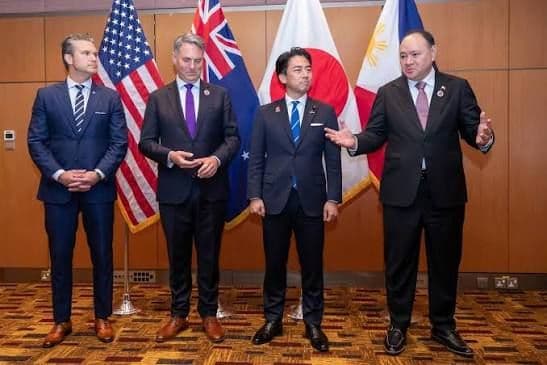
The Emerging SQUAD
The Indo-Pacific is saturated with strategic acronyms. AUKUS, announced in September 2021, is reshaping Australia’s long-term defense capabilities. The QUAD, particularly since its revival in 2017, serves as a forum for regional cooperation among four partners. The ANZUS Treaty, signed in 1951, remains the foundation of Australia’s alliance with the United States (U.S.). These are only a few examples of the many overlapping security arrangements shaping the region, from ASEAN-led forums such as the ASEAN Defence Ministers’ Meeting-Plus (ADMM-Plus) and the ASEAN Regional Forum (ARF) to longstanding defense arrangements such as the Five Power Defense Arrangements (FPDA).
Among the region’s many developments is the emergence of a lesser-known Indo-Pacific minilateral grouping comprising Australia, Japan, the Philippines, and the U.S., informally known as the SQUAD. The defense ministers of Australia, Japan, the Philippines, and the U.S. first met during the Shangri-La Dialogue in Singapore in June 2023. In May 2024, U.S. Secretary of Defense Lloyd Austin held talks in Hawaii with his counterparts from Australia, Japan, and the Philippines, further advancing their defense cooperation. By June 2024, the SQUAD label was appearing in policy commentary.
We Cannot Build Tomorrow's Weapons With Yesterday's Alloys
By Joseph F. Krause • RealClearDefense
Americans Will Sacrifice for Their Country, Not for Politicians
By Jane Li • RealClearDefense
No Need for a New World Order
By Will Thibeau • RealClearDefense
Congress: Don’t Let the NDAA Hand China Our Defense Blueprints
By Richard Newton • RealClearDefense
Washington Cannot Ignore Afghanistan’s Weapons Legacy
By Saima Afzal • RealClearDefense
Marines Deploy Neros Archer Drone in Live Fire Exercise for First Time
By USNI News
Confessions Of An SR-71 Blackbird Pilot
By Howard Altman, The WarZone
Air Force Exploring Creative Ways to Produce More Pilots
By Laura Heckmann, NatDef
"Super F-22' Propels Rator to Fly With F-47 Into 2060s
By Kris Osborn, Warrior Maven
GA-ASI and Saab Test AEW Payload on MQ-9B
By Stefano D'Urso, The Aviationist