
æ?°å?å?? – ç½?ç»?å?? – æ?ºè?½å??: China's Quest for an AI Revolution in Warfare
Last updated 05:50 PM EDT • Read time: 16m
THE PLA’S TRAJECTORY FROM INFORMATIZED TO “INTELLIGENTIZED” WARFARE
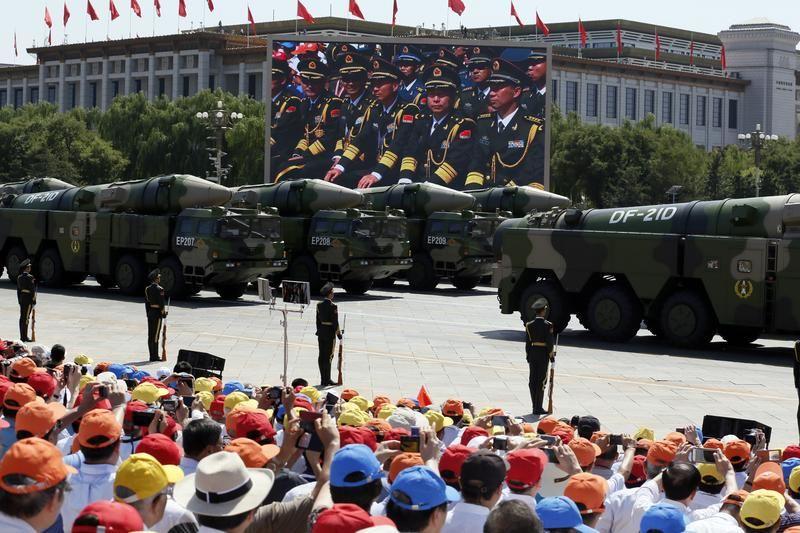
China aspires to surpass the U.S. in artificial intelligence, seeking to take advantage of the unique opportunities that this critical emerging technology could confer to its economic competitiveness and military capabilities. To date, the scale of Chinese research in artificial intelligence, as reflected by the number of papers published and cited, has already exceeded that of the U.S., and China also ranks second in AI patent applications.[i] From speech recognition to computer vision, Chinese efforts in artificial intelligence are cutting-edge and evidently constitute a priority for China’s leadership at the highest levels. Within the past year alone, China has released a series of national science and technology plans that seek to advance artificial intelligence and established a national deep learning lab.[ii] In particular, China’s new national mega-project for artificial intelligence, known as “Artificial Intelligence 2.0,” will advance and direct an ambitious agenda for research and development, including economic and national security applications.[iii]
...THE RELATIVE TRAJECTORIES OF U.S. AND CHINESE ADVANCES IN ARTIFICIAL INTELLIGENCE WILL IMPACT THE FUTURE MILITARY AND STRATEGIC BALANCE...
As the U.S. and China compete to innovate in this domain, the relative trajectories of U.S. and Chinese advances in artificial intelligence will impact the future military and strategic balance. China’s ability to leverage these national strategies, extensive funding, massive amounts of data, and ample human resources could result in rapid future progress. In some cases, these advances will be enabled by technology transfer, overseas investments, and acquisitions focused on cutting-edge strategic technologies.[iv] At the same time, it is undeniable that China’s capability to pursue indigenous, independent innovation has also increased. Whereas the U.S. military possessed an uncontested advantage in the technologies underlying the Second Offset, dominance in today’s emerging technologies thus remains highly contested between the U.S. and China. Thus, the Chinese military’s approach to artificial intelligence and automation will inherently influence the trajectory of this next military revolution.
Although the military dimension of China’s rise in artificial intelligence has remained relatively opaque, the People’s Liberation Army (PLA) intends to take advantage of this technological trend through a national strategy of military-civil integration (or military-civil “fusion,” å??æ°?è?å?). The Military-Civil Integration Development Commission, established in early 2017 under the leadership of Xi Jinping himself, is responsible for directing this agenda.[v] To date, Chinese technology companies have already achieved rapid advances in multiple areas – including machine learning, natural language processing, vision systems, and voice recognition – that may have impactful military applications. Since major Chinese Internet companies have access to the massive datasets necessary to train the underlying algorithms, Baidu, Alibaba, Tencent, and others will also have an inherent advantage in the future development of artificial intelligence. Thus, the PLA seeks to undertake a path to “shared construction, shared enjoyment, and shared use” of advances in this emerging technology through military-civil integration.[vi] Despite continued bureaucratic obstacles, there are indications that the PLA has started to create mechanisms to actualize military-civil integration in this technological domain. For instance, in late 2016, the Military-Civil Integration Intelligent Equipment Research Institute was created with support from the PLA to focus on research areas including intelligent robotics, artificial intelligence, unmanned systems, and military brain science.[vii]
At the highest levels, the PLA recognizes and seeks to capitalize on the transformation of today’s informatized (??å??) ways of warfare into future “intelligentized” (æ?ºè?½å??) warfare. According to Lieutenant General Liu Guozhi, director of the Central Military Commission’s Science and Technology Commission, the world is “on the eve of a new scientific and technological revolution.”[viii] He believes that we are “entering the era of intelligentization” due to rapid advances in artificial intelligence and its applications. Liu Guozhi anticipates artificial intelligence will accelerate the process of military transformation, causing fundamental changes to military units’ programming, operational styles, equipment systems, and models of combat power generation, ultimately leading to a profound military revolution (å??äº??å?½).[ix] Liu Guozhi warns, “Whoever doesn’t disrupt will be disrupted!”[x] The PLA presently has a unique opportunity to take advantage of today’s transformation of warfare through artificial intelligence and automation through leveraging the dynamism of Chinese private sector advances in AI.
For the PLA, the coming of intelligentized warfare constitutes a stage beyond informatization that will require deeper changes in its approach to force development and modernization. According to Major General Wang Kebin, director of the former General Staff Department Informatization Department, China’s “information revolution” has been progressing through three stages: first “digitalization” (æ?°å?å??), then “networkization” (ç½?ç»?å??), and now “intelligentization” (æ?ºè?½å??).[xi] In its agenda for informatization, the PLA has sought to integrate information technology into the PLA and to improve its ability to utilize information in warfare.[xii] To date, the PLA has succeeded in the introduction of information technology into platforms and systems; progressed gradually towards integration, especially of its command, control communications, computers, intelligence, surveillance, and reconnaissance capabilities; and seeks to advance towards deeper fusion of systems and sensors across all services, theater commands, and domains of warfare. In this final stage, intelligentization would enhance the PLA’s capability to process and utilize information at scale and at machine speed. For instance, in the immediate future, the PLA could employ artificial intelligence and automation to enhance its ability to rapidly process information to support intelligence.
...DUE TO THE PLA’S DISTINCTIVE STRATEGIC CULTURE, AS LEADING PLA STRATEGISTS AND ARTIFICIAL INTELLIGENCE EXPERTS CONTINUE TO FOCUS ON THE ADVENT OF INTELLIGENTIZATION, THEIR THINKING ON THE EMPLOYMENT OF ARTIFICIAL INTELLIGENCE COULD DIVERGE FROM THAT OF THE U.S.
At this point, the PLA remains in the early stages of speculation and experimentation with artificial intelligence that could prelude deeper military innovation.[xiii] The PLA’s initial thinking on artificial intelligence in warfare has been influenced by its close study of U.S. defense innovation initiatives, including the Third Offset.[xiv] In their writings, PLA academics and officers, not unlike those in the U.S. military, tend to project that impactful military applications of artificial intelligence could include intelligentized command and control or support to decision-making, intelligent unmanned military platforms, and the expansion of human stamina, skills, and intellect through artificial intelligence.[xv] However, due to the PLA’s distinctive strategic culture, as leading PLA strategists and artificial intelligence experts continue to focus on the advent of intelligentization, their thinking on the employment of artificial intelligence could diverge from that of the U.S. Traditionally, the PLA has evaluated warfare through the lens of military science (å??äº?ç§??), focusing extensively on simulation and war-gaming in efforts to derive appropriate military concepts and theories informed by underlying technological conditions.[xvi] The traditional notion that “technology determines tactics” could result in a greater degree of willingness to experiment with artificial intelligence and attempt to formulate novel military theories and concepts.[xvii]
While the PLA has traditionally sought to learn lessons from foreign conflicts, its current thinking on the military implications of artificial intelligence has been deeply informed not by war but rather a game.[xviii] In the spring of 2016, AlphaGo’s initial defeat of Lee Sedol in the ancient Chinese game of Go seemingly captured the PLA’s imagination at the highest levels.[xix] The continued success of AlphaGo, including its recent victories over China’s top Go players, is considered a turning point that demonstrated the potential of artificial intelligence to engage in complex analyses and strategizing comparable to that required to wage war—not only equaling human cognitive capabilities but even contributing a distinctive advantage that may surpass the human mind.[xx] From the perspective of influential PLA strategists, this “great war of man and machine” decisively demonstrated the immense potential of artificial intelligence to take on an integral role in decision-making in future warfare. In this regard, the PLA’s apparent fascination with AlphaGo presents early indications of its initial thinking on and potential future employment of artificial intelligence in warfare.
SIFT has just completed Phase 1 of the DARPA Deep Green Program. The goal of Deep Green is to transform a machines' ability to assist in planning and execution of military operations.
The PLA could seek to utilize artificial intelligence to enhance command and control at the operational and even strategic levels of warfare, through intelligent assistance to decision-making or even to enable decision-making at machine speeds. The Central Military Commission Joint Staff Department has called for the PLA to leverage artificial intelligence and related technologies to advance towards intelligentized command and decision-making in its construction of a joint operations command system.[xxi] Already, PLA researchers have reportedly achieved initial progress in their efforts to increase the intelligentization of the PLA’s command and control systems.[xxii] It is difficult at present to evaluate the sophistication of existing systems based on the information available. However, in theoretical writings, PLA thinkers have closely analyzed DARPA’s program Deep Green, which, as of the mid-2000s, sought to develop a system that would support commanders’ decision-making on the battlefield through advanced predictive capabilities, including the evaluation of options and assessment of the impact of decisions in real time.[xxiii] In the foreseeable future, a comparable capability could be within the PLA’s reach as well.
Looking to the future potential of artificial intelligence, certain PLA thinkers anticipate that the intelligentization of warfare could result in a trend towards battlefield “singularity.”[xxiv] As warfare accelerates towards machine speed, human cognition may prove unable to keep pace with the new operational tempo of intelligentized warfare. The introduction of artificial intelligence, to support and perhaps even eventually supplant human cognition and decision-making on the battlefield, will dramatically accelerate the speed of the “OODA loop” — the decision-making cycle of Observe, Orient, Decide, and Act, a concept formulated by Colonel John Boyd but also familiar to and recurrent in the writings of PLA thinkers.[xxv] To date, the U.S. approach to artificial intelligence and automation in the context of the Third Offset has focused on the potential of human-machine teaming, conceptualized as a “centaur model.”[xxvi] The PLA, which has closely tracked the Third Offset, may pursue similar forms of human-machine collaboration as well.[xxvii] However, the PLA’s strategic speculation on the ultimate trajectory of artificial intelligence does raise the question of whether the U.S. emphasis on human intuition and ingenuity, might be appropriate for the immediate future but perhaps infeasible for future warfare that may occur at machine speed. There may be a point at which keeping a human in the loop becomes a liability.
The PLA’s organizational tendencies could render it more inclined to take full advantage of the disruptive potential of artificial intelligence, without constraints due to concerns about keeping humans ‘in the loop.’ In its command culture, the PLA has tended to consolidate and centralize authorities at higher levels, remaining reluctant to delegate decision-making downward. The introduction of information technology has exacerbated the tendency of PLA commanders to micromanage subordinates through a practice known as “skip-echelon command” (è¶??æ??æ?¥) that enables the circumvention of command bureaucracy to influence units and weapons systems at even a tactical level.[xxviii] This practice can be symptomatic of a culture of distrust and bureaucratic immaturity. The PLA has confronted and started to progress in mitigating its underlying human resource challenges, recruiting increasingly educated officers and enlisted personnel, while seeking to modernize and enhance political and ideological work aimed to ensure loyalty to the Chinese Communist Party. However, the employment of artificial intelligence could appeal to the PLA as a way to circumvent and work around those persistent issues. In the long term, the intersection of the PLA’s focus on ‘scientific’ approaches to warfare with the preference to consolidate and centralize decision-making could cause the PLA’s leadership to rely more upon artificial intelligence, rather than human judgment.
If the PLA succeeds in realizing the military potential of artificial intelligence and automation, these technologies could become a critical force multiplier for China’s future military capabilities. During the “Information-Technology Revolution in Military Affairs,”[xxix] the U.S. possessed an advantage in the underlying technologies, but the Soviet Union was the first to recognize their revolutionary potential and to formulate critical concepts such as the reconnaissance-strike complex.[xxx] Today, the PLA possesses the technological prerequisites for military innovation and is actively engaging with critical questions regarding concepts of operations and the nature of future warfare. In the process, the thinking of PLA strategists is informed by a careful examination of the evolving U.S. approach to artificial intelligence and automation,[xxxi] but their eventual conclusions about and approach to intelligentized warfare could prove unique and impactful. It will thus be critical to track the future trajectory of the PLA’s approach to the employment of these emerging technologies. Ultimately, the PLA’s conceptualization of intelligentized warfare will deeply influence the trajectory of this ongoing military-technical revolution.
Elsa Kania is an analyst focused on the PLA's strategic thinking on and advances in emerging technologies, including unmanned systems, artificial intelligence and quantum technologies. Elsa is also in the process of co-founding a start-up research venture.
NOTES:
[i] “China overtakes US in quantity of AI research,” South China Morning Post, October 20, 2016, http://www.scmp.com/lifestyle/article/2029101/china-has-now-eclipsed-us-quantity-ai-research; “Xinhua Insight: China's AI business ready to lead the world,” Xinhua, June 1, 2016, http://news.xinhuanet.com/english/2017-06/01/c_136330954.htm
[ii] The 13th Five-Year Plan (2016–20) called for breakthroughs in artificial intelligence, which was also highlighted by its National Science and Technology Innovation Plan. See “Notice on the “Thirteenth Five-Year” National Science and Technology Innovation Plan [“?ä¸?äº?”å?½?ç§?æ??å??æ?°è§?å??ç??é??ç?¥ å?½å?], State Council, July 28, 2016, http://www.gov.cn/zhengce/content/2016-08/08/content_5098072.htm. The Internet Plus and Artificial Intelligence Plan (2016–18) emphasized the importance of advances in artificial intelligence and its expansive applications, including in unmanned systems and cyber security: ““Internet Plus” Artificial Intelligence Three-Year Activities Implementation Program Issued” [“äº?è?ç½?+”??æ?ºè?½ä¸??è¡?å?¨å®?æ?½æ?¹æ¡??å?], Xinhua, May 26, 2016, http://news.xinhuanet.com/info/2016-05/26/c_135390662.htm; Meng Jing, “China’s first ‘deep learning lab’ intensifies challenge to US in artificial intelligence race,” South China Morning Post, February 21, 2017, http://www.scmp.com/tech/china-tech/article/2072692/chinas-first-deep-learning-lab-intensifies-challenge-us-artificial
[iii] “China’s “Science and Technology Innovation 2030 -Megaprojects Will Newly Add “Artificial Intelligence 2.0”” [?å?½“ç§?æ??å??æ?°2030—é???ç?®”å°?æ?°å¢?“??æ?ºè?½2.0”], Ministry of Science and Technology of the People’s Republic of China, February 16, 2017, http://www.most.gov.cn/ztzl/lhzt/lhzt2017/hkjlhzt2017/hkj_fbh02/201702/t20170228_131502.htm; Meng Jing, “Beijing to release national artificial intelligence development plan,” South China Morning Post, March 12, 2017, http://www.scmp.com/tech/article/2078209/beijing-release-national-artificial-intelligence-development-plan
[iv] For one account of this, see: Paul Mozur and Jane Perlez, “China Bets on Sensitive U.S. Start-Ups, Worrying the Pentagon,” New York Times, March 22, 2017, https://www.nytimes.com/2017/03/22/technology/china-defense-start-ups.html?hpw&rref=business&action=click&pgtype=Homepage&module=well-region®ion=bottom-well&WT.nav=bottom-well
[v] “Military-Civil Integration Development Committee Established” [å??æ°?è?å?å?å±?å§?æ?ç«?], Xinhua, January 23, 2017, http://news.xinhuanet.com/finance/2017-01/23/c_129458492.htm.
[vi] “National People’s Congress Representative Liu Guozhi: Artificial Intelligence Will Accelerate the Process of Military Transformation” [????å??å?½?ï¼???æ?ºè?½å°?å? é??å??äº?å??è¿?ç¨?], PLA Daily, March 7, 2017, http://jz.chinamil.com.cn/zhuanti/content/2017-03/07/content_7517615.htm; “An Weiping: Promote Civil-Military Integration towards Deeper Development” [å®???ï¼?æ?¨è¿?å??æ°?è?å?å???å?å±?], Global Times, January 24, 2017, http://opinion.huanqiu.com/1152/2017-01/10010428.html
[vii] “Beijing Engineering University Established the Civil-Military Integration Intelligent Equipment Research Institute” [å????ç»??å??æ°?è?å?æ?ºè?½è£?å¤?ç ??é?¢], Science and Technology Daily, November 28, 2016, http://www.stdaily.com/cxzg80/kebaojicui/2016-11/28/content_349218.shtml
[viii] “National People’s Congress Representative Liu Guozhi: Artificial Intelligence Will Accelerate the Process of Military Transformation” [????å??å?½?ï¼???æ?ºè?½å°?å? é??å??äº?å??è¿?ç¨?].
[ix] This term might also be translated as “Revolution in Military Affairs” (RMA), but the distinction between military revolution and RMA is not as meaningful for the PLA.
[x] “National People’s Congress Representative Liu Guozhi: Artificial Intelligence Will Accelerate the Process of Military Transformation” [????å??å?½?ï¼???æ?ºè?½å°?å? é??å??äº?å??è¿?ç¨?].
[xi] Wang Kebin [ç??å??æ??], “Resolutely Take the Path of Strengthening the Military by Informationization with Chinese Characteristics” [å?å®??å¤???å?½ç?¹è?²???å??ä¹??], China Military Science (2) [?å?½å??äº?ç§??], 2015.
[xii] Joe McReynolds and James Mulvenon, “The Role of Informatization in the People’s Liberation Army under Hu Jintao,” in Kamphausen, Lai, and Tanner, Assessing the People’s Liberation Army in the Hu Jintao Era (2014): 207-256.
[xiii] This process is discussed in greater detail in Thomas C. Mahnken, Uncovering Ways of War: U.S. Intelligence and Foreign Military Innovation, 1918-1941, Cornell University Press, 2002.
[xiv] Pang Hongliang [åº???], “The Intelligentization Military Revolution Starts to Dawn” [æ?ºè?½å??å??äº??å?½æ??å??å?ç?°], PLA Daily, January 28, 2016, http://www.mod.gov.cn/wqzb/2016-01/28/content_4637961.htm
[xv] Li Daguang [æ??å??], “Artificial Intelligence Opens the Door to Intelligentized Warfare” [??æ?ºè?½?å¼?æ?ºè?½å??æ??äº??é?¨], Xinhua, January 23, http://news.xinhuanet.com/mil/2017-01/23/c_129459228.htm.
[xvi] For a more detailed account of the PLA’s wargaming efforts, see: Dean Cheng, “The People’s Liberation Army on Wargaming,” War on the Rocks, February 17, 2015, https://warontherocks.com/2015/02/the-peoples-liberation-army-on-wargaming/
[xvii] Dennis J. Blasko, “‘Technology Determines Tactics’: The Relationship between Technology and Doctrine in Chinese Military Thinking,” The Journal of Strategic Studies 34, no. 3 (2011): 355-381.
[xviii] For a more detailed analysis, see: Andrew Scobell, David Lai, and Roy Kamphausen, “Chinese Lessons From Other People’s Wars,” Strategic Studies Institute Book, November 2011, http://ssi.armywarcollege.edu/pdffiles/pub1090.pdf
[xix] For instance, this initial match provoked multiple high-level workshops and sessions, such as the following: China Military Science Editorial Department [?å?½å??äº?ç§?? ç¼?è¾?é?¨], “A Summary of the Workshop on the Game between AlphaGo and Lee Sedol and the Intelligentization of Military Command and Decision-Making” [å?´æ£??æ?º?æ??ä¸?å??äº?æ??æ?¥å?³ç?æ?ºè?½å??ç ??ä¼?è§?ç?¹??], China Military Science [?å?½å??äº?ç§??], April 2, 2016.
[xx] Yuan Yi [?è?º], Will Artifical Intelligence Command Future Wars?” [??æ?ºè?½å°?æ??æ?¥æ?ª?æ??äº?ï¼?], China Military Online, January 12, 2017, http://www.81.cn/jmywyl/2017-01/12/content_7448385.htm
[xxi] CMC Joint Staff Department [??å??å§?è?å?å?è°?é?¨], “Accelerate the Construction of a Joint Operations Command System with Our Nation’s Characteristics—Thoroughly Study Chairman Xi’s Important Sayings When Inspecting the CMC Joint Operations Command Center [å? ?æ???å?·æ??æ??å??ç?¹è?²ç??è?å?ä½?æ??æ??æ?¥ä½??—— ?å?¥???????è§?å¯?å??å§?è?æ???å¿?æ?¶ç??é????], Qiushi [æ±?æ?¯], August 15, 2016, http://www.qstheory.cn/dukan/qs/2016-08/15/c_1119374690.htm
[xxii] “National University of Defense Technology’s Liu Zhong: Creating a Powerful “External Brain” for Command and Control” [å?½é?²ç§??å???:?æ??æ?¥æ?§å?¶æ??é? ??"å¤?è??"], People’s Daily, December 28, 2015, http://military.people.com.cn/n1/2015/1228/c401735-27986608.html. “The Story of National University of Defense Technology Information Systems and Management Institute Chief Engineer Professor Liu Zhong” [å?½é?²ç§?æ???????ç»?ä¸??ç??é?¢æ?»?ç¨?å¸?å???æ??æ??æ??äº?é??], Xinhua, December 15, 2015, http://news.xinhuanet.com/mil/2015-12/30/c_128559188_5.htm.
[xxiii] J.R. Surdu, K. Kittka, “Deep Green: Commander’s tool for COA’s Concept,” Computing, Communications and Control Technologies: CCCT 2008, 29 June - 2 July 2008, Orlando, Florida, http://www.bucksurdu.com/Professional/Documents/11260-CCCT-08-DeepGreen.pdf. For a Chinese analysis of the program, see this extensive analysis of DeepGreen by Hu Xiaofeng: “Chief Engineer Hu Xiaofeng, General Manager of China’s Bingqi Program, Delivered a Lecture: the Challenge of the Intelligentization of Command information Systems” [?å?½å?µæ£??ç¨?æ?»å¸?è?¡æ???å°?å°?æ¼??ï¼?æ??æ?¥???ç»?ç??æ?ºè?½å??æ??æ??], July 13, 2016, 2016, http://chuansong.me/n/434595151184
[xxiv] Chen Hanghui [é??è?ªè¾?], “Artificial Intelligence: Disruptively Changing the Rules of the Game” [??æ?ºè?½ï¼??è¦?æ?§æ?¹å?“?æ?è§?å??], China Military Online, March 18, 2016, http://www.81.cn/jskj/2016-03/18/content_6966873_2.htm
[xxv] John R. Boyd, “Organic design for command and control,” A Discourse on Winning and Losing, 1987, http://pogoarchives.org/m/dni/john_boyd_compendium/essence_of_winning_losing.pdf.
[xxvi] Cheryl Pellerin, “Work: Human-Machine Teaming Represents Defense Technology Future,” DoD News, November 8, 2015, https://www.defense.gov/News/Article/Article/628154/work-human-machine-teaming-represents-defense-technology-future/. See also: “Centaur Army: Bob Work, Robotics, and the Third Offset Strategy,” September 9, 2016, http://breakingdefense.com/2015/11/centaur-army-bob-work-robotics-the-third-offset-strategy/
[xxvii] See, for instance: “Chinese Perceptions of the “Third Offset Strategy,” China Brief, October 4, 2016, https://jamestown.org/program/chinese-perceptions-third-offset-strategy/
[xxviii] For one description of this practice, see: “Six Major New Trends in PLA Training” [?æ?¾å???ç»?å??æ?°è¶?å?¿], PLA Daily, http://jczs.news.sina.com.cn/2007-01-17/0633427003.html
[xxix] The author does not seek to take a side in the terminological debate about the distinction between and appropriate usage of “Revolution in Military Affairs” and “military revolution” but chooses to use the former in this case in reference to the literature cited in this case.
[xxx] Dima Adamsky, The Culture of Military Innovation: The Impact of Cultural Factors on the Revolution in Military Affairs in Russia, the US, and Israel, Stanford University Press, 2010.
[xxxi] For an influential U.S. take on these issues, see: Robert O. Work and Shawn Brimley, “20YY: Preparing for War in the Robotic Age,” Center for a New American Security, January 2014, https://www.files.ethz.ch/isn/176455/CNAS_20YY_WorkBrimley.pdf
This article appeared originally at Strategy Bridge.

The Gulf of Finland’s Forgotten Islands
By Ben Poulin • RealClearDefense
NATO’s New Spending Pledge Must Buy Real Energy Resilience
By Chuck Dockery • RealClearDefense
The Army Needs a Data Logistics Discipline Before the Next Surge
By Steve Ferenzi • RealClearDefense
2949 Marine Prisoners, Hostages, and Peacetime Governmental Detainees Since Our Corps' Founding
By Jon Couch • RealClearDefense
America Must Win the Biotech Race Against China
By Rob Maness • RealClearDefense
U.S. Air Force To Arm C-17 Cargo Aircraft With Cruise Missiles
By C. Jones, Defence Blog
How Marine Vet Ernest Langdon Became a Renowned Shooter & Gunsmith
By WATM
In First, Two CCAs Fly Air Combat Maneuvers Using Autonomy Software
By A&SF
Space Force Launches Mission Operations Center
By Jon Harper, DefenseScoop
Pentagon Mulls Placing Fleet of Military Satellites Around the Moon
By Ars Technica