
Information Warfare
RealClear Context
Click below to continue reading this story, discover more Information Warfare stories from over 25 years of RealClear archives, or follow this topic to stay in the know.
The Right Fight in the Wrong Frontier
Why Moral Signaling in Emerging Domains Undermines the Credibility of the United States
11/06/25Read it on RealClearDefenseThe Triumph of Tech-Fueled Propaganda
America Isn't Ready for the Next Wave of Foreign Influence Operations
10/06/26Read it on Foreign AffairsAn Asymmetry of Existential Fear
What Two Wars on Terror Reveal About Russia and America Today
10/05/26Read it on RealClearDefense
Preventing Foreign Cultivation
The United States has no mechanism to protect a president's family from foreign cultivation. Adversary services know it — and on Tuesday, the...
09/28/26Read it on RealClearDefense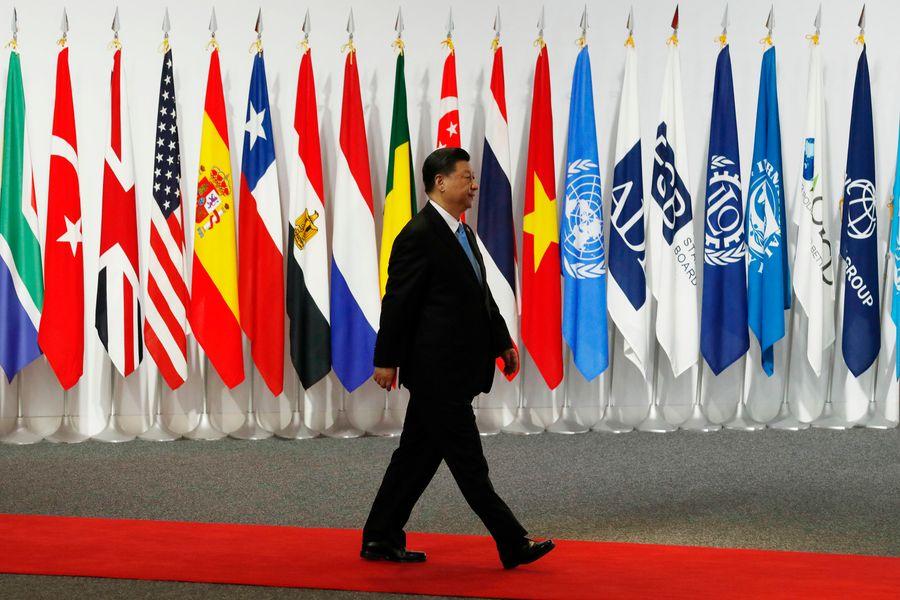
China Is Building an AI System for Tailoring Its Foreign Propaganda
China’s propaganda is often mocked as blunt, loud and tone-deaf. But state-backed researchers are trying to make it more sophisticated. They are building AI systems that model the cultural and political values of foreign audiences, simulate how they might respond to events and messages and use those predicted reactions to refine what China says to the world.
Among the clearest examples is a system unveiled in April 2026 called Huanyu Zhiying 1.0 寰舆智应 – a name that puns ‘the whole world’ with ‘global public opinion’ –at Sun Yat-sen University in Guangzhou. Built from more than 10,000 simulated user profiles spanning a claimed 18 countries, it attempts to model how foreign audiences and media might respond to events and messages. But the system does not merely try to predict what foreigners might think. It is being designed to help formulate what China should say in response.
China Is Building an AI System for Tailoring Its Foreign Propaganda
China's propaganda is often mocked as blunt, loud and tone-deaf. But state-backed researchers are trying to make it more sophisticated.
09/21/26Read it on The Strategist (ASPI)Claude: Tyranny's Little Helper
Our enemies are weaponizing AI
09/17/26Read it on UnHerdInformation Recon: Crowdsourced Sensor Networks
Conflicts since the World Wars (World War I, World War II) have increasingly demonstrated that civilian populations are capable and willing to...
09/16/26Read it on Information Professionals AssociationRussia Is Weaponizing U.S.-Built AI
Russia is weaponizing U.S.-built AI to make killer drones, cyberattack bots, and fake news
09/14/26Read it on Defense One
Open Models Are Becoming a Tool of Chinese Statecraft
The argument in Washington over the past few months has been about whether to ban Chinese AI models or restrict them. What has been less examined is what Beijing intends to do with the open-weight – that is, publicly available and downloadable – models its labs have built. Beijing has started to answer that question, and not with one voice.
Xi Jinping has encouraged open source without conditions. A new intergovernmental organisation was founded in Shanghai to carry Chinese AI abroad. The planning ministry tied open-source sharing to compliance systems. And the standards body began drafting rules for how open models are released and reused.

The Gulf of Finland’s Forgotten Islands
By Ben Poulin • RealClearDefense
NATO’s New Spending Pledge Must Buy Real Energy Resilience
By Chuck Dockery • RealClearDefense
The Army Needs a Data Logistics Discipline Before the Next Surge
By Steve Ferenzi • RealClearDefense
2949 Marine Prisoners, Hostages, and Peacetime Governmental Detainees Since Our Corps' Founding
By Jon Couch • RealClearDefense
America Must Win the Biotech Race Against China
By Rob Maness • RealClearDefense
U.S. Air Force To Arm C-17 Cargo Aircraft With Cruise Missiles
By C. Jones, Defence Blog
How Marine Vet Ernest Langdon Became a Renowned Shooter & Gunsmith
By WATM
In First, Two CCAs Fly Air Combat Maneuvers Using Autonomy Software
By A&SF
Space Force Launches Mission Operations Center
By Jon Harper, DefenseScoop
Pentagon Mulls Placing Fleet of Military Satellites Around the Moon
By Ars Technica