
The Iranian Factor in the Confrontation of August 2022 in the Gaza Strip
Published Aug. 29, 2022 • Read time: 8m
There has been a conflict between Israel and Iran, since 1979. Iran seeks to destroy Israel, so the latter is obviously genuinely concerned about Iran’s nuclear program, which might end in Iran producing nuclear weapons. Israel is also worried about Iran’s regional ambitions. Iran sees itself as a regional power. It has several proxies, partners, and allies in the Middle East, (their status regarding Iran depends on how strong and independent they are). Some of them are located around Israel. Those include NSAs (Non-State Organizations) such as Hezbollah in Lebanon and Hamas and the PIJ (Palestinian Islamic Jihad) that are based in the Gaza Strip.
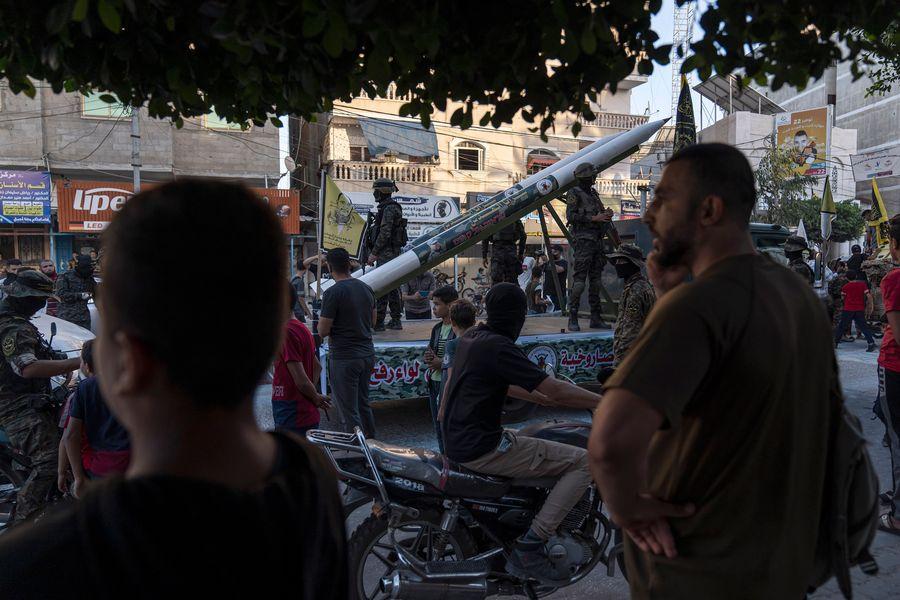
Iran supports Arab NSAs near Israel in order to allow Iran to confront Israel from several fronts, while keeping Iran itself outside the fight, and by that to protect Iran form Israeli retribution. Israel made it clear it sees Iran as responsible for attacks on Israel that are carried out by those pro-Iranian groups. However, Israel did not officerly attack Iran let alone by conducting air strikes there. Instead, Israel runs covert actions against Iran. Both states carried out cyber-attacks against the other. Israel also bombs inside Syria, to reduce the delivery of weapons to Hezbollah and to contain Iran’s military deployment inside Syria. There were also clashes in the Gaza Strip, usually between Israel and Hamas. The PIJ sometimes joined Hamas. In November 2019, the PIJ faced Israel alone. In early August 2022, the IDF (Israel Defense Forces) confronted the PIJ once again. It was the most important fight between Israel and Iranian proxy in more than a year. This article examines how Iran might not have sought this round, but once it started, Iran had an interest to make it longer.
Did Iran seek this confrontation?
The PIJ is “very close” to Iran. Yet it is not clear if Iran wanted the PIJ to confront Israel in early August 2022. If Iran had sought to get the attention of the international community, pointing it at the Gaza Strip, it was not the right time. There are other confrontations, mostly the one in Ukraine that is bigger and much more important than the one that took place in the Gaza Strip. Although world attention to the war in Ukraine is not as it used to be a few months ago, the fight there is still much more crucial, in several levels, to world powers and many other states, than another round in the Gaza Strip let alone one that was quite limited. Even the tension about Taiwan draws more attention than the confrontation between Israel and the PIJ, for good reasons. A major crisis let alone a war in Taiwan, even a limited one, would have much more destructive implications than the fight in the Gaza Strip. There are now also the talks about Iran’s nuclear program. Iran could have used the fight in the Gaza Strip as a leverage in the negotiations. Yet such a move would have exposed Iran as a state that causes conflicts, one which should not be trusted, including in the nuclear issue.
Therefore, Iran had several reasons to restrain the PIJ and wait for a better opportunity to start a confrontation with Israel.
The results of the confrontation of August 2020 “were entirely one sided, and hence the decision by PIJ to agree to a ceasefire, even though their Iranian masters would have wanted them to persist.” Iran might not have initiated the confrontation, but after it started Iran would have benefited from prolonging it, in order to wear down Israel. In the latter there is a growing concern due to the cost of each round in the Gaza Strip. Israel is highly sensitive to casualties, both soldiers and civilians. There are also the economic ramifications. For example, in May 2021 there was a round between Israel and Hamas. Each day of that fight cost Israel 37 million$.
No wonder why Israel had to end a confrontation as soon as possible. Other issues have to do with the nature of the fight. Israel was forced to bomb inside populated areas in the Gaza Strip, because its foe used those places as a fire base. The IDF invested a significant effort in avoiding collateral damage, yet Palestinian civilians were killed, which brought criticism against Israel. Over the years Hamas and the PIJ were also condemned for firing at Israeli civilians. Iran and many Arabs justify, openly or not, the actions taken by those NSAs against Israel. Iran also supports the Assad regime that killed enormously more Arab noncombatants than Israel. Nevertheless, Iran exploits the anger on Israel in the Arab world, following the collateral damage in the Gaza Strip, to tarnish Israel. The longer the confrontation is, the higher are the chances more Palestinian noncombatants would be killed, which could be used against Israel. Furthermore, Arab states, according to their approach toward Israel, have condemned Israel’s attacks in the Gaza Strip. Some Arab states have relations with Israel. Iran seeks to cause a rift between Israel and Arab states, mostly Gulf Arab states, due to their strategic importance. Israel has official ties with UAE and Bahrain and unofficial relations (which are an open secret) with other Arab states there including the most powerful one, Saudi Arabia. Iran is concerned Arab states and Israel could strengthen their relations, which would have severe strategic implications for Iran. There are major difficulties in establishing an official alliance between Israel and Arab states let alone one that would have military components. Even if publicly, there is not a pact against Iran, the latter considers any ties between Israel and Arab states let alone a military one, as a threat to Iran. Even cooperation on a purely defense structure such as recent ideas to create a joint air defense, worries Iran, which seeks to undermine such ties, by using the confrontations between Israel and Palestinians. Therefore, the various cost to Israel, following its confrontations with Palestinians, especially when they drag for weeks, was a major reason for Iran to urge the PIJ to continue the confrontation of August 2022, yet it lasted only three days. Previous confrontations in the Gaza Strip went on for much longer, sometimes weeks and even more than a month. The PIJ, by accepting a cease fire after only three days disappointed its Iranian patron.
The role of Hezbollah and Hamas
If Iran had sought to confront Israel, by using one of the pro – Iranian NSAs, then Iran should have preferred Hezbollah and / or Hamas, which are stronger than the PIJ. It would have increased the price Israel would have paid. However, Iran wants to keep Hezbollah and Hamas to another time when Iran would need them more. If Israel is about to bomb Iran’s nuclear sites, those NSAs can try to deter Israel from attacking Iran or to retaliate after the Israeli strike. In addition, despite the aid Iran provides to Hezbollah and Hamas those two NSAs are quite independent. Hamas fought Israel in several rounds, when it suited Hamas, not necessarily according to Iran’s interests. Furthermore, at the start of the Syrian civil war Iran wanted Hezbollah and Hamas to support the Assad regime, an Iranian ally. Hezbollah agreed but Hamas refused, which led to a rift between Hamas and Iran. Hezbollah was heavily involved in Syria where it absorbed high casualties. Hezbollah needs time to recover. Although Hezbollah has an impressive firepower, the group avoided confronting Israel since 2006. Overall, when it would be crucial for Iran to use Hamas and Hezbollah against Israel, they might not obey Iran or drag their feet. Hamas and even Hezbollah might hesitate to launch a full-scale war against Israel, fearing the cost of such a war.
For Iran, each time one of its allies confront Israel it costs Israel, but Iran’s proxies absorb a much bigger blow, and it affects them. The casualties and damage Hezbollah had in the war of 2006 caused it to be more careful, so it would not be entangled again in a costly war with Israel. Hamas proved its willingness to fight with Israel over and again, yet Hamas got worn down. No wonder why Hamas did not join the PIJ in August 2022. Another issue for Iran is that Iran’s prestige might be damaged when one of its proxies loses since that group is armed and trained by Iran.
Overall, Iran might not have initiated the confrontation of August 2022. If Iran had wanted to harm Israel as much as possible Iran might have tried to use a more powerful NSA than the PIJ such as Hamas or Hezbollah, but Iran and those groups too prefer to save their strength to another time. After this round had started Iran could have benefited if it were longer, yet it was quite short. In that sense Israel managed to foil Iran’s intentions by gaining a quick and limited achievement against a relatively weak foe.
Dr. Ehud Eilam has been dealing with and studying Israel's national security for more than 25 years. He served in the Israeli military and later worked for the Israeli Ministry of Defense as a researcher. He has a Ph.D. and he had published six books in the U.S / U.K. His latest book is: Containment in the Middle East, (University Press of Nebraska, 2019)

The Army’s AI Cyber Defenders Need a Proven Stand-Down Order
By Gleb Tsipursky • RealClearDefense
After the Silence
By Chase Skylar DeMayo • RealClearDefense
Defense Chip Procurement Needs a Recovery Test
By Percy Yixuanchen Yu • RealClearDefense
FORTRESS America Must Measure Missions, Not Megawatts
By Burak Oktenli • RealClearDefense
After the Midterms, the Right Strategy Against Iran
By Lance Gordon • RealClearDefense
After the Silence
By Chase Skylar DeMayo • RealClearDefense
Underwater Arms Race Puts U.S. Naval Supremacy at Risk
By Tom O'Connor, Newsweek
New Facilities To Pump Out Upgraded F/A-18E/F Super Hornets
By Trevithick, WarZone
U.S. Navy Expands Tomahawk Warhead Production
By Naval News Staff, Naval News
SSN(X) Attack Boat Will be a Swift, Lethal Mothership for Undersea Drones
By USNI N.