
Iran
RealClear Context
Click below to continue reading this story, discover more Iran stories from over 25 years of RealClear archives, or follow this topic to stay in the know.
U.S. Strikes Iran’s Qeshm Island as Trump Talks Down War Risks
Trump told reporters Monday ‘we haven’t been doing any fighting for months’...
4h agoRead it on The Wall Street Journal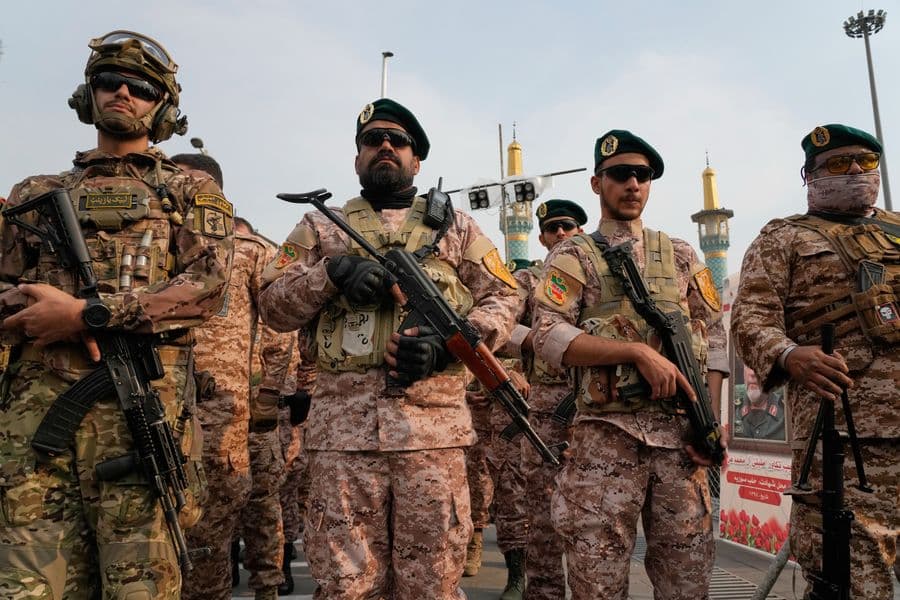
Eight Months of Epic Fury and Still No Internal Alternative
Eight months into Operation Epic Fury, the White House continues to promise a swift conclusion to the conflict. We have seen this playbook before: Washington degrades Iranian military capabilities through intense airstrikes, tightens economic sanctions, and then waits for a battered regime to petition for peace. Yet Tehran’s theocracy is absorbing these material losses while keeping an iron grip on power. U.S. strategists are ignoring a glaring parallel: our own failure in Afghanistan.
Long before their 2021 return to power, the Taliban cultivated a functional shadow government, guerrilla cells, and an underground intelligence apparatus. Pakistan’s Inter-Services Intelligence provided the critical sanctuary and logistics to sustain them, supplemented by arms and intelligence support from Russia and the Islamic Revolutionary Guard Corps (IRGC) Quds Force. While the United States propped up the Afghan government with a substantial force presence, Washington fatally underestimated both the Taliban's deep local insurgent roots and the durability of their ideology. When U.S. diplomats negotiated from a perceived position of strength, they secured an agreement that evaporated the moment American troops withdrew. Because Washington left no sustained ground counterweight, the insurgent structures American forces failed to dismantle simply took over.
Eight Months of Epic Fury and Still No Internal Alternative
U.S. strategists are ignoring a glaring parallel: our own failure in Afghanistan....
4h agoRead it on RealClearDefenseIs Europe in Iran’s Crosshairs? Tehran Hints at Wider Military Reach
A statement attributed to Supreme Leader Mojtaba Khamenei on October 31 directed the armed forces to be ready to respond to an attack "immediately,...
4h agoRead it on RFE/RLWhat Would Another U.S.-Iran Conflict Look Like?
U.S. and Israeli options to escalate range from maritime campaigns to attempting regime change but risk provoking retaliation...
1d agoRead it on Financial TimesIran’s Hidden Web of Military Agencies Is Slipping Past the U.S. Blockade
Iran has harnessed a military-financial complex of 5,000 agencies to bring in components, explosives and heavy-duty trucks critical to its drone and...
4d agoRead it on ReutersInside the U.S. Military’s Open-Ended Mission to Keep Gulf Oil Flowing
Troops are operating around the clock to maintain the Iranian blockade and protect ships in the Strait of Hormuz...
4d agoRead it on The Wall Street JournalU.S. Warns Gulf of Possible Short, Intense Renewal of Iran War After Midterms
There are signs that American, Israeli militaries preparing potential strikes to muscle Tehran to negotiating table...
5d agoRead it on The Wall Street JournalAmerica’s Military Presence Reshapes Hormuz
Progress is undeniable, and there is a clear explanation....
6d agoRead it on The Wall Street JournalIran Threatens Wider Strikes on Economic and Civilian Targets if U.S. Attacks
Tehran retains missile and drone stockpiles; Washington is trying to move more servicemembers and diplomatic staff out of harm’s way...
1w agoRead it on The Wall Street Journal
Eight Months of Epic Fury and Still No Internal Alternative
By Stephen D. Cook • RealClearDefense
The Readiness Cliff: Pacific Lessons Drawn from the Middle East
By Brian McSorley • RealClearDefense
The Pentagon’s Real Modernization Problem Is Time, Not Technology
By Bruce Allen Lubbering • RealClearDefense
The World His Mother Opened
By Carlo J.V. Caro • RealClearDefense
Wake Island Lessons for Expeditionary Advanced Base Operations
By Brian J. Dunn • RealClearDefense
Wake Island Lessons for Expeditionary Advanced Base Operations
By Brian J. Dunn • RealClearDefense
U.S. Navy Expands Unmanned Mine Hunting
By Global Defense News
MRF-SEA Will Maintain Continuous Presence in the Philippines
By Mahadzir, USNI News
Space Force Weighs Proliferated Cislunar Satellite Constellation
By C. Albon, A&SF
America-Class Amphibs Enable New Ship-to-Shore Attack Strategies
By Warrior M.