
The Return of Landmines Marks a Darker Era for Europe – and the World
Last updated 03:56 PM EDT • Read time: 5m
Countries withdrawing from the ban treaty shows how Russian
hostility is forcing choices that undermine global norms.
Prior to the Covid-19 pandemic, border crossings between Finland and Russia numbered close to 1 million per month. Russians would cross seeking products not available at home, while Finns would fill up on cheap petrol. Yet as pandemic restrictions eased, Russia launched its full-scale invasion of Ukraine and the Finns placed new restrictions on crossings. In May 2022, Finland applied to join NATO. Then, in November 2023, Finland closed the border completely following Russia’s hybrid tactics of pushing asylum seekers into Finland to create political problems for the government.
In July this year Finland signalled that its trust in Moscow had eroded completely. Following decisions by Estonia, Latvia, Lithuania and Poland, Finland also informed the United Nations that it will withdraw from the Ottawa Convention on the Prohibition of the Use, Stockpiling, Production and Transfer of Anti-Personnel Mines and on Their Destruction. A move designed to potentially turn the Finnish-Russian border into something far more inhospitable.
Since becoming effective in the late-1990s, the Ottawa Convention had been a great success as an arms control treaty. Global landmine and explosive-remnant casualties fell from about 25,000 annually in the mid-1990s to fewer than 1000 in 2012. However, there has been a recent uptick of several thousand more due to extensive landmine use by Russia in eastern Ukraine and by the junta in Myanmar. The nature of the weapons means that the vast majority of victims remain civilians – 84% in 2023, with more than a third being children – making the decision to withdraw all the more fraught.
Withdrawal from the convention requires a six month notice period, however, as the treaty was designed to prevent the use of landmines within warzones, it contains a condition that withdrawal cannot take place before the end of any on-going conflict a state is party to. Ukraine has also decided to withdraw from the convention, but given its extraordinary circumstances fighting a state who is not a signatory, it has chosen to be in violation of this provision.
At present, Finland has no current plans to mine its border with Russia, merely to manufacture landmines as a reserve capability. Finland’s president has stated that landmines will not be deployed during “times of peace”. But what constitutes peace has become murkier, with Russia’s use of grey zone tactics, and its needling of Europe through drone incursions and violations of airspace. The mere stockpiling of landmines may not be an effective form of deterrence.
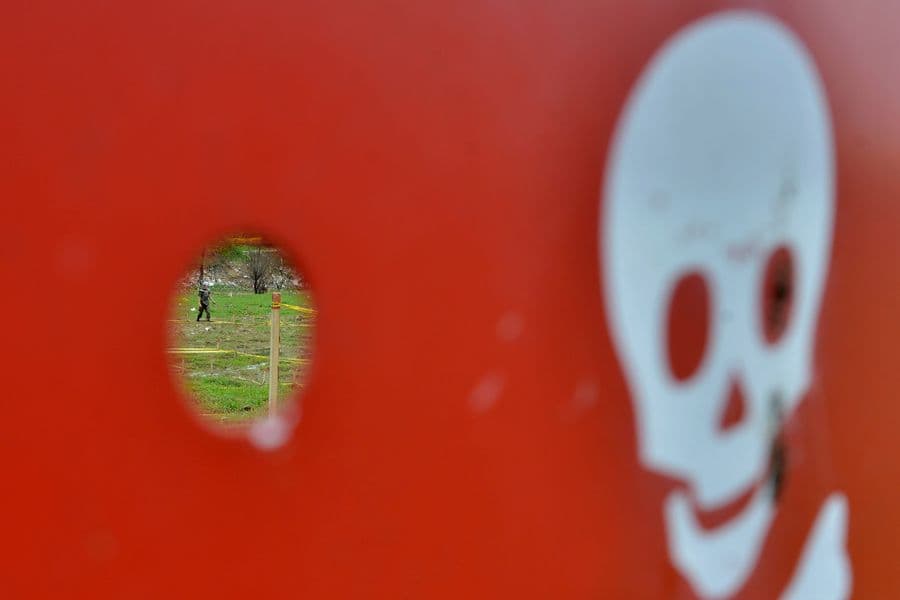
The indiscriminate nature of conventional landmines that makes them far more dangerous (Ukrinform/NurPhoto)
The Ottawa Convention allows for certain anti-tank mines that can select targets and be detonated manually by an operator. But this type of mine is expensive to produce and requires extensive commitments of personnel to administer. Finland’s Ministry of Foreign Affairs told me in recent discussions that the country’s heavily forested landscape also means that it cannot rely solely on manually deployable mines. Conventional landmines – those banned by the treaty – are cheaper and don’t require eyes in terrain where visibility is low.
Yet it is the indiscriminate nature of conventional landmines that makes them far more dangerous. These are mines that trigger on touch and are therefore incapable of distinguishing between an enemy combatant or a kid chasing a ball. These mines are also unable to recognise peace. A conflict may end, but the landmine remains active. Finland’s perception of Russia as a permanent threat – regardless of its various political iterations – means that once mines are laid they’re unlikely to be removed.
Despite withdrawing from the convention, the Ministry of Foreign Affairs stressed to me that Helsinki remains committed to its obligations under international humanitarian law, and does not encourage other states to withdraw – recognising the convention’s value as a humanitarian instrument. Finland will continue its landmine clearing assistance, presently undertaken in Afghanistan, Iraq, Syria and Somalia. While also signalling its intent to help Ukraine demine territory currently occupied by Russia.
However, this highlights the dilemma created by Russia’s aggression. Finland – as well as other states bordering Russia – now distinguish between the global standards and responsibilities they acknowledge in principle and their own immediate security needs. Global arms control treaties may in theory lead to a more secure and peaceful world, but without the submission to the idea of sovereignty by your adjoining states their practical use weakens.
Aside from the devastation it has wrought in Ukraine, Russia’s belligerence has planted this insidious worm of distrust within Europe, one that eats away at the international conventions designed to build mutually beneficial norms and practices. This is creating a far less rules-bound world. One where states start retreating from cooperation and feel the need to re-enlist previously renounced weapons like landmines – whose deterrence is built on their indiscriminate nature.
What Russia has also done is dismantle the mundane normalcy of cross border interaction. Shopping trips and cheap petrol may not seem like great losses in the grand scheme of things, but they represent the conditions of peace, trust and coexistence between bordering states. Conditions that over time could have expanded to genuine friendship and neighbourliness.
Maybe this was always a stretch to hope for with Russia? However, whether or not Finland’s eastern border becomes a literal minefield, it is this potential for regional harmony that Moscow has now completely blown up.
Grant Wyeth is a columnist for The Diplomat and is the editor at Asia-Pacific Development, Diplomacy and Defence Dialogue (AP4D).
This article appeared originally at Lowy Institute's the interpreter.
Trump's Disrupt First, Negotiate Second: Greenland in Focus
By Meda Parameswara Reddy • RealClearDefense
In Seeking Peace With Beijing, Taipei Is an Asset, Not a Burden
By Alexandru Filip • RealClearDefense
Strike First: Israel's Inevitable Doctrine for the Iranian Axis
By Lance Gordon • RealClearDefense
It’s Not President Trump but Thomas Friedman Who Should Be Ashamed
By Francis P. Sempa • RealClearDefense
Putin, Plague, and America’s Biodefense Gap
By Ryan Kane • RealClearDefense
U.S. and Japan Begin Naval Exercises Near Taiwan
By Mari Yamaguchi • Associated PressU.S. and Japan Begin Naval Exercises Near Taiwan
By Mari Yamaguchi, AP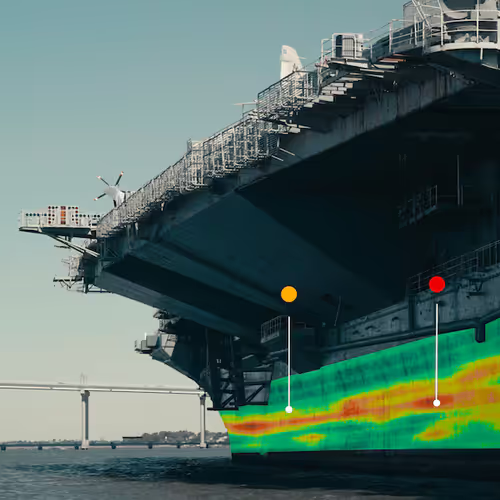
U.S. Navy, Gecko Robotics Surge AI Maintenance Contract
By Ceder, Simkins, Navy T.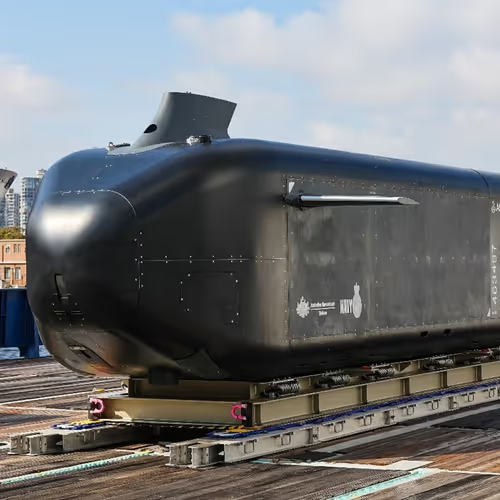
Ghost Shark XL-AUV Payload Bay Seen For First Time
By Thomas Newdick, The WarZone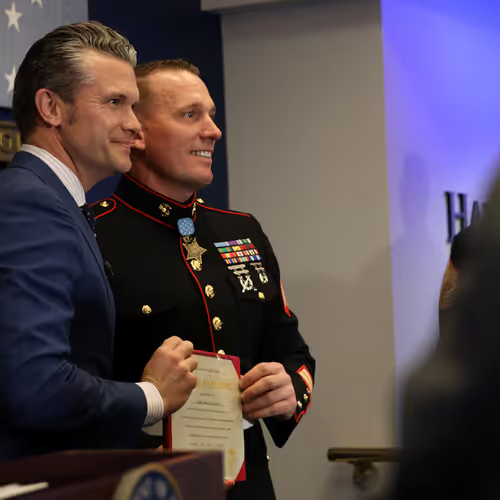
Dakota Meyer Tapped As Barracks Task Force Senior Advisor
By C. Stassis, MC Times