
The ABCs of A2/AD
Published May 10, 2022 • Read time: 5m
Much of the current debate about the U.S. Navy’s surface force has been about the number of ships we need. Almost none of it, however, has focused on the fact that Russian and Chinese Anti-Access and Area Denial (A2/AD) capabilities will effectively deny the Navy the ability to bring our carriers, amphibious forces and surface combatants into action. Dense Russian anti-air and anti-surface systems based in Kaliningrad pose a formidable barrier to U.S. and NATO naval operations in the Baltic Sea (already a crucial area whose importance will grow larger if Sweden and Finland enter NATO). Similarly, Chinese A2/AD systems based on the Chinese mainland and on the artificial islands Xi promised never to militarize pose a barrier to U.S. and allied naval operations in the South China Sea. If we are to bring our maritime might to bear in either theater, the A2/AD defenses must be reduced first. The relatively short legs of naval tactical air (compared to the Russia and Chinese air defenses) tend to rule these out as the answer. At the same time, the sophistication of the air defenses argue against Tomahawk as the weapon of choice, as does its relatively long time of flight (which was not a factor in Iraq but could be against a sophisticated enemy).
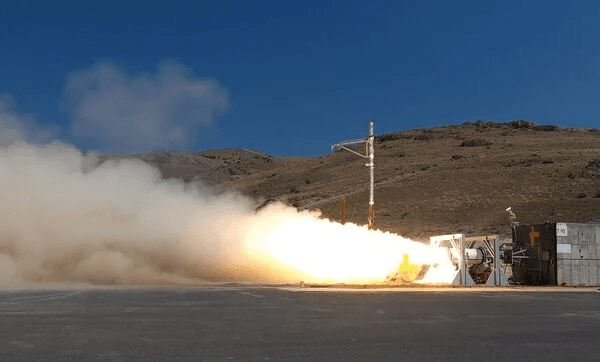
Fortunately, a joint Army-Navy program has brought a hypersonic system – the Conventional Prompt Strike (CPS) System -- through a successful development program and transitioned it to industry. Production has begun for both variants. IOC for the Army version theoretically is next year; the IOC for the Navy version (assuming the Navy does not scrap the three Zumwalt cruisers intended to be the initial launch platforms) is 2025. Unfortunately, the pace at which the two services are deploying CPS is painfully slow, almost as if no threat exists. The Army system will deploy eight missiles in 2023 (two missiles each per four launchers) in the United States. Beyond the Zumwalts, the Navy plans to deploy CPS on the Virginia Block V and VI SSNs as they enter the force (at one-to-two a year) in the mid-to-late 2020s and beyond. Given events in Europe, and former U.S. Indo-Pacific Commander Admiral Phil Davison’s prediction that Beijing might try to take Taiwan within the next six years, the Army and Navy deployment schedules are extremely late to need. To complicate the situation, Congress, reacting to the slow pace of planned deployment, has slashed funding for the program.
Given where we find ourselves in both main theaters, what steps should be taken? Here are a few suggestions:
- Production of the Army system should be increased as quickly as possible. Concurrently, the Army should explore the speed with which CPS batteries can be deployed to Guam and to NATO Europe. Working with the Joint Staff, OSD and the State Department should begin negotiations promptly to determine the political and operational feasibility of deploying Army CPS batteries to U.S. Pacific allies. If the negotiations are successful, those deployments should occur promptly.
- The Navy should commit to retaining the Zumwalts in service to provide an initial naval CPS platform at the earliest possible opportunity. Additionally, it should explore urgently whether the Army system can be deployed, perhaps even on an interim basis until the end of this decade, on several of the Navy’s large deck ships.
- If the Services can proceed with any of the above, Congress should increase spending accordingly to provide adequate support.
If “Integrated Deterrence” has any meaning, it begins with coordinated multi-service efforts to serve the national interest. Deterrence requires a credible war-fighting capability which makes clear to potential enemy leaders that the costs of aggression will outweigh their hoped-for gains. A deterrent which arrives in theater too late to halt aggression is a failed deterrent. And a surface force, however large, which cannot enter the theater of operations is of small value.
On a final note, and to be the subject of a future op-ed, it is incumbent on DoD to review and reverse its cancellation of SLCM-N. The Administration’s purported rationale as it made its decisions in late 2021 was that cancellation would contribute to its goal of “reducing the role of nuclear weapons”. The constant nuclear saber-rattling by Vladimir Putin and his sycophantic cohort, Kim Jong- un’s similar rhetoric and missile tests, and the continued frenzied pace of Chinese strategic nuclear force build-up make clear that this element of the Administration’s policy has not succeeded. SLCM-N’s cancellation contributed to encouraging these adverse outcomes, and it has simultaneously increased allied concerns about the extended deterrent – particularly in the Pacific. Course corrections are difficult politically, but it is incumbent on policymakers to recognize when an initiative has failed (as this so clearly has) and must be altered.
Franklin C. Miller served for three decades as a senior nuclear policy and arms control official in the Pentagon and on the National Security Council staff.

Iran’s Nuclear and Chemical Weapons Threat
By Ben Ollerenshaw • RealClearDefense
Europe’s Rearmament Paradox
By Daniel Darling • RealClearDefense
Pentagon’s Pursuit of Faster Acquisition
By Ben Harris • RealClearDefense
The Army’s AI Cyber Defenders Need a Proven Stand-Down Order
By Gleb Tsipursky • RealClearDefense
After the Silence
By Chase Skylar DeMayo • RealClearDefense
The First Surface Drone-v-Drone Fight
By CDR Salamander, CDR Salamander
Air Force Strengthens F-22 Raptor Combat Readiness in the Pacific
By Global DefenseAfter the Silence
By Chase Skylar DeMayo • RealClearDefense
Underwater Arms Race Puts U.S. Naval Supremacy at Risk
By Tom O'Connor, Newsweek
New Facilities To Pump Out Upgraded F/A-18E/F Super Hornets
By Trevithick, WarZone