
Army Plans To Close Many Museums
Published July 3, 2025 • Read time: 4m
The U.S. Army announced on June 4 that it will close about 29 museums on military bases and other facilities during the next three years as part of a major overhaul of the Army museum system. These museums showcase the history and legacies of major historic units, branches, bases and weapons.
The Army plans to reduce its roster of 41 museums and other facilities — 38 of which are on or near bases inside the U.S. with three overseas — by closure and consolidation to a mere 12 museums by 2028.
Rock Island Arsenal Museum
Army museums are overseen by the Center of Military History, under its Army Museum Enterprise directorate, and take several forms: 33 traditional museums open to the public with curated displays; four properties dubbed training support facilities, which are generally attached to major training schools and open to soldiers while training in major disciplines like artillery or infantry; and two major warehouses in Alabama and Virginia which house the vast majority of the system’s 540,000 artifacts — the historical weapons, uniforms, vehicles and other objects with educational value or historical value. The museums also oversee a collection of 60,000 archived documents. Only about 1% of the Army’s artifacts are on display at any time in the museums and historians and curators regularly create exhibits from the vast pool of stored artifacts. The National Museum of the United States Army at Fort Belvoir, Virginia, is also overseen by the Center of Military History, but its budget, staffing and exhibit spaces supposedly will not be affected by the round of closures.
Army officials claimed that increasing maintenance costs and aging buildings — but not DOGE — are behind the Army plan. James Vizzard, the deputy executive director of the Army Center for Military History at Fort McNair stated that “We have more museum footprint than we can support and that is the bottom line. We can keep the museums open, but we cannot present a museum experience our visitors deserve and, frankly, our workforce deserves.”
“Part of the problem is that [each museum] can afford to hire a couple of curators, but every museum should also have education specialists. That’s what museums are for,” said Vizzard. “You need to have exhibit technicians and educators and those are where we tend to skimp, frankly, and that gets back to that museum experience. You’re not getting the right museum experience if you just have curators.”
One of the driving factors in the reduction plan is the state of the aging facilities and the increasing costs associated with maintaining them. Many Army museums, explained Vizzard, occupy older buildings on a base, leading to high maintenance costs. If the Army were to repair and update the over 100 buildings that Army museums now occupy, Vizzard stated, the cost could run to $65 million. By comparison, the total annual operating budget for all 41 museums, he said, is $35 million. Leaky roofs and bad HVAC, he said, make for bad experiences for visitors and also can damage exhibits.
Under the Army’s plan, some museums will be closed outright and others will be consolidated. For example, three smaller museum facilities currently in Virginia, will be consolidated while a fourth is closed. The U.S. Army Transportation Museum at Fort Eustis, the Quartermaster Museum and the Ordnance Training Support Facility at Fort Gregg-Adams near Richmond will be consolidated in a single facility under the theme of Army Sustainment at Fort Gregg-Adams. The U.S. Army Women’s Museum at Gregg-Adams will be closed and its exhibits might be sent to other museums.
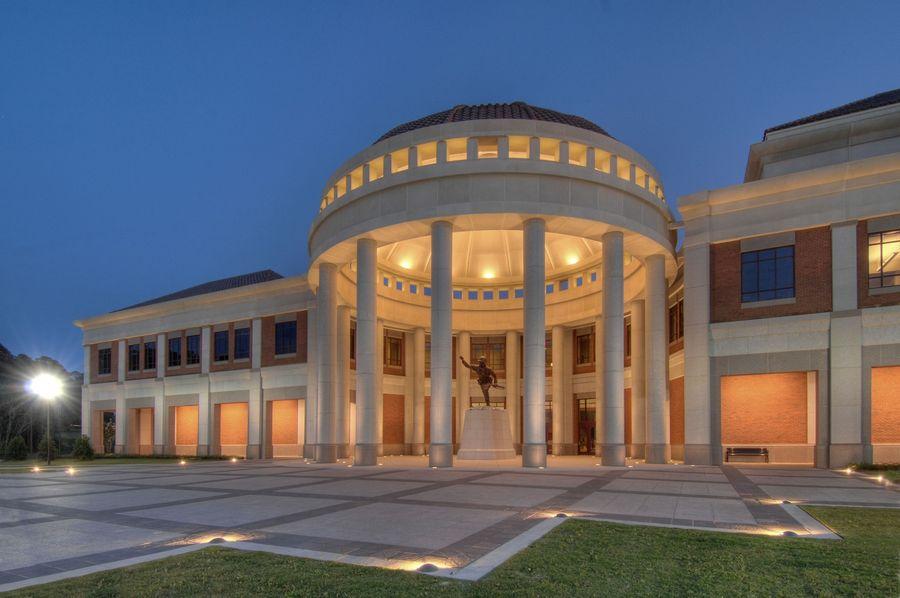
Public-private partnerships are also being considered. These may follow the model of the National Infantry Museum at Fort Benning, Georgia.
Rock Island Arsenal Museum
U.S. Army
Unfortunately, Rock Island, with its superb small arms collection, is on the chopping block, despite having reopened in 2023 after an extensive renovation and upgrading. The Rock Island Arsenal Museum originally opened on July 4, 1905 as The Ordnance Museum at Rock Island Arsenal. It is the nation’s second oldest Army museum after West Point,
According to a draft proposal obtained by TASK and PURPOSE:
Bases and facilities where the Army is proposing to keep museums open:
Museums set to close at these bases:
The U.S. Military Academy at West Point
Fort Huachuca, Arizona
U.S. Army Museum of Hawaii in Honolulu
Fort Lewis, Washington
Fort Gregg Adams, Virginia
White Sands Missile Range, New Mexico
Fort Bragg, North Carolina
Fort Carson, Colorado
Fort Cavazos, Texas
Fort Riley, Kansas
Fort Leonard Wood, Missouri
Fort Bliss, Texas
Fort Campbell, Kentucky
Fort Leavenworth, Kansas
Fort Jackson, South Carolina
Fort Knox, Kentucky
Fort Benning, Georgia
Fort Stewart, Georgia
Fort Novosel, Alabama
Fort Drum, New York
Fort Sam Houston, Texas
Fort Hamilton, New York
Fort Sill, Oklahoma
Rock Island, Illinois
Fort Eustis, Virginia
Camp Humphreys, South Korea
Vilseck, Germany

After the Midterms, the Right Strategy Against Iran
By Lance Gordon • RealClearDefense
The Color Revolution Came Home
By Emzari Gelashvili • RealClearDefense
When Access Becomes the Fight
By Richard Byno • RealClearDefense
What the 2026 Midterm Results Mean for U.S. Strategic Competition with Rivals
By Dean Chen • RealClearDefense
Measurable by Design: Project Meridian
By Alex Willard • RealClearDefense

New USAF Force Design Bets on Technology
By Stephen Losey, Air & Space Forces
DoD Pushes $450M in Loans To Bolster U.S. Space Companies
By Hitchens, BrDefense
The U.S. Navy Needs a New Battlecruiser. Will It Get One?
By Sadler & Ouellette, NatInt
U.S. Army Rehearses Rapid HIMARS Rocket Launcher Deployment
By Global Defense N.
Coding Commander's Intent into Unmanned Systems
By Thomas Baumstark, Proceedings