
Long-term Defense Planning Assumptions Need to Change!
Published Feb. 15, 2018 • Read time: 10m
Long-term defense planning, or strategic planning, is the sphere of politico-military activity, which provides guidelines on how to cope with the future in the defense realm. One of the core aspects of defense planning is related to the definition of military threats to national security. By doing so, defense planning also defines the core military tasks that armed forces must be able to perform.
Defence planning is thus a politically guided process that sets priorities and allocates resources for the maintenance, development and the use of military force. The perspective of defense planning and military capability development is 10-20 years into the future. It is a process that is future-oriented, but one that has to take into account the legacy of the “pre-existing” military procedures, doctrine and platforms. All national armed forces have been constructed during several decades incrementally - building new layers onto the preceding one. In the defense realm, the shadow of history is cast way into the future.
In addition to being forward-looking and history-dependent, defense planning is deeply ingrained in the strategic culture of the actor in question. Different states with different historical experiences and geostrategic locations have diverse ways to conceptualize what kinds of threats must be countered, who or what should be protected from these threats, and what military means are effective or acceptable in doing so. In other words, the way actors conceptualize war – its character, probability and goals – influences how they organize their armed forces, what they procure and where they prepare to fight. Defence planning is the process where these considerations are brought to bear.
U.S. and Australia Should Give ANZUS Teeth
How to Win Without Military Victory
Tailored Deterrence and Nuclear First Use in Europe
When Access Becomes the Fight
Lately, many Western states have noted that today’s military capabilities are not in line with the existing and emerging military threats. Nor have the plans for future procurement, operational concepts under development (or the lack thereof) or requirements for future military training and exercises supported Western statesmen and the armed forces that are at their disposal to deal with the existing and future security challenges. The actions of China in the East and South China Seas as well as Russia in Europe, Northern Africa and the Middle East have exposed gaps and shortages in the military capabilities of many Western states. Even in the best of circumstances, it is going to take years, most probably more than a decade, to address these shortfalls of military capability.
It is argued that the problems faced by the West today, concerning the challenge posed by Russia and increasingly by China, have developed as a result of two defense planning fallacies during the past 25 years: the lack of rigorous long-term defense policy guidance and the over-emphasis on future change at the expense of the long-term logic of maintaining and developing military capability.
It Is a Long-term Thing
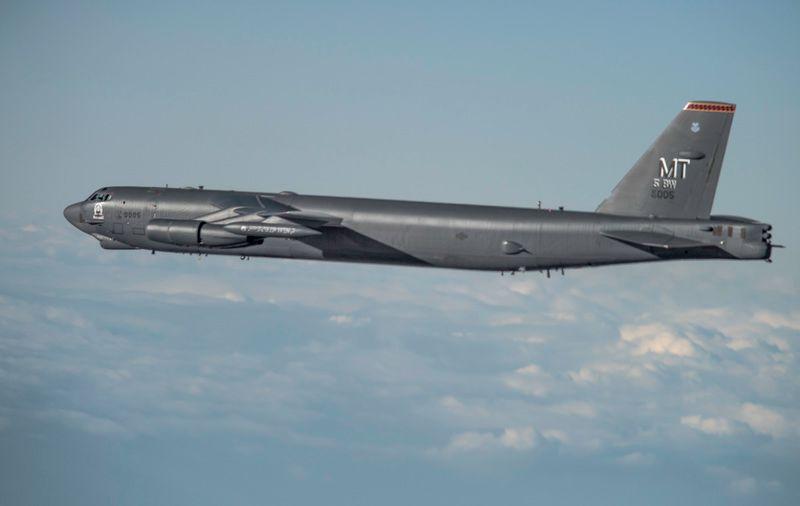
One of the challenges of defense planning is associated with the fact that building, maintaining and developing credible military capability is a very long-term business. Today’s capabilities have been built during the last 40-50 years, in some cases (like the B-52 Stratofortress) even longer. For many, understanding this is an insurmountable task. Moreover, there is also fierce resistance at the political stratum concerning this. It has become fashionable and very commonplace to refer to the “revolutionary technologies,” “game changers” or “edge” created by “leap-ahead technologies” when talking about armed forces and military capability development. But even in the “revolutionary cases,” which are very rare, these revolutions take decades - not years or months. This means that U-turns in defense planning are not possible, and if they are tried, they will be detrimental to the overall military capability. It is easy to ruin existing military capability in a few years, but rebuilding it will take decades. Today, we are witnessing this in Europe - and also to some extent in the United States.
Trying a U-Turn - Unsuccessfully
Today’s globalizing world is a complex system, containing many different and partly overlapping security-related trends. In addition, the tasks of Western armed forces have grown during the post-Cold War era. After the early 1990s, practically all Western states have moved from deterrence and defense of territory towards the active use of military force in expeditionary military operations to tackle the so-called “new threats” of the international system. These tasks have included, but have not been restricted to, military crisis management and humanitarian interventions to prevent gross violations of human rights. In addition, many Western armed forces have been used to fight extremist terrorist organizations in Afghanistan, Iraq, Syria and many other locations. Related to this Global War on Terror has been the need to broaden the scope of military activity as some military operations have transformed from counter-terrorism towards stability operations, counterinsurgency operations and nation-building missions. Experiences in Iraq and Afghanistan are the prime examples of this trend.
In addition to the “new threats” of the post-Cold War era, Western strategic planners have had to face the problem related to the cashing in the peace dividend. In a post-Cold War world of zero direct existential national security threats towards the West, cutting from the military has been easy. Western states - mostly in Europe - have axed defense expenditures and the size of their national armed forces. Military capabilities for large-scale warfare have decreased. The planning assumption for practically any Western military operation has been that they will be executed in multinational fashion under air and information supremacy provided by the U.S. Armed Forces. Most European states do not possess enough broad-based national military capabilities for independent action anymore. Nor do they have much to contribute to any potential large-scale warfighting operation, which could become reality under Article 5 of the Washington Treaty - the foundational document of NATO.
So, based on a short-term analysis - which in the defense domain means something from few years up to a decade - of the international security environment, Western states started to divest their military capability in the 1990s. This was all based on the new strategic planning assumptions and analyses conducted after the end of the Cold War. “Big war” was supposed to be over. Former enemies were engaged and absorbed into the “Western family.” The globalizing world was expected to demand new kind of security and defense policies - a non-zero-sum collaborative approach to security and defense. This was of course as much a political project to “convert” former enemies into friends, partners and allies as much it was an analysis of the “real” security threats of the globalizing world. And as we have seen - at least during the last decade - this planning assumption was not only based on short-term policy goals. It was also based on a short-sighted analysis of the international security logic, where potential peer competitors were identified but neglected almost until today.
Even the War in Georgia 2008 did not change the Western long-term defense planning guidance. After all, Russia and Georgia were at war in less than six months after NATO heads of states and government had declared that Georgia (and Ukraine) would become members of the alliance in the future. But so pressing were the ongoing military operations in Afghanistan and Iraq at that time that the long-term logic of potential existential threats were neglected, and huge economic, political and military resources were expended on counter-terrorism and counterinsurgency operations - which were surely important, but not vital (not to mention existential) national security issues to the West. The sad result is that at the same time as “big war” capability and mentality has atrophied within the West, “wear and tear” has eaten away a chunk of the capability left for counterinsurgency campaigns - the defining way of war for the West during this century.
As the United States enjoyed the post-Cold War “unipolar moment” with its allies, they lacked one fundamental ingredient of defense planning: the ability to pinpoint direct military threats - even existential threats - that needed to be countered. Threats crystallize defense planning focus. Without clear and relevant threat scenarios it is hard - but not impossible - to explicitly state the long-term policy guidance concerning the future requirements for the armed forces.
The Defense Planning Problematique Today
During the last 25 years, the planning horizon of Western strategic planners has widened from deterrence and large-scale conventional (mechanized) warfare towards an ever expanding set of tasks based on projected “strategic trends” and “global drivers” that may influence Western societies and states in the future.
Scientific progress within the fields of Artificial Intelligence (AI), robotics, automation, nanotechnology and 3D-printing have all been anticipated to change the character of war in the future. Some have even argued that the very nature of war itself will be redefined as intelligent unmanned systems will - eventually - take over the battlefield.
In addition to the strides we are witnessing within the spheres of science and technology, it has also been proposed that the nature of the globalizing international system will become more chaotic, unpredictable and threatening. Strategic trends concerning urbanization, demographics, resource scarcity or climate change are often evoked - among myriad others - as red flags pointing to the increasing number of future security challenges. The list could go on and on: from terrorism to fractured identities and from competing ideologies to asymmetry of wealth.
The problem that defense planners face with these strategic trends is these trends do not speak for themselves. They are not objective facts - they are mostly projected future trends that are uncertain and contingent. Without a framework - or a theory - that informs us, which of these multiple trends are important and how we do not have solid foundations for the maintenance and development of military capability in the future.
As we have seen, the defense planning guidance for the armed forces has failed to deliver during the post-Cold War era. In order not to do the same mistakes that have been done ever since the 1990s, it is argued here that Western armed forces need to get clear and rigorous guidance of what kinds of wars are going to be important for Western powers. It is a totally different thing to prepare a force for a “three block war,” “war amongst the people” or “counterinsurgency operations” with serious nation-building and stability functions than it is to prepare a force to fight advanced great-power military forces with long-range firepower, precision-guided munitions, stealth fighters and warships and sophisticated electronic warfare and air defense capabilities.
So, when analyzing the effects of urbanization or fractured identities on future war, we need a defense planning framework to inform us how significant these trends are for the way that the West goes to war. As an example, urbanization may be an important megatrend, and more and more people may in the future live in large “megacities” in the developing world. This still does not automatically turn into the need for Western militaries to excel in urban combat. Within a “big war” defense planning construct, these megacities are almost irrelevant. Conflicts may become more frequent in these developing megacities throughout the world, but most of them will not - and should not - concern Western militaries.
The “lenses” we have influence heavily on what we see. For two and half decades states within the Western security community have analyzed defense issues through “small war” and “counterinsurgency” lenses. This has not produced positive security outcomes - on the contrary. I argue that it is time to change the lenses and focus on a narrower list of tasks assigned to Western militaries. It is time to bring deterrence and defense of territory back to guide Western defense planning.
Lt. Col. Jyri Raitasalo is a military professor of war studies at the Finnish National Defence University. The views expressed here are his own.
The Pressure Is the Message: What Xi and Putin Faced in Shenzhen
By Emzari Gelashvili • RealClearDefense
China’s Revised Mobilization Law and the Expanding Reach of National Defense
By Muhammad Shoaib • RealClearDefense
U.S. Putting Weapons in Space: A Strategic Blunder?
By Ajey Lele • RealClearDefense
The Clearance Myth Is a Readiness Problem
By Elijah Fernandez • RealClearDefense
The Pentagon's Next Readiness Test Should Begin When the Cloud Goes Dark
By Colton Overcash • RealClearDefense
U.S. Putting Weapons in Space: A Strategic Blunder?
By Ajey Lele • RealClearDefense
U.S. Senate Seeks to Exchange Shipbuilding Funds for More Munitions
By Naval News
F-35C Completes First Launch and Recovery Trials on a Ford-Class Carrier
By Navy T.
USS George Washington Leaves Mideast As Trump Mulls Ending Iran War
By S&S
ULA’s Latest Launch Failure Spells Trouble for Space Force
By Greg Hadley, A&SF