
Strengthening Deterrence With SLCM-N
Last updated 05:16 PM EST • Read time: 2m
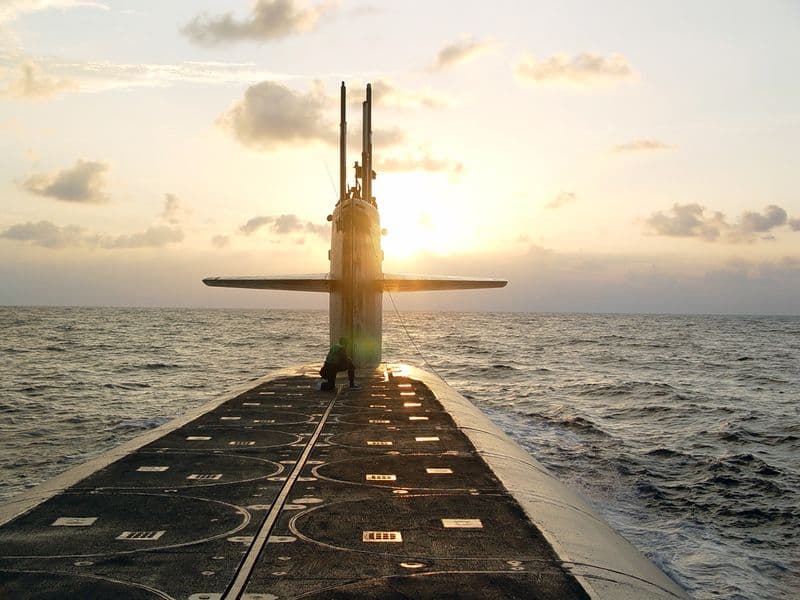
The Ohio-class ballistic-missile submarine USS Wyoming approaches Naval Submarine Base Kings Bay, Ga. The low-yield W76-2 warhead
is borne by existing ballistic-missile submarines. U.S. Navy photo by LT Rebecca Rebarich
FORWARD Defense
ISSUE BRIEF
The Biden administration has recently released its 2022 Nuclear Posture Review, which assesses the nuclear threats facing the United States. A top priority challenge named by the 2022 NPR is reinforcing deterrence against the potential for Russian and Chinese limited nuclear aggression, including using low-yield nuclear weapons. However, the NPR announces the administration’s decision to cancel a program specifically designed to counter that threat, the nuclear-armed Sea-Launched Cruise Missile (SLCM-N). Former nuclear deterrence policymakers John R. Harvey and Robert Soofer, from Democratic and Republican administrations, respectively, argue that the SLCM-N is needed to address a gap in U.S. nuclear deterrence capabilities created by Russia’s and China’s continuing efforts to maintain and expand regional nuclear forces.
The old is new again
SLCM-Ns are nuclear-armed cruise missiles capable of being launched from naval vessels, including submarines. During the Cold War, SLCMs were one of a variety of theater nuclear munitions that the United States deployed; these weapons were retired in 2010 as the security environment improved.
Faced with a deteriorating security situation, the 2018 Nuclear Posture Review supported the development of a modernized SLCM-N following aggressive Russian behavior. While many nuclear strategists and Members of Congress have lent support to the notion that supplemental U.S. capabilities are necessary to deter limited nuclear use, some question the SLCM-N as redundant, expensive, and potentially disruptive to the U.S. Navy.
A unique role
The SLCM-N would provide a highly survivable U.S. regional nuclear presence. This is crucial given the increasing emphasis in Russian nuclear doctrine on exercising a limited nuclear first strike and China’s expanding nuclear arsenal. SLCM-N has advantages in presence, survivability, and promptness in responding to potential limited nuclear aggression that current U.S. systems lack.
Key takeaways:
- Fielding SLCM-N is not radical but rather a return to nuclear form
- Renewed nuclear threats posed by Russia and China make theater nuclear weapons more necessary
- SLCM-N provides unique capabilities that air launched nuclear weapons cannot
- SLCM-N is affordable, since it can harness legacy technologies or benefit from other programs in progress
- Impacts on the submarine force would be manageable

Trump's Disrupt First, Negotiate Second: Greenland in Focus
By Meda Parameswara Reddy • RealClearDefense
In Seeking Peace With Beijing, Taipei Is an Asset, Not a Burden
By Alexandru Filip • RealClearDefense
Strike First: Israel's Inevitable Doctrine for the Iranian Axis
By Lance Gordon • RealClearDefense
It’s Not President Trump but Thomas Friedman Who Should Be Ashamed
By Francis P. Sempa • RealClearDefense
Putin, Plague, and America’s Biodefense Gap
By Ryan Kane • RealClearDefense
U.S. and Japan Begin Naval Exercises Near Taiwan
By Mari Yamaguchi • Associated PressU.S. and Japan Begin Naval Exercises Near Taiwan
By Mari Yamaguchi, AP
U.S. Navy, Gecko Robotics Surge AI Maintenance Contract
By Ceder, Simkins, Navy T.
Ghost Shark XL-AUV Payload Bay Seen For First Time
By Thomas Newdick, The WarZone
Dakota Meyer Tapped As Barracks Task Force Senior Advisor
By C. Stassis, MC Times