
The Most Bang for the Buck
Published Nov. 10, 2025 • Read time: 5m
How Typhon (SMRF) Decouples Missiles from Expensive Platforms and Redefines Long-Range Strike and Deterrence
The Defense Department has wrestled for decades with a simple budgetary fact: most of a weapon system’s lifetime cost is not the acquisition check but the decades of operations and maintenance (O&M) that follow acquisition. When Secretary Work’s 2011 TACAIR affordability review stated bluntly, “We must identify and pursue the TACAIR portfolio that meets near- and long-term warfighter requirements at the lowest possible cost,” it asked a simple but powerful question: Where are the big levers of cost and performance?
When the analysis was completed, the biggest cost lever was platform O&M, and the biggest performance lever was long range cruise missiles.
This strategic, yet elemental, insight ultimately resulted in the Army’s Typhon Strategic Mid-Range Fires System (SMRF), which moved the missile and launcher out of the most expensive element of the force—the high-end platform—and turned missiles into a distributable, affordable commodity. The implications for Indo-Pacific deterrence are profound: large, rapid, and relatively low-cost increases in magazine depth at theater scale, with huge lifecycle savings driven by reduced O&M burden.
From TACAIR to Payload Doctrine
The TACAIR tasking in July 2011 forced the Navy to look for immediate, programmatic savings and to question whether mission effects required bespoke platforms or could be achieved through improved payloads and munitions. Admiral Jonathan Greenert translated that budget-driven reasoning into doctrine: platforms should be treated as “trucks” for payloads—standard, enduring hulls that accept evolving weapons and sensors—because payloads change far faster and far cheaper than whole ships or aircraft. The result was a doctrine that prioritized modularity, standoff lethality, and cost-aware force structure design.
U.S. and Australia Should Give ANZUS Teeth
How to Win Without Military Victory
Tailored Deterrence and Nuclear First Use in Europe
When Access Becomes the Fight
Typhon: Decoupling Missile Capability from Platform Cost
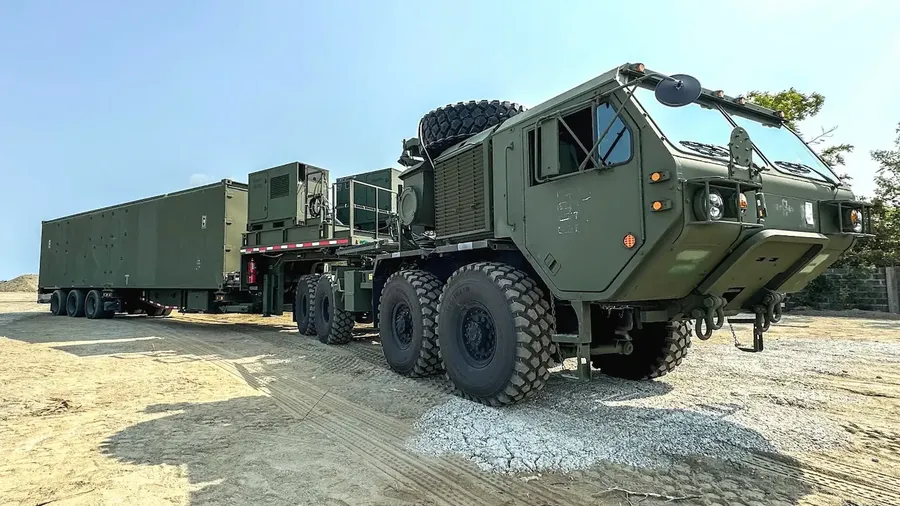
Typhon (SMRF) is the fielded expression of payload thinking applied to long-range fires. Each Typhon launcher packs four strike-length Mk-41 cells in a 40-foot ISO footprint; a fully formed battery brings multiple launchers, a Battery Operations Center, reloads, and support vehicles, and is designed to fire SM-6 and Tomahawk missiles from land or other mobile basing. Typhon was flight-tested beginning in 2023, deployed to the Indo-Pacific for exercises in 2024, and is funded in FY25 budget lines—$183 million for RDT&E and $233 million for procurement—evidence that this is not a concept sketch but a program of record.
Why does it matter? Because the platform—a DDG‑51 destroyer, a Virginia‑class submarine, or a carrier air wing—carries enormous acquisition and, more importantly, sustainment cost. Analyses repeatedly show that O&M accounts for roughly 70 percent of a weapon system’s life‑cycle cost; acquisition is the minority share. Cutting the O&M burden is therefore where the biggest and most enduring savings appear.
Typhon’s model shifts where missiles live and who pays to sustain them. Instead of embedding cells into a multi‑billion‑dollar hull (and then absorbing that hull’s high sustainment bill for decades), Typhon makes missiles a movable, lower‑sustainment commodity—transportable by truck, heavy airlift, or ship—so commanders buy magazine depth without buying more expensive hulls and their associated O&M costs.
The “Most Bang for the Buck” Arithmetic
Open budgets and public reporting provide a clear intuition: a new Arleigh Burke–class destroyer costs roughly $2–2.7 billion and embeds upward of 90 Mk‑41 cells; Typhon batteries cost orders of magnitude less to procure and, crucially, to operate. Even a conservative apples‑to‑apples thought experiment shows why the arithmetic favors containerized mid‑range fires as a low-cost way to expand distributed magazine capacity, rather than building new hulls.
If acquisition is 30 percent of lifecycle cost and O&M 70 percent, then every dollar shifted away from building another high‑end hull and toward procuring and transporting magazine modules reduces the long‑term sustainment bill and increases deployable magazine depth rapidly. That is the structural advantage Secretary Work sought when he asked for affordability trades across the Navy’s future plans.
Strategic Effect in the Indo‑Pacific
Typhon’s operational utility is twofold. First, the system provides an economical way to mass medium‑ and long‑range precision fires in theater—Tomahawk and SM‑6 reach that intermediate range band that is critical against peer anti‑access/area‑denial systems. Second, early, concentrated strikes by Typhon batteries can shape the battlespace: disrupting integrated air‑defense systems (IADS), command‑and‑control nodes, airfields, and logistics hubs, thereby creating a more permissive environment for follow‑on air and naval operations.
Observers and commentators have not been shy in ascribing revolutionary potential to Typhon. Coverage of deployments and tests has used phrases like “landmark deployment” and described the system as a “game changer” for regional deterrence—language that reflects both Typhon’s reach and the political signaling embedded in expeditionary deployments.
Not a Replacement—but a Multiplier
Typhon does not make destroyers, submarines, or carrier air wings obsolete. High‑end platforms bring sensors, survivability, command‑and‑control, and sustained power projection that the Typhon battery alone cannot replace. What Typhon does is multiply the effectiveness of existing high‑end capabilities by supplying magazine depth cheaply and flexibly. In a contested fight, that increased magazine depth may be decisive: sustaining layered defenses, providing saturation effects, and enabling persistent pressure without reloading missiles at sea.
Conclusion: The Most Efficient Lever
When Secretary Work asked where the big levers were, it inevitably steered analysis toward the actual business end of warfighting—payloads. Typhon delivers that logic in practice: it strips the most expensive parts of long‑range fires away from the hull and treats missiles as distributable, affordable combat power. In a region where volume of fires, persistence, and cost‑efficient deterrence matter, that design choice delivers real strategic leverage.
For long‑range power projection in the Indo‑Pacific, Typhon is exactly what the title promises: the most bang for the buck—an affordable, rapidly fieldable means to mass fires, shape the early fight, and preserve the endurance of high‑end platforms that still must win the decisive moments.
Russell A. Haas is a retired defense executive and former Subject Matter Expert at the U.S. Navy Fighter Weapons School (TOPGUN). He later served as Director of Raytheon Missile Systems’ Futures & Innovation Group and now works as a freelance writer and consultant specializing in defense analysis and strategic modernization initiatives.
The Pressure Is the Message: What Xi and Putin Faced in Shenzhen
By Emzari Gelashvili • RealClearDefense
China’s Revised Mobilization Law and the Expanding Reach of National Defense
By Muhammad Shoaib • RealClearDefense
U.S. Putting Weapons in Space: A Strategic Blunder?
By Ajey Lele • RealClearDefense
The Clearance Myth Is a Readiness Problem
By Elijah Fernandez • RealClearDefense
The Pentagon's Next Readiness Test Should Begin When the Cloud Goes Dark
By Colton Overcash • RealClearDefense
U.S. Putting Weapons in Space: A Strategic Blunder?
By Ajey Lele • RealClearDefense
U.S. Senate Seeks to Exchange Shipbuilding Funds for More Munitions
By Naval News
F-35C Completes First Launch and Recovery Trials on a Ford-Class Carrier
By Navy T.
USS George Washington Leaves Mideast As Trump Mulls Ending Iran War
By S&S
ULA’s Latest Launch Failure Spells Trouble for Space Force
By Greg Hadley, A&SF