
The (Not-So) Peaceful Transition of Power
Last updated 05:52 PM EDT • Read time: 2m
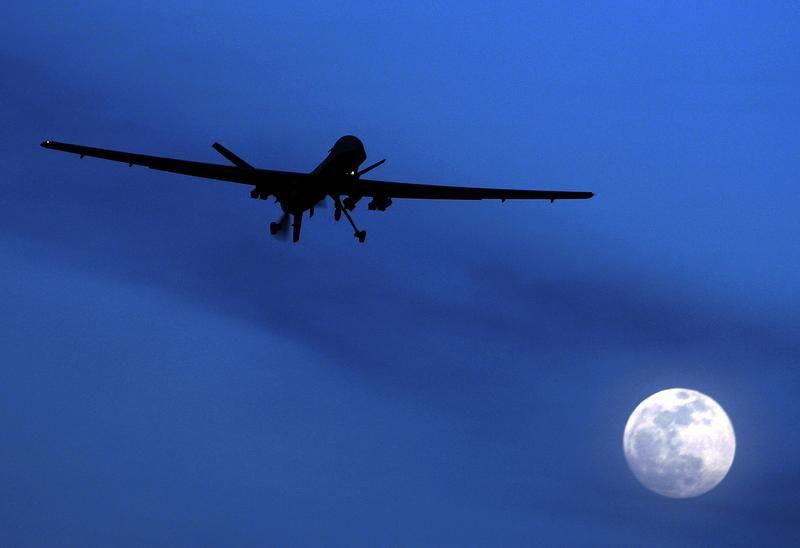
Trump’s Drone Strikes Outpace Obama
As a candidate, President Donald Trump was deeply misleading about the sorts of military operations that he would support. He claimed to have opposed the 2003 Iraq War when he actually backed it, and to have opposed the 2011 Libya intervention when he actually strongly endorsed it, including with U.S. ground troops. Yet, Trump and his loyalists consistently implied that he would be less supportive of costly and bloody foreign wars, especially when compared to President Obama, and by extension, former Secretary of State Hillary Clinton. This might be true, but nonetheless the White House is considering deploying even more U.S. troops to Syria, loosening the rules of engagement for airstrikes, and increasing the amount of lethal assistance provided to Syrian rebel groups.
By at least one measure at this point in his presidency, Trump has been more interventionist than Obama: in authorizing drone strikes and special operations raids in non-battlefield settings (namely, in Pakistan, Yemen, and Somalia). During President Obama’s two terms in office, he approved 542 such targeted strikes in 2,920 days—one every 5.4 days. From his inauguration through today, President Trump had approved more than 25 drone strikes or raids in 41 days—one every 1.6 days. These include three drone strikes in Yemen on January 20, 21, and 22; the January 28 Navy SEAL raid in Yemen; one reported strike in Pakistan yesterday; and “more than 20” early this morning.
Thus, people who believed that Trump would be less interventionist than Obama are wrong, at least so far and at least when it comes to drone strikes. These dramatically increased lethal strikes demonstrate that U.S. leaders’ counterterrorism mindset and policies are bipartisan and transcend presidential administrations. As I have noted, U.S. counterterrorism ideology is virulent and extremist, characterized by tough-sounding clichés and wholly implausible objectives. There has never been any serious indication among elected politicians or appointed national security officials of any strategic learning or policy adjustments. We are now on our third post-9/11 administration pursuing many of the same policies that have failed to meaningfully reduce the number of jihadist extremist fighters, or their attractiveness among potential recruits or self-directed terrorists. The Global War on Terrorism remains broadly unquestioned within Washington, no matter who is in the White House.
This article appeared originally at the Council on Foreign Relations Blog.
Don’t Be Swayed by Tactical Nukes
By Benjamin Giltner • RealClearDefense
How Seoul’s Break With Kyiv Serves Trump’s Russia Turn
By Sang Won Pyo • RealClearDefense
When the Grid Goes Down, the Mission Must Go On. Solar and Storage Can Help.
By John Szoka • RealClearDefense
Data and Communications Technology are the Hidden Keys to Success for Golden Dome
By Eric Velte • RealClearDefense
The Dual Threat: Why Beijing’s Collapse Is Just As Dangerous as Its Rise
By Efraín Vázquez-Vera • RealClearDefense
USS Stout Loses Power During Port Visit Due to ‘Engineering Casualty’
By USNI News
Air Force Lessons Learned From Operation Epic Fury
By Tabitha Reeves, National Defense
Marines Need Nine More Amphibious Warships To Carry Out Its Missions
By TWZ
AFRL, ACC Fly XQ-67A Drone To Test Autonomous Teaming
By Airforce Technology
F-35B Releases Meteor BVRAAM for the First Time
By Parth Satam, The Aviationist