
The Road to Victory Meets the Dysfunctional IHL Permit Process
Published Nov. 11, 2023 • Read time: 6m
Building a road to military victory is a complex multistep endeavor that is in many ways analogous to building a high-speed rail link between two cities. Since building a road to victory (or a railroad) inevitably inflicts costs upon the civilians in its path, International Humanitarian Law (IHL) creates a permit process for each step to ensure that humanitarian concerns are taken into account. Yet, this IHL process is so dysfunctional that building a road to victory is now more difficult than building high speed rail in California. The IHL permit process must therefore be scrapped and replaced by one that enables countries of the West (Israel, the U.S., the UK, and other democracies) to win their wars against evil regimes while still taking humanitarian concerns into account.
Obtaining an IHL permit (that is, legal sign-off) to engage in a specific attack on the road to victory requires showing that the attack is not disproportionate. Under IHL, an attack is disproportionate if the expected harm to civilians that the attack entails is “excessive in relation to the concrete and direct military advantage anticipated”. There are two fundamental flaws with this permit process.
First, IHL focuses entirely upon the seen graveyard of civilian losses due to a specific attack and completely ignores the unseen graveyard of civilian harm (for both parties to the conflict) that failing to win the war will ultimately create. Consider an evil tyrannical regime that inflicts immense suffering on its own people while engaging in a destructive terrorist campaign against you. The evil regime protects itself from attack by using human shields. Eliminating the regime would be morally correct due to the reduction in overall harm. But eliminating overall harm is not a “concrete and direct military advantage” resulting from a specific attack. So, the immediate harm to the human shields that follows from any specific attack makes any specific attack disproportionate. Thus, though victory is the moral outcome, the IHL blocks each individual step that the road to victory requires. The evil regime triumphs.
Second, the IHL permit process completely ignores military casualties on the attacker’s side. So, suppose that attack option A will lead to X deaths on the attacker’s side but that human shields make this specific attack disproportionate. Option B, on the other hand, will lead to 100 X deaths for the attacker but fewer civilian deaths and so will not be disproportionate. The IHL permit process will only allow option B.
But, of course, Israel, the U.S., and other democracies do not have an infinite number of lives that they can (or should) sacrifice for victory even in a worthy cause. By increasing the blood toll that victory requires, then, the IHL permit process places any country (such as those in the West) that values the lives of the people in its own military at an enormous disadvantage in wars against evil regimes.
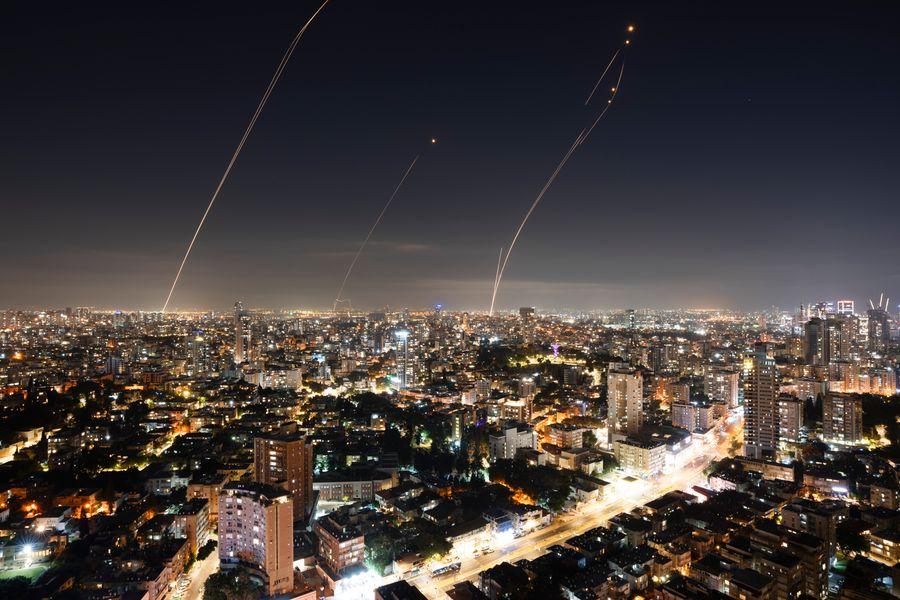
These flaws in the IHL permit process are not theoretical: they are central to the strategies that evil regimes pursue in their wars against the West. Gaza illustrates this point perfectly. Israel must destroy Hamas to win, but cannot fully exploit its air and artillery power to do so because human shields will make such an attack disproportionate under IHL (especially as interpreted by international institutions/lawyers actively hostile to Israel). Instead, Israel must mount a ground assault that will necessarily result in high Israeli casualties — perhaps too high to pursue the campaign to victory. In this case, Hamas will win.
A permit process that tilts outcomes towards the triumph of evil is one that needs to be scrapped. I propose replacing the IHL process with National Just War Principles (NJWP).
The core idea of the NJWP approach is that any road to victory that does not involve committing atrocities (rape, looting, gratuitous death, and destruction) is permissible in a just war. A just war is one that is one where a political judgement is reached that it is worth pursuing taking into account: i) the ultimate benefits of victory; ii) the harm to enemy civilians that victory entails; and iii) the costs to friendly military and society more generally of building the road to victory.
There is no objective formula that dictates how precisely to weigh the inputs into the just war calculation to maximize the net benefits of the war, and it is delusional to think that any sound framework can have universal support. It follows that the decisions over whether and how to fight a war are strictly and necessarily political and military, not legal. IHL therefore empowers the wrong people using the wrong framework to influence the course of military campaigns. It is just absurd that the political/military decisions that constitute war now get made on the basis of arbitrary and capricious legal hair-splitting rather than on the basis of achieving a just victory.
There are three principal objections to this proposed approach.
First, if the West withdraws from the IHL permit process, then Hamas, Hezbollah, Iran, Russia, China, etc. will also withdraw. And that would be bad because…oh wait, these regimes already ignore the IHL permit process. Never mind.
Second, replacing the IHL permit process with the NJWP approach will undercut the ability of the International Criminal Court (ICC) to prosecute IHL defined War Crimes. This objection might carry weight if the ICC wasn’t such an ineffectual farce. In any event, the U.S. and Israel have demonstrated that they can enforce penalties against atrocities far more effectively on their own outside of the ICC process than it is possible for any country to do within the ICC process.
Third, IHL does have worthwhile features (e.g., protecting POWs) and does provide a framework to limit barbarism in Western forces. But the worthwhile features of IHL can be supported outside of the IHL framework, and Western militaries can enforce honorable behavior for their own ranks through national policies.
The West has a moral duty to win its just wars against evil regimes. By significantly hindering the West from building a road to victory in these wars, the IHL permit process is immoral. IHL must therefore be scrapped and replaced by National Just War Principles that provide a superior political/military framework for thinking through whether and how to fight and win wars while still taking due and proper account of humanitarian considerations.
Kevin R. James (@kevinrogerjames) is an economist in the Systemic Risk Centre at the London School of Economics.
After the Midterms, the Right Strategy Against Iran
By Lance Gordon • RealClearDefense
The Color Revolution Came Home
By Emzari Gelashvili • RealClearDefense
When Access Becomes the Fight
By Richard Byno • RealClearDefense
What the 2026 Midterm Results Mean for U.S. Strategic Competition with Rivals
By Dean Chen • RealClearDefense
Measurable by Design: Project Meridian
By Alex Willard • RealClearDefense

New USAF Force Design Bets on Technology
By Stephen Losey, Air & Space Forces
DoD Pushes $450M in Loans To Bolster U.S. Space Companies
By Hitchens, BrDefense
The U.S. Navy Needs a New Battlecruiser. Will It Get One?
By Sadler & Ouellette, NatInt
U.S. Army Rehearses Rapid HIMARS Rocket Launcher Deployment
By Global Defense N.
Coding Commander's Intent into Unmanned Systems
By Thomas Baumstark, Proceedings