
Military Strategy
RealClear Context
Click below to continue reading this story, discover more Military Strategy stories from over 25 years of RealClear archives, or follow this topic to stay in the know.
China's Amphibious Warfare: History, Doctrine, and Forces
As China surrounds Taiwan with warships, it's time to consider what military operations Xi Jinping may be preparing for. This first part of a...
12/16/24Read it on The Diplomat
The Mirror-Life Trap: When Deterrence Must Prevent Invention
Imagine a scientific breakthrough that could make a nation less secure even if it achieved it first. Now imagine two rival powers, each afraid the other might pursue it anyway. That is the strategic problem raised by the possibility of so-called "mirror life". Its danger lies not only in what an adversary might do with a novel organism, but in what competition itself might persuade otherwise cautious actors to create.
Mirror life does not exist today. It is a hypothetical form of life built from biological molecules that are the mirror images of those found in nature. The distinction involves what scientists call "chirality", or molecular "handedness". Consider your left and right hands. They have the same components but are arranged as mirror images and cannot be perfectly superimposed. Something similar occurs in biology. The proteins of living organisms are built almost exclusively from "left-handed" amino acids, while DNA relies on "right-handed" sugars. Mirror life would reverse these arrangements, potentially producing organisms whose molecular structures are fundamentally incompatible with those of life as we know it. Scientists have already created individual mirror-image biological molecules, but never a self-replicating organism. The danger is that certain mirror microbes might evade immune defenses and national biological controls that evolved to recognize ordinary organisms, thereby potentially allowing infections or ecological disruptions that would be difficult to contain. The likelihood and scale of these dangers remain uncertain at the moment.
The Mirror-Life Trap: When Deterrence Must Prevent Invention
Imagine a scientific breakthrough that could make a nation less secure even if it achieved it first....
8h agoRead it on RealClearDefenseThe Necropolitics of the Wasteland
The Strategic Obsolescence of Clausewitzian Occupation in the Twenty First Century...
1d agoRead it on RealClearDefenseDo American Forces in the First Island Chain Deter or Invite War?
After the deterrence failure that led to the Korean War, the United States recognized the necessity of forward presence to prevent war....
1d agoRead it on Modern War Institute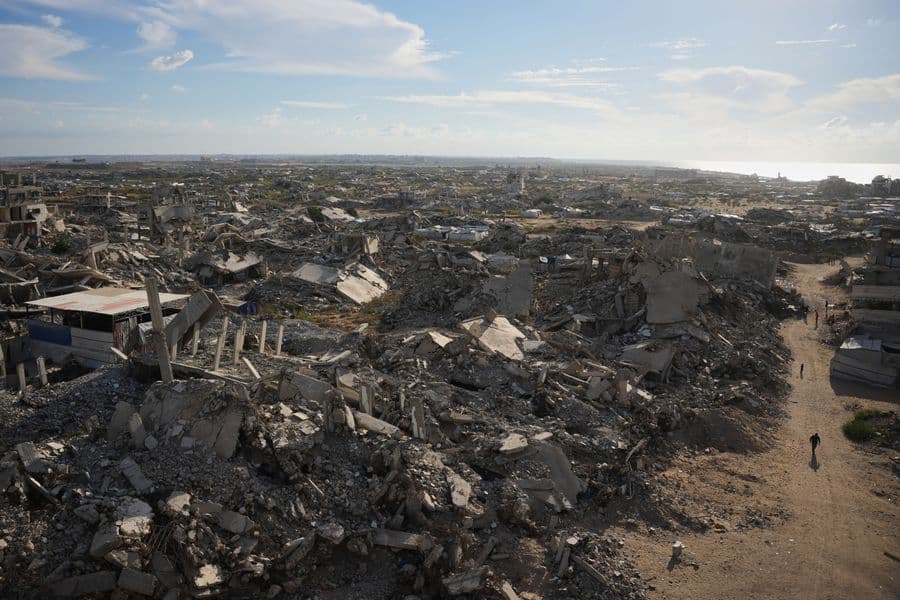
The Necropolitics of the Wasteland
Modern power can increasingly control an adversary’s resilience through remote warfare. Therefore, occupation is no longer necessary to impose and sustain a chosen reality and has become a strategically inefficient model of victory.
The U.S. Nuclear Deterrent Umbrella
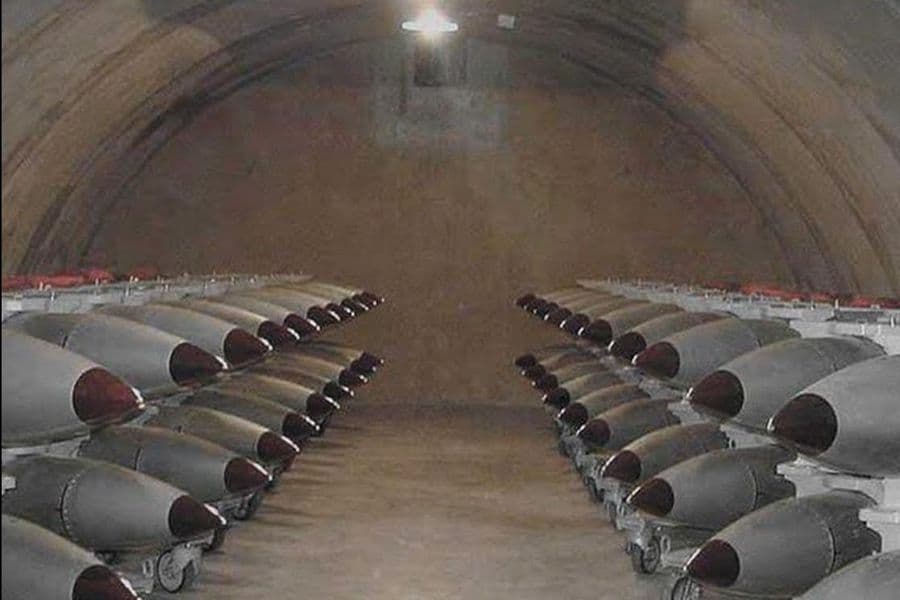
The Commander of the U.S. Strategic Command, ADM Rich Correll, recently described the strategic environment as more complex than at any point in his lifetime. He explained that future military capabilities must account for five major threat vectors: cyber, counter-space, the contested electromagnetic spectrum, novel missile systems and the supply chain. As the Admiral well knows, being the military commander of our nuclear deterrent, these vectors come at us within the context of an overarching nuclear weapons environment that gathers less attention than it should and is more dangerous than is appreciated.
The current legacy U.S. nuclear deterrent is being modernized as it is 40-70 years old. However, important assessments have warned that while critically necessary the program of record is not adequate to fully protect our future security. The current strategic balance could become even more dangerous than it is today unless, for example, the conclusions of the 2023 Strategic Posture Commission are taken seriously. The SPC confirmed that nuclear weapons play a key and central role in the current geostrategic environment in which we find ourselves. But the Commission also concluded the 2010 and 2022 nuclear posture reviews assumed a relative benign future environment, that the U.S. and its allies could significantly lessen the role of nuclear deterrence in our security, highlight cooperative work with Russia and China, and work to prevent the further spread of nuclear weapons, particularly to terror groups.
The U.S. Nuclear Deterrent Umbrella
The current strategic balance could become even more dangerous than it is today unless, for example, the conclusions of the 2023 Strategic Posture...
6d agoRead it on RealClearDefenseIs Mission Command Dead?
How Transparent is the Modern Battlefield?...
1w agoRead it on Warfare Mastery InstituteFour Principles to Lift the Academic Fog Around War
When evaluating how technological changes affect the conduct of warfare, caution is essential....
1w agoRead it on The National InterestChecklist for Modern Conflict Readiness
Modern security environments are characterized by rapidly evolving threats that can shift from covert pressure to open conflict with minimal...
1w agoRead it on RealClearDefense
Washington Cannot Ignore Afghanistan’s Weapons Legacy
By Saima Afzal • RealClearDefense
Moral Injury at One O'Clock
By Jeff Hood • RealClearDefense
The Mirror-Life Trap: When Deterrence Must Prevent Invention
By Lawrence J. Kaiser • RealClearDefense
The Pentagon’s AI Agents Could Complete the Mission and Still Leak Secrets
By Burak Oktenli • RealClearDefense
A Passage to the Middle East: India as a Mediator and Security Partner
By Irina Tsukerman • RealClearDefense

U.S. Intel Confirms This Is China’s Secret Spaceplane
By Joseph Trevithick, The WarZone
Navy Sees 10-year High For Class A Aviation, Afloat Mishaps
By H. Mongilio, USNI News
U.S. Navy To Install AI Vessel Detection System on Five Destroyers
By The Defense Post
U.S. Navy’s CHAOS Program
By Dylan Malyasov, Defence Blog
Two U.S. Navy Carriers Ready to Operate New MQ-25A Tankers
By Global Defense News