
Military Technology
RealClear Context
Click below to continue reading this story, discover more Military Technology stories from over 25 years of RealClear archives, or follow this topic to stay in the know.
America’s AI Ambitions Depend on Taiwan
Washington Cannot Achieve Tech Dominance on Its Own...
1h agoRead it on Foreign AffairsPentagon Is Beginning To Follow Ukraine Into Wider Use of Ground Robots
But many U.S. UGVs are more complicated than the attritable ones that Kyiv is buying....
1h agoRead it on Defense OnePrototype X-BAT VTOL ‘Fighter’ Drone Unveiled
We are finally getting our first look at Shield AI's extremely ambitious tail-sitting X-BAT multi-role combat drone....
1h agoRead it on The WarZoneRaytheon Joins DARPA PICASSO Program for Photonic Circuits
Raytheon won a DARPA phase one contract under the PICASSO program to develop photonic circuits that process signals entirely with light....
1h agoRead it on Defence Blog
The Pentagon’s Real Modernization Problem Is Time, Not Technology
In the halls of the Pentagon and across testing ranges, the national security conversation centers on technological superiority. High-profile modernization initiatives showcase autonomous systems, hypersonic propulsion, and artificial intelligence models designed to outpace adversaries. Yet government audit data and procurement metrics point to a different conclusion. The military’s primary vulnerability is not a shortage of advanced technology. It is a procurement architecture that moves too slowly to field that technology at scale.
The core issue is temporal. The commercial sector runs on rapid software updates, continuous delivery pipelines, and iterative hardware manufacturing. Defense acquisition remains tethered to a rigid, industrial-era process. Major programs now routinely take more than a decade to deliver an initial capability. By the time complex hardware and software reach frontline service members, the state of the art has moved on, and newly fielded equipment becomes a candidate for expensive retrofits and redesigns.
The Pentagon’s Real Modernization Problem Is Time, Not Technology
The military’s primary vulnerability is not a shortage of advanced technology. It is a procurement architecture that moves too slowly to field that...
1d agoRead it on RealClearDefenseU.S. Weapons Most At Risk In The Looming Rare Earths Supply Crisis
Rare earths are critical in thousands of weapon systems, many of which are essential to national security, and China is the source for most of them....
1d agoRead it on The WarZoneThe Assay Problem: Battlefield Data After the 2026 Iran War
Battlefield data shared between allies for model training needs to be graded for quality, just as oil is. The war in Ukraine is transforming...
2d agoRead it on The Strategist (ASPI)The Assay Problem: Battlefield Data After the 2026 Iran War
Battlefield data shared between allies for model training needs to be graded for quality, just as oil is. The war in Ukraine is transforming...
2d agoRead it on RealClearDefense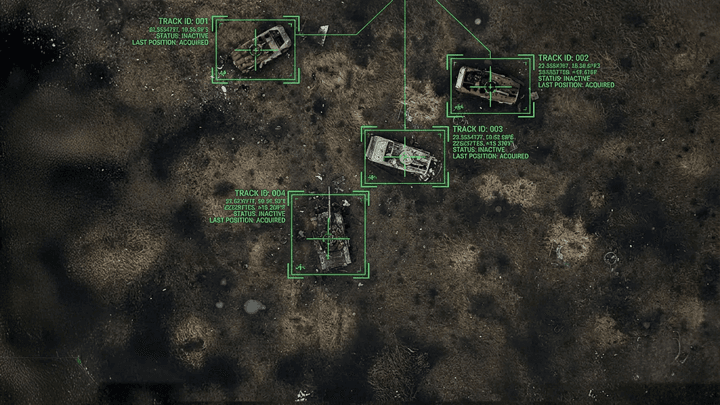
The Assay Problem: Battlefield Data After the 2026 Iran War
Battlefield data shared between allies for model training needs to be graded for quality, just as oil is.
The war in Ukraine is transforming battlefield data into a shareable asset. In August, Britain became the first foreign country to get access to Ukraine’s Avengers AI Labs, a platform collecting data from thousands of cameras and infrared sensors. The British government has described the platform as a gold mine.

ICE Is Not a Four-Letter Word
By Meda Parameswara Reddy • RealClearDefense
The U.S. Can Draw Down in the Middle East Without Going Blind
By Cudi Zerey • RealClearDefense
America Needs a Joseph Directive
By Jeff Ballabon • RealClearDefense
Partnering Decides Whether Flexible Military Construction Can Work
By Matt Russell • RealClearDefense
Eight Months of Epic Fury and Still No Internal Alternative
By Stephen D. Cook • RealClearDefense

GE Aerospace to Supply Engines for Two US Navy Flight III Destroyers
By Defense Post
U.S. Air Force Asks Industry for New Cruise Missile for Ukraine
By Michael Peck, DNews
First Flight II San Antonio-class Amphib Completes Builder’s Trials
By Mongilio, USNI N.
LGM-35 Sentinel ICBM on Track for 2030
By Kris Osborn, Warrior Maven
On American Destroyers, Avoid a Self-Inflicted Wound in Spain
By Defense News