
U.S.–French Naval Partnership Is Anchored Deep
Last updated 04:58 PM EDT • Read time: 5m
France is one of our oldest and most enduring Allies. Our naval alliance, in particular, emerged from the decisive victory of Admiral Comte de Grasse over the British fleet in 1781, helping the United States gain its independence almost 240 years ago. Since that monumental victory, the French and U.S. navies have built upon that tradition of cooperation. As such, I am excited to be back in Paris in order to conduct key leader engagement and present my perspective on the U.S.–French Strategic Alliance at The First Alliance Foundation’s Colloquium hosted at the Musee des l’Armee-Invalides. This event will examine the history and continuity of the Franco–American strategic and military alliance, highlighting our enduring relationship today, and discussing the challenges and opportunities that await our alliance in the future.
The U.S.–French alliance is of particular importance to me. Both of my grandfather’s fought in the trenches of World War I—one was awarded the Croix de Guerre avec Palme for action at Courcelette and the other earned battlefield promotions from private to captain—as well as the King George V Military Cross. These men—like so many others—fought with their comrades through many harrowing experiences here in France, enabling an Allied victory. My father landed at Normandy on D+44 and proceeded to fight with his unit across France—in places like Crepon, Caen, Vauchelles, Chateau de Mondeville, Verrieres, and Falaise among others.
In a sense, I was born into the NATO alliance—quite literally being born at Mönchengladbach in NATO in the Northern Army headquarters of Rheindahlen, Germany, where my father was stationed in the 1960s. Later in life as a Navy lieutenant and Olmsted Scholar, I studied at the University of Strasbourg, France, in the heart of the European community. During that time I developed great respect for the French culture and way of life. There is a rich sense of pride in the French heritage and loyalty to country that Americans certainly can respect and relate to.
Yet my visit to Paris serves also as a reminder of how fundamental our combined naval strength is to achieving maritime security, which is critical for regional and economic stability in Europe and throughout a globally connected world. The complexity of the challenges and adversaries that we face together—including Russia’s increasingly aggressive behavior in European water, the civil war in Syria, illicit maritime activity in Africa, and terrorism—requires us to strengthen interoperability with each other, and amongst our NATO allies and partners.
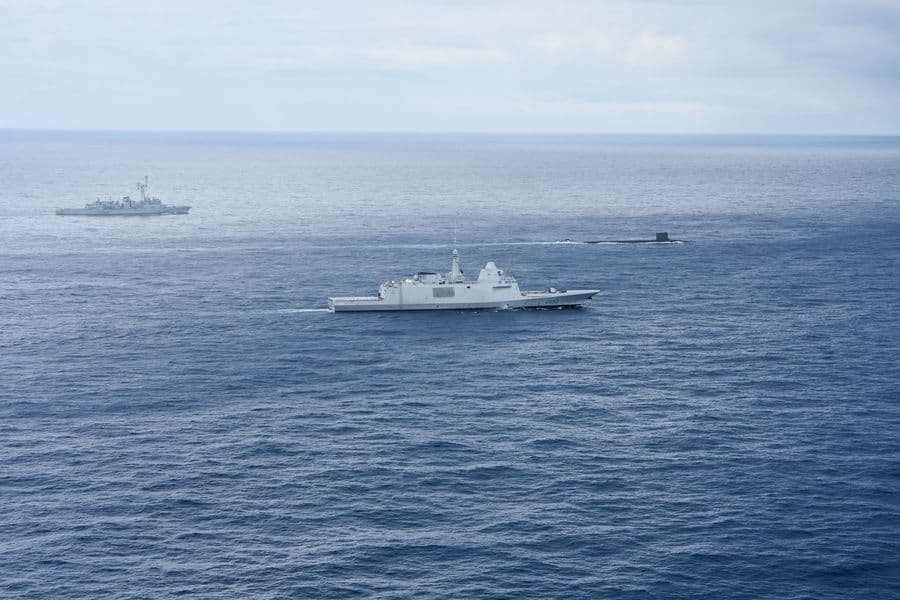
I have witnessed firsthand impressive displays of interoperability in action. In March, the French frigates Bretagne and Aquitaine participated in the missile defense exercise, Formidable Shield 19. During this exercise, Bretagne successfully fired an Aster-15 air defense missile against a supersonic target. Both Bretagne and Aquitaine sailed alongside warships and staffs from 12 countries, demonstrating interoperability and enhancing NATO’s capability to provide Europe an umbrella of protection against ballistic missiles. The French have stalwartly contributed to global efforts against terrorism, as well as contributing to NATO operations in Kosovo, Afghanistan, Iraq, and Africa. France was among the first countries to offer condolences and support following 11 September 2001, and when terrorism struck Paris on 13 November 2015, we were among the first to respond, as well.
In 2016, the Charles de Gaulle Battle Group transited alongside the USS Dwight D. Eisenhower Carrier Strike Group and conducted joint flight operations in support of Operation Inherent Resolve from the Mediterranean Sea. The French air wing flew more than 384 combat missions as part of the operations aimed at taking out ISIS. From the flight deck of the French aircraft carrier, I watched countless fighters take off with air-to-surface weapons loaded and return without them. The Charles de Gaulle Battle Group also integrated American guided-missile destroyers USS Ross (DDG-71) and Mason (DDG-87) into its air defense operations as part of their collective defense.
In April 2018, France, the United Kingdom, and the United States joined forces to respond to the Assad’s regime use of chemical weapons against his own people. Our combined forces integrated throughout the planning and execution of the operation to deter the future use of chemical weapons. The French Air Force launched Rafale B fighters and Mirage 2000â?5F fighters against Syrian chemical weapons facilities. The French frigate Languedoc fired three Missile De CroisieÌ?re Naval land attack missiles, while U.S. surface ships, submarines, and aircraft, and Royal Air Force aircraft also fired missiles and conducted operations in support of the mission. This seamless display of international operations speaks to the strength of our partnership.
While this is a truly remarkable display of interoperability, it is understanding given our long, storied alliance. And it is a gift from France that we proudly display in New York harbor, which serves as a reminder to all of who we are as a nation: the State of Liberty. We have fought together, mourned together, and celebrated freedom together. For this reason, as I plan to share during the events this week, our commitment to each other’s defense, to deter aggression, and preserve peace through our highly professional, well-trained, and interoperable navies is as vibrant and relevant today as it was 240 years ago.
Adm. James G. Foggo III, commander, U.S. Naval Forces Europe-Africa delivers remarks during a United States Navy Memorial and Frogmen Association of Utah Beach dedication ceremony in Normandy, France, June 6, U.S. Navy (Jonathan Nelson)
Admiral Foggo is Commander, U.S. Naval Forces Europe and Africa/Commander, NATO Allied Joint Force Command, Naples.
This article appeared originally at the U.S. Naval Institute Blog.

The Services Do Not Need a Four-Star Autonomous Warfare Command
By Steven Wills • RealClearDefense
Honor Them While There Is Still Time
By Jeffrey Rosales • RealClearDefense
From Siberia to Fairford: How Operation Spider’s Web Has Changed the Rules of Airpower
By Frank A. Rose • RealClearDefense
Faster Simulations, Better Defense Decisions
By Rut Lineswala • RealClearDefense
Will HASC Have an Oversight Subcommittee in the Next Congress?
By Christopher J. Bright • RealClearDefense

Hegseth Barred Trans Troops. Military Boards Are Rejecting Those Orders.
By NYT
Closing the Sea: Lessons from Ancient Mediterranean Blockades
By DeCasien, CIMSECFrom Siberia to Fairford: How Operation Spider’s Web Has Changed the Rules of Airpower
By Frank A. Rose • RealClearDefenseFaster Simulations, Better Defense Decisions
By Rut Lineswala • RealClearDefense
Bombers Could Have a Major Air-to-Air Combat Role
By Joseph Trevithick, The WarZone