
Pentagon
RealClear Context
Click below to continue reading this story, discover more Pentagon stories from over 25 years of RealClear archives, or follow this topic to stay in the know.
AI and the Future of Warfare: Can the U.S. Military Keep Up?
From autonomous weapons and drone swarms to AI battlefield decisions, America’s armed forces face a technological revolution that could leave human...
1h agoRead it on The American SpectatorBridging Network Gaps in the Indo-Pacific
Lags in communication could undermine even the most advanced technology available...
1d agoRead it on Defense OneAs Private Investment Pours Into Defense, the Clock Is Ticking
We are in uncharted territory in terms of private capital’s influence on the defense economy. At the same time, federal lawmakers struggle to advance...
2d agoRead it on RealClearDefenseAutonomous Warfare and the Risks of Affordable Attrition
With Secretary of War Pete Hegseth’s recent announcement of a new combatant command focused on autonomous warfare, it is worth expanding the scope of...
4d agoRead it on Providence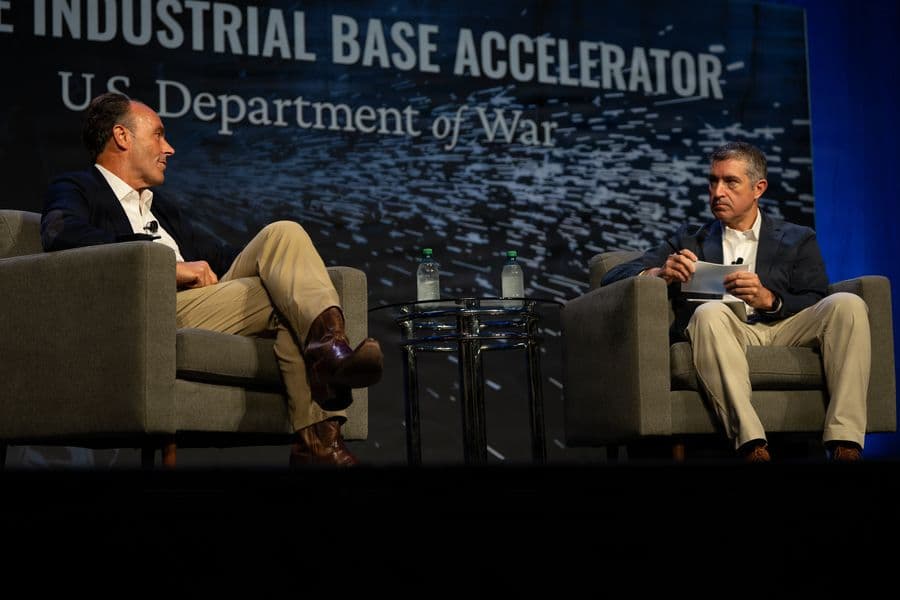
As Private Investment Pours Into Defense, the Clock Is Ticking
We are in uncharted territory in terms of private capital’s influence on the defense economy. At the same time, federal lawmakers struggle to advance 2027 legislation most likely to support autonomy, AI, c-UAS, industrial base expansion, critical minerals, and other sectors that are key markets for those same companies competing for private financing. The nation requires vision, clarity of opportunity and risk, problem definition, and deliberately investigated solutions – in that order – followed by on-time budgets.
As the interests of warfighters, taxpayers, industry, and investors converge on the same goal - a dominant, cost-effective, adaptable, resilient American military – there is understandable widespread enthusiasm to leverage private capital interest in defense to accelerate the delivery of innovative technologies at lower cost, shift the financial risk for the development of such technologies from taxpayers to investors, and increase overall competition in the defense market. Now is also the time to anticipate potential fracture points and mitigate them through intelligent design.
Superintelligence Exposes a Gap in the Law of Delegated Authority
Federal policy on “Super Intelligence” is moving rapidly toward implementation....
5d agoRead it on RealClearDefenseMilitary Base Freezer Malfunctions a Suspected Cyberattack
The Pentagon is treating the spate of mysterious freezer malfunctions that spoiled food at military bases across the United States in August as a...
5d agoRead it on ReutersStrategic Capabilities Office Expanding Scope in 2027
The Defense Department office dedicated to delivering wide-ranging battlefield priorities within a five-year timeline is planning an uptick in new...
5d agoRead it on National Defense MagazineMission Partner Environment Breaks Silos for Tactical Networks, C2
"We've spent the past 50 years building siloed networks, siloed applications and siloed environments to collaborate internally with our own data. We...
5d agoRead it on Military Times
ICE Is Not a Four-Letter Word
By Meda Parameswara Reddy • RealClearDefense
The U.S. Can Draw Down in the Middle East Without Going Blind
By Cudi Zerey • RealClearDefense
America Needs a Joseph Directive
By Jeff Ballabon • RealClearDefense
Partnering Decides Whether Flexible Military Construction Can Work
By Matt Russell • RealClearDefense
Eight Months of Epic Fury and Still No Internal Alternative
By Stephen D. Cook • RealClearDefense

GE Aerospace to Supply Engines for Two US Navy Flight III Destroyers
By Defense Post
U.S. Air Force Asks Industry for New Cruise Missile for Ukraine
By Michael Peck, DNews
First Flight II San Antonio-class Amphib Completes Builder’s Trials
By Mongilio, USNI N.
LGM-35 Sentinel ICBM on Track for 2030
By Kris Osborn, Warrior Maven
On American Destroyers, Avoid a Self-Inflicted Wound in Spain
By Defense News