
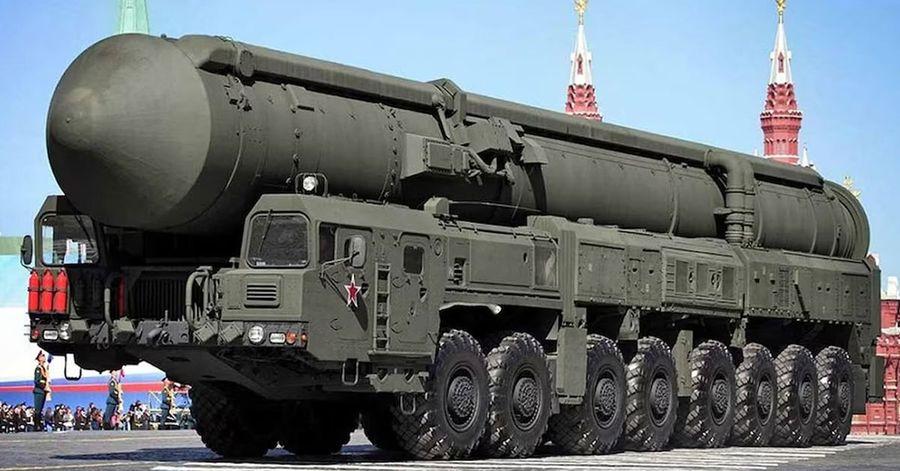
Recent Evidence of Russian Arms Control Violations
Published Sept. 12, 2025 • Read time: 24m
In the last few years, there has been an upsurge of reports indicating new Russian arms control violations. This is important because President Putin has just stated, “The aim [of the summit with President Trump] is to establish long-term conditions for peace not only between our countries but also in Europe and indeed globally – especially if we proceed to subsequent stages involving agreements on strategic offensive arms control.”[i] Noted journalist Michael Gordon observed, “Russia is using the lure of arms control to improve the atmosphere for the Alaska summit with President Trump—and set the stage for potential nuclear talks that might follow.”[ii] In reality, Putin has no interest in peace or arms control. What President Putin wants is the status quo – no new sanctions, continuation of the Ukraine war to achieve a Russian victory and American acceptance of a flawed, violated and unverifiable New START Treaty.
The Trump-Putin Alaska Summit did not result in a Ukraine war ceasefire.[iii] Reportedly, President Putin made his maximalist demands which included “…that Ukraine cede occupied territory, abandon NATO membership, demilitarize, issue a resolution that recognizes the ‘root causes’ of the war, and change the regime in Kyiv.”[iv] The United Kingdom’s Ministry of Defense estimates that the territorial gains in Ukraine that Putin seeks would cost Russia another two million casualties.[v] Putin does not care as long as he stays is power and expands Russia’s
borders. Significantly, there was no mention of strategic arms control in the joint press conference at the end of the Summit.[vi]
Putin’s attitude toward nuclear arms control reflects his perception that nuclear weapons are the core of Russia’s national power.[vii] His nuclear buildup has been Russia’s highest military priority.[viii] In 2024, Putin again lowered Russia’s nuclear weapons use threshold.[ix] Putin and his subordinates make frequent nuclear threats.[x] Indeed, since 2010, except for a few months of negotiations with President Trump in 2020, Putin has refused to negotiate new strategic nuclear arms control agreements and constraints on non-strategic or tactical nuclear weapons. (The 2020 Trump negotiation was well conducted but Putin blocked progress.) Putin is now seeking to exploit the U.S. desire for arms control.[xi]
In 2022, Russia violated the New START Treaty when it refused to allow Treaty-required on-site inspections and in 2023 Putin illegally “suspended” the entire Treaty.[xii] The bipartisan Congressional Strategic Posture Commission pointed out that, “Over the past 20 years, Russia has either violated or has failed to comply with nearly every major arms control treaty or agreement to which the United States is or was a party.”[xiii]
If he negotiates arms control now, Putin will attempt to avoid any effective limits and impose unilateral restrictions upon the United States (killing Golden Dome and the Trump nuclear modernization program.) Putin’s objective is not peace with Ukraine but military conquest. Just before the Alaska summit, “Trump has threatened ‘very severe sanctions’ if Putin does not agree to peace with Ukraine, but he has not detailed what that could mean.”[xiv] Since Putin has no intention of agreeing to a prompt peace with Ukraine, he is trying to change the subject.
New Russian Violations of the New START Treaty
In November 2024, Ukraine announced that Russia had attacked it with an ICBM which
Ukrainian press reports said was a RS-26 Rubezh.[xv] The Biden Department of Defense confirmed the Ukrainian report. It stated “…that Russia did launch an experimental intermediate range ballistic missile. This IRBM was based on Russia’s RS-26 Rubezh intercontinental ballistic missile model.”[xvi] The RS-26 Rubezh, or any other missile that uses the first stage of an ICBM, is accountable as an ICBM under the New START Treaty. A 2015 report by Air Force Intelligence referred to the RS-26 Rubezh as the SS-X-28 and said it was MIRVed, with a range of 5,500-km+, and was based on the Russian SS-27 Mod 2 ICBM (the RS-24 Yars).[xvii] Russia had previously declared the Rubezh to be an ICBM, stating it was tested to ICBM range.[xviii] In the attack on Ukraine, the missile carried six warheads.[xix]
What the Pentagon did not say was that changing the missile’s name (they now call it the Oreshnik) or placing conventional warheads on it does not remove it from New START Treaty accountability. Deployment of the Oreshnik results in a number of new violations of the New START Treaty.[xx] This includes the required notifications, the lack of a demonstration of the missile in which the missile and its canister are photographed and measured, pushing Russia further above the New START Treaty limit on deployed warheads.
The RS-24 Yars (the SS-27 Mod 2) itself was a violation of the original START Treaty because it involved the illegal MIRVing of the single warhead missile the United States calls the SS-27 Mod 1 and the Russians call the Topol-M Variant 2.[xxi] This missile was misclassified by Russia as a variant of an existing type of ICBM (Topol M) because it was in actuality a new missile type.[xxii] What the United States faces is literally new Russian arms control violations built atop previous ones.
In May 2025, Russian state-run TASS reported that, “The Oreshnik missile complex is set to be deployed in Belarus by the end of this year, with the designated deployment sites already determined, according to Alexander Volfovich, the Secretary of the [Belarus] Security Council.”[xxiii] In August 2025, Belarusian President Alexander Lukashenko, speaking about the Zapad-2025 military exercise with Russia, threatened the use of nuclear weapons and stated that, “The Oreshnik missile system which Russia promised to deploy in Belarus before the end of the year is capable of carrying nuclear warheads, too.”[xxiv] Deploying ICBMs outside of one’s national territory is a violation of the New START Treaty.
In June 2025, Putin stated that serial production of the Oreshnik is underway.[xxv] In August 2025, he announced that, “We have produced the first serial Oreshnik system, the first serial missile – and it has already been delivered to the troops.”[xxvi] The delivery of the Oreshnik missile to the Strategic Missile Forces troops has triggered a number of new arms control violations. Putin also indicated that deployment activities in Belarus were underway and would be completed by the end of the year. This would be an additional New START Treaty violation. Hence, it appears clear that Russia is moving further above the New START Treaty limits.
Russian Violation of the New START Treaty Limits
While the Biden State Department acknowledged Russian violations of the New START Treaty in a 2023 report, and indicated that it was unable to certify Russian compliance with the New START Treaty limits it amazingly stated that, “The United States assesses that the Russian Federation likely did not exceed the New START Treaty’s deployed warhead limit in 2023.”[xxvii] This assessment was highly political.
In late July 2025, Dmitri Medvedev, Deputy Chairman of the Russian National Security Council Staff and former President of Russia, made one of his commonplace nuclear threats, this time mentioning Russia’s “dead hand” nuclear missile launch system.[xxviii] President Trump responded with the announcement that two nuclear submarines were being moved closer to Russia “just in case” Russia was serious about it.[xxix] Apparently, because of the Medvedev statement, state-run Russia Beyond the Headlines republished an article (first published in December 2021) by Colonel (ret.) Nikolai Litovkin on the dead hand system. He wrote, “Russian military forces have 700 nuclear weapon ‘carriers’ - strategic bombers, nuclear submarines and intercontinental ballistic missile silos.”[xxx] The reprinted version quickly vanished from the Russia Beyond the Headlines website. It had inadvertently revealed a major Russian New START Treaty violation. The number of Russian delivery vehicles was almost 200 more than Russia has ever reported under the New START Treaty.[xxxi] The Russian data for February 2022 listed only 526 START accountable delivery vehicles.[xxxii] This would require Russia having a covert force of mobile ICBMs and giving the Tu-26M3 Backfire bomber prohibited intercontinental capabilities. Unfortunately, there is substantial evidence this has happened.
Colonel General Sergei Karakayev, Commander of the Strategic Missile Forces, has repeatedly stated that the Strategic Rocket Forces have 400 ICBMs which is about one hundred higher than what is possible under the declared number of Russian strategic nuclear delivery vehicles.[xxxiii] In December 2019, Colonel General Karakayev implied that Russia has over 3,300 strategic nuclear warheads when he said that Russian strategic nuclear warheads had been reduced by two-thirds from Cold War levels.[xxxiv] (The peak Soviet Cold War level was about 10,000 deployed strategic nuclear warheads.)[xxxv] To have over 3,300 warheads Russia would have to have been in violation of the 1,550 warhead limit mandated in the New START Treaty.
In order to have 700 deployed strategic nuclear delivery vehicles in December 2021, Russia would have needed about 100 non-declared mobile ICBMs and have had to upgrade about 70 Backfire bombers to intercontinental strike range with nuclear long-range cruise missiles. There are reports in Russian state media that this has been done.
Russian Deployment of Long-range Nuclear ALCMs on Non-Heavy Bombers
The Russian Backfire bomber, which was not an accountable “heavy bomber” under the New START Treaty, is very important. It has been the subject to a very substantial upgrade (the Tu-22M3M),[xxxvi] and has been armed with new near hypersonic Kh-32 1,000-km range cruise missiles, according to state-run TASS.[xxxvii] The Kh-32 is described in the 2018 Nuclear Posture Review report as being nuclear-capable.[xxxviii] State-run Sputnik News confirms this, saying “…the Kh-32 can carry either conventional or nuclear munitions.”[xxxix] State-run Russia Beyond the Headlines also says its range is 1,000-km and it can be armed “…with a nuclear or conventional 500-kilogram (1,102 lb) warhead and hit targets within a few yards.”[xl]
Rossiyskaya Gazeta, the official newspaper of the Russian government, reports the new version of the Backfire (Tu-22M3M) can carry the nuclear-capable Kh-101 and the Kh-555, both long-range air-launched cruise missiles.[xli] There are other reports associating the Backfire bomber with the Kh-101.[xlii] The Kh-555 was long reported to be the conventional modification of the Soviet Kh-55 (AS-15) long-range nuclear air-launched cruise missile. However, Sputnik News says it is dual capable: “Second, in addition to the nuclear option, the Kh-555 can carry up to 410 kg of conventional munitions.”[xliii] It also noted that it was five times as accurate as the Kh-55.
In December 2015, Putin, when discussing the Kh-101 strikes against Syria with his Defense Minister, declared the Kh-101 “…can be equipped either with conventional or special nuclear warheads.”[xliv] When briefing on these Syria missile strikes, Russian Defense Ministry spokesman Major General Igor Konashenkov also said that the Kh-101 could carry conventional or nuclear warheads.[xlv] In August 2017, again speaking about Kh-101 strikes against Syria, he repeated his statement that the Kh-101 carries both conventional and nuclear warheads.[xlvi] In 2017, Putin stated that the Kh-101 has “…a range of 4,500 [km], which is quite good.”[xlvii] Russian air attacks against Syria with the Kh-101 involved their flying well beyond the 600-km New START Treaty threshold for a nuclear ALCM.[xlviii]
If Russia puts long-range (i.e., 600-km or greater range) nuclear air-launched cruise missiles (ALCMs) on non-heavy bombers (fighters, light bombers or medium bombers), it turns them into Treaty-accountable heavy bombers under the New START Treaty and de facto puts Russia in violation of the numerical limits of the New START Treaty on deployed warheads and deployed delivery vehicles. This is one of the reasons the United States does not have nuclear ALCMs on its fighter aircraft.
In 2012, Colonel General Alexander Zelin, then-Commander of the Russian Air Force, stated that the Russian Su-34 long-range strike fighter would be given “…long-range missiles…Such work is under way and I think that it is the platform that can solve the problem of increasing nuclear deterrence forces within the Air Force strategic aviation.”[xlix] In 2022, then-Russian Deputy Prime Minister Yuri Borisov stated in an interview with state-run RT:
Since you mentioned the seaborne Kalibr cruise missile, the fact is that almost all Russian ships and Project 636.6 diesel submarines carry Kalibr missiles. Deployed in the Black Sea, they can strike military targets anywhere in Ukraine. The same is true for other types of missiles, including the Kh-101 airborne missile carried by the Sukhoi Su-30 and Su-35 fighter-bombers. We have a wide range of air-to-surface munitions with a different effective range and power to hit different types of targets. Because of that, Russia dominates the sky in Ukraine. Russia’s Air Force ensures this with its efficient air-launched weapons.[l]
The implication of this is that all Su-30 and Su-35 long-range fighters are undeclared heavy bombers under the New START Treaty, pushing Russia well above the deployed warhead and deployed delivery vehicle limits. Since the number of Russian fighters is much larger than the number of Russian bombers, the impact on the scope of Russian violations of the numerical limits of the New START Treaty is significantly greater. Afterward, RT republished the article removing the reference to the Kh-101.[li]
Covert Russian Strategic Nuclear Warhead Upload
There is substantial uncertainty concerning the number of Russian deployed strategic nuclear warheads with almost all of it being on the upside. The United States has not conducted a warhead counting on-site inspection in Russia since March 2020. In January 2025, three days before the change of Administration, the State Department, apparently, in anticipation of the Trump Administration, issued a report that grudgingly acknowledged that Russia “…may have exceeded the deployed warhead limit by a small number during portions of 2024….”[lii] In addition, it said that, “The United States assesses with high confidence that Russia did not engage in any large-scale activity above the Treaty limits in 2024.…”[liii] Even with the entire New START Treaty verification regime, the assertion of “high confidence” is not supportable. Indeed, in 2010, then-Senator Christopher Bond (R-MO) stated that, “As the vice chairman of this committee [the Senate Select Committee on Intelligence], I have reviewed the key intelligence on our ability to monitor this treaty [New START] and heard from our intelligence professionals. There is no doubt in my mind that the United States cannot reliably verify the treaty’s 1,550 limit on deployed warheads.”[liv] The New START Treaty verification regime, such as it is, is highly dependent upon on-site inspections. Indeed, in 2020, former Under Secretary of State and chief New START Treaty negotiator Rose Gottemoeller said “…we discarded the counting rules in favor of confirming declared warheads on the front of missiles through reciprocal inspections; in fact, we did not need telemetry measures to confirm compliance with the warhead limits in the new treaty.”[lv] Given the absence of on-site inspections since March 2020, Russia has had more than enough time to have uploaded its entire strategic nuclear force.
There is increasing evidence that Russia has uploaded its strategic nuclear forces above the New START Treaty limit on deployed warheads, even without taking into account the long-range nuclear cruise missiles on non-heavy bombers. A November 2024 Defense Intelligence Agency (DIA) report stated that Russia “…maintains about 1,550 deployed strategic nuclear warheads on ICBMs and submarine-launched ballistic missiles (SLBMs), as well as a force of heavy bombers which are capable of carrying long-range air-launched cruise missiles (ALCMs).”[lvi] Since 1,550 is the New START limit on all accountable deployed weapons, the DIA’s assessment indicates Russia was violating the Treaty limit. In early 2025, TASS revealed that Russia had operational SS-19 ICBMs,[lvii] which would put Russia further above the Treaty limit. In May 2025, the DIA issued a missile threat assessment related to the Golden Dome missile defense system. It indicated that Russia has 192 SLBM launchers or 32 more than in the November 2024 assessment.[lviii] To avoid a substantial increase in deployed nuclear warheads (up to about another 260) above the New START Treaty limit of 1,550 deployed warheads, Russia would have had to download about half of its strategic nuclear missiles in Russian winter conditions. This is extraordinarily unlikely. Thus, Russia appears to be moving further above the New START Treaty limit.
The Presidential Nuclear Initiative
The 1991-1992 Presidential Nuclear Initiatives (PNIs) which eliminated a very high percentage of U.S. non-strategic (or tactical) nuclear weapons has been consistently violated by the Russian Federation.[lix] Much of the Russian advantage in non-strategic nuclear warheads is a direct result of the Presidential Nuclear Initiatives. The United States has complied with its PNI commitments while Russia has not. The scope of this advantage is illustrated in the following chart[lx]:
NATO
The PNIs pledged that tactical nuclear weapons would not be routinely deployed on warships.
In December 2024, Russian Captain 1st Rank (ret.) Stepan Yakymiak, stated concerning the Russian cruiser Moskova sunk by Ukraine, that, “I think that of the sixteen [missiles on the cruiser], at least two, maybe up to four [were nuclear]. That’s my estimate. I haven’t seen any classified documents on this matter, but going by the practice and experience of combat training and going on combat duty – and this is a ‘special military operation’ – a ship has to be fully combat-ready for immediate and subsequent tasks, and nuclear war and the ability to repel attacks from NATO are an element of that.”[lxi] This provides substantial confirmation of what has been previously reported. It is important because it could allow surprise tactical nuclear strikes.[lxii]
Conclusion
The idea of negotiating a new strategic arms control treaty when Russia is violating the existing one is ridiculous. The United States has no idea of how many strategic nuclear warheads Russia has currently deployed. At best, the United State now has no more than moderate confidence on the maximum possible number. It could be thousands above the New START Treaty limit.[lxiii] There have been no on-site inspections for five years and the United States has not monitored mobile ICBM production in Russia since 2009 because it was excluded by the New
START Treaty. Additionally, Russia has consistently refused to negotiate limitations on non-strategic or tactical nuclear weapons.
In the new multipolar nuclear threat environment, it would be foolish to negotiate with Russia without the involvement of China. Even the Biden Administration’s estimates of the growth of Chinese nuclear weapons, almost certainly very low, credited China with 1,500 hundred operational nuclear warheads by 2035.[lxiv] China has consistently refused to negotiate about nuclear arms control. This was reiterated in late August 2025.[lxv]
In its last months in office, the Biden Administration recognized that, “Russia, the PRC and North Korea are all expanding and diversifying their nuclear arsenals at a breakneck pace—showing little or no interest in arms control.”[lxvi] However, there was an enormous disconnect between its perceptions of the nuclear threat and its ideological devotion to illusory arms control. The Biden Administration’s nuclear targeting guidance report stated, “Arms control, risk reduction, and nuclear nonproliferation play indispensable roles [in nuclear deterrence] as well.”[lxvii] The Congressional Strategic Posture Commission accurately concluded that “…given Russia’s history of noncompliance and illegal treaty suspensions, and China’s continued intransigence on arms control dialogue, the United States cannot develop its strategic posture based on the assumption that arms control agreements are imminent or will.
Mark B. Schneider is a Senior Analyst with the National Institute for Public Policy. Dr. Schneider previously served in DoD as Principal Director for Forces Policy, Principal Director for Strategic Defense, Space and Verification Policy, Director for Strategic Arms Control Policy and Representative of the Secretary of Defense to the Nuclear Arms Control Implementation Commission. He also served in the senior Foreign Service as a Member of the State Department Policy Planning Staff.
Notes:
[i] “Meeting on preparations for the Russian-American summit,” Kremlin.ru, August 14, 2025, available at http://en.kremlin.ru/events/president/news/77775.
[ii] Michael R. Gordon, “Putin Dangles Prospect of Renewed Nuclear Talks Ahead of Trump Summit,” The Wall Street Journal, August 16, 2025, available https://www.wsj.com/livecoverage/trump-putin-alaska-summit/card/iFxP5vKOEpwu6ljWDidY?gaa_at=eafs&gaa_n=ASWzDAgWw6QAuwGmSsXhFGibYrXKpoZICrzH1n7K6HhNVKxKFxAGnjN0O5eK&gaa_ts=68aeecc8&gaa_sig=yNqcD7lXKJCuMQftgOGHDkqXnfUWLt9ggzSQ0U08liET5Rc-e199dMI1smIKmc9PKwVH-wKFTtY4ffhgfXf9RA%3D%3D.
[iii] Olena Borodyna, “Alaska summit: no deal agreed at Trump-Putin meeting but land swap for ceasefire still on the table,” The Conversationalist.com, August 16, 2025, available at https://theconversation.com/alaska-summit-no-deal-agreed-at-trump-putin-meeting-but-land-swap-for-ceasefire-still-on-the-table-263208.
[iv] Michael Katz, “Finnerty: Ukraine, Russia Have 5 Demands Each to End War,” Newsmax, August 15, 2025, available at https://www.newsmax.com/newsmax-tv/rob-finnerty-russia-ukraine/2025/08/15/id/1222697/.
[v] United Kingdom Ministry of Defense, “Intelligence Update,” August 15, 2025, available at https://x.com/DefenceHQ/status/1956348169203159497/photo/1.
[vi] “Joint news conference by the President of Russia and the President of the United States,” Kremlin.ru, August 16, 2025, available at http://en.kremlin.ru/events/president/news/77793.
[vii] Mark B. Schneider, “Russian Nuclear Weapons Policy,” Real Clear Defense, April 28, 2017, available at https://www.realcleardefense.com/articles/2017/04/28/russian_nuclear_weapons_policy_111261.html#_edn3.
[viii] William Schneider, “How Russian Coercion Diminished Deterrence and Shifted the Nuclear Balance,” Hudson Institute, June 17, 2025, available at https://www.hudson.org/arms-control-nonproliferation/how-russian-coercion-diminished-deterrence-shifted-nuclear-balance-william-schneider.: Pavel Felgenhauer, “Kremlin Learning to Navigate Washington’s New Unpredictability,” Eurasia Daily Monitor Vol. 14. No. 3, January 19, 2017, available at https://jamestown.org/program/kremlin-learning-navigate-washingtons-new-unpredictability/.
[ix] “Putin Lowers Threshold for Using Nuclear Weapons in Updated Doctrine, Sparking Escalation Concerns, “ The Moscow Times, November. 19, 2024, available at https://www.themoscowtimes.com/2024/11/19/putin-lowers-threshold-for-using-nuclear-weapons-in-updated-doctrine-sparking-escalation-concerns-a87059.: Mark B. Schneider, “The Implications of Russia’s New Nuclear Doctrine,” National Institute for Public Policy Information Series No. 615, February 5, 2025, available at https://nipp.org/information_series/mark-b-schneider-the-implications-of-russias-new-nuclear-doctrine-no-615-february-5-2025/.
[x] Ibid.: Stephen Blank, “Nuclear weapons and Russia’s War against Ukraine,” Naval War College Review, Autumn 2022, pp. 53-87.
[xi] Maxim Starchak, “Putin’s Russia Will Continue to Pursue Nuclear Escalation,” The Carnegie Endowment.com, July 16, 2024, available at https://carnegieendowment.org/russia-eurasia/politika/2024/06/russia-nuclear-war-threats?lang=en.
[xii] U.S. Department of State, Office of the Spokesperson, “Russian Noncompliance with and Invalid Suspension of the New START Treaty,” Fact Sheet, June 1, 2023, available at https://2021-2025.state.gov/russian-noncompliance-with-and-invalid-suspension-ofthe-new-start-treaty/.
[xiii] Madelyn Creedon and Jon Kyl, et al., America’s Strategic Posture (Alexandria, VA: Institute for Defense Analyses, 2023), p. 84, available at https://www.ida.org/research-and-publications/publications/all/a/am/americas-strategic-posture.
[xiv] Rachel Wolf, “Putin praises Trump’s ‘sincere’ peace efforts, signals possible US-Russia nuclear deal First US-Russia meeting since 2021 comes as strategic weapons agreement faces February deadline,” Fox News, August 14, 2025, available at https://www.foxnews.com/world/putin-praises-trumps-sincere-peace-efforts-signals-possible-us-russia-nuclear-deal.
[xv] “Russia launches intercontinental ballistic missile RS-26 Rubezh for first time in Ukraine war | VIDEO,” India News, November 21, 2024, available at https://www.indiatvnews.com/news/world/ukraine-claims-russia-launched-icbm-intercontinental-ballistic-missile-in-attack-for-first-time-in-war-local-media-identifies-as-rs-26-rubezh-2024-11-21-962712.
[xvi] Department of Defense, “Deputy Pentagon Press Secretary Sabrina Singh Holds a Press Briefing,” November 21, 2024, available at https://www.defense.gov/News/Transcripts/Transcript/Article/3975265/deputy-pentagon-press-secretary-sabrina-singh-holds-a-press-briefing/.
[xvii] Defense Intelligence Ballistic Missile Analysis Committee, BALLISTIC AND CRUISE MISSILE THREAT, NASIC-1031-0985-17, June 2017, available at https://www.nasic.af.mil/Portals/19/images/Fact%20Sheet%20Images/2017%20Ballistic%20and%20Cruise%20Missile%20Threat_Final_small.pdf.
[xviii] Dr. Mark B. Schneider, “Confirmation of Russian Violation and Circumvention of the INF Treaty,” (Fairfax VA: National Institute for Public Policy, February 2014), p. 9.
[xix] Mark B. Schneider, “Military and Arms Control Implications of the New Russian Oreshnik Missile,” Real Clear Defense, December 17, 2024, available at https://www.realcleardefense.com/articles/2024/12/17/military_and_arms_control_implications_of_the_new_russian_oreshnik_missile_1079036.html.
[xx] Ibid.
[xxi] Dr. Mark B. Schneider, New START: The Anatomy of a Failed Negotiation, (Fairfax Va.: National Institute Press, July 2012), pp. 61-62, available at https://nipp.org/wp-content/uploads/2021/05/New-START-Final-for-web.pdf.
[xxii] Mark B. Schneider, “Russian Violations of Its Arms Control Obligations,” Comparative Strategy, Vol. 31:4, p. 313, available at http://dx.doi.org/10.1080/01495933.2012.711115.
[xxiii] “Oreshnik will appear in Belarus by yearend, deployment sites determined — Security Council,” TASS, May 28, 2025, available at https://tass.com/defense/1965025.
[xxiv] “Zapad 2025 exercise to practice planning use of nukes, Oreshnik missile — Belarus,” TASS, August 13, 2025, available at https://tass.com/defense/2001709.
[xxv] “Meeting with graduates of higher military schools,” Kremlin.ru, June 23, 2025, available at http://en.kremlin.ru/events/president/news/77240.
[xxvi] “Visit to Valaam,” Kremlin.ru, August 1, 2025, available at http://en.kremlin.ru/events/president/news/77637.
[xxvii] U.S. Department of State, “2023 Report to Congress on Implementation of the New START Treaty Report,” January 31, 2024, available at https://www.state.gov/bureau-of-arms-control-deterrence-and-stability/releases/2024/01/2023-report-to-congress-on-implementation-of-the-new-start-treaty.
[xxviii] Andrew Osborn, “Medvedev reminds Trump of Russia’s Doomsday nuclear strike capabilities as war of words escalates,” Reuters, July 31, 2025, available at https://www.reuters.com/world/europe/medvedev-reminds-trump-russias-doomsday-nuclear-strike-capabilities-war-words-2025-07-31/.
[xxix] “Trump orders nuclear submarines closer to Russia ‘just in case’,” Axios, July 1, 2025, available at https://www.axios.com/2025/08/01/trump-nuclear-submarines-russia-medvedev.
[xxx] Nikolai Litovkin, “Dead Hand: 5 questions about the SCARIEST Russian nuclear retaliation system (PHOTOS),” Russia Beyond the Headlines, December 28, 2021, available at https://www.rbth.com/science-and-tech/334565-dead-hand-5-questions-about-the-scariest-nuclear-system.
[xxxi] U.S. Department of State, “New START Treaty Aggregate Numbers of Strategic Offensive Arms of the United States and the Russian Federation, February 2011 – March 2022,” March 1, 2022, available at https://www.state.gov/wp-content/uploads/2022/04/March-2022-NST-Aggregate-Numbers-Chart-Factsheet.pdf.
[xxxii] Ibid.
[xxxiii] “Russian Strategic Missile Troops have about 400 ICBM Launchers – Commander,” Interfax-AVN Online, December 17, 2013, available at https://wnc-eastview-com.mutex.gmu.edu/wnc/article?id=37881791.: Franz-Stefan Gady, “Russian General: Russia Now Fields 400 Intercontinental Ballistic Missiles,” The Diplomat, December 16, 2016, available at https://thediplomat.com/2016/12/russian-general-russianow-fields-400-intercontinental-ballistic-missiles/.; “Ordnance; Russian Strategic Missile Forces comprise approx. 400 ICBMs – commander,” Interfax, December 17, 2017, available at https://interfax.com/newsroom/top-stories/25845/.; “World’s end at their fingertips: Russian troops in charge of ground-launched ICBMs celebrate 60th anniversary,” RT, December 17, 2018, available at https://www.rt.com/search?q=400+RVSN&type=.; Pavel Podvig, “Does Russia have 400 operational ICBMs?,” Russian Strategic Nuclear Forces, December 17, 2013, available at https://russianforces.org/blog/2013/12/does_russia_have_400_operation.shtml.
[xxxiv] “FACTBOX – Strategic Missile Forces Day in Russia,” Sputnik, December 17, 2018, available at https://dialog. proquest.com/professional/professionalnewsstand/docview/2157472585/fulltext/170A13075F1754EEEB6 /1? accountid=155509&site=professionalnewsstand&t:ac=170A13075F1+-754EEEB6/1&t:cp=maintain/resultcit.
[xxxv] “Russia seeks to modernize strategic nuclear forces,” The Evening Sun, November 29, 1993, available at https://dialog.proquest.com/professional/professionalnewsstand/docview/306483054/fulltext/19823811DF9/1?accountid=155509&accountid=155509&site=professionalnewsstand&t:ac=19823811DF9/1&t:cp=maintain/resultcitationblocksbrief&t:zoneid=transactionalZone_80297917f0b4e.
[xxxvi] Dr. Mark B. Schneider, “The Renewed Backfire Bomber Threat to the U.S. Navy,” Proceedings, Vol.145/1/1,391, January 2019, available at https://www.usni.org/magazines/proceedings/2019/january/renewed-backfire-bomber-threat-us-navy.
[xxxvii] Alexander Fedor, “Flexible Strategic Fist,” Oborona.ru. December 12, 2015, available at http://www.oborona.ru/ includes/periodics/armedforces/2015/1214/145317358/detail.shtml. (In Russian.)
[xxxviii] “Russia’s upgraded strategic bomber to join Aerospace Force in October,” TASS, May 15, 2018, available at http ://tass.com/defense/1004329.
[xxxix] “Winged Snipers: Best of the Best of Russia’s Ballistic and Cruise Missiles,” Sputnik News, December 23, 2017, available at https://sputniknews.com/military/201712231060272064-russian-air-launched-ballistic-cruise-missiles/.
[xl] Nikolai Litovkin, “New Russian cruise missiles to hit targets from the stratosphere,” Russia Beyond the Headlines, August 30, 2016, available at https://www.rbth.com/defence/2016/08/30/new-russiancruise-missiles-tohit-targets-from-the-stratosphere_625441.
[xli] “Russia: First Tu-22M3M bomber due 2018, 30 to be upgraded,” BBC Monitoring Former Soviet Union, May 21, 2017, available at https://dialog.proquest.com/professional/docview/1900529954/fulltext/19837C0DB87/1?accountid=155509&accountid=155509&t:ac=19837C0DB87/1&t:cp=maintain/resultcitationblocksbrief&t:zoneid=transactionalZone_91be2a28133f8.: “Winged Snipers: Best of the Best of Russia’s Ballistic and Cruise Missiles,” op. cit.
[xlii] “Winged Snipers: Best of the Best of Russia’s Ballistic and Cruise Missiles,” op. cit.
[xliii] Ibid.: “Kh-101 / Kh-102,” CSIS Missile Threat, April 23, 2024, available at https://missilethreat.csis.org/missile/kh-101-kh-102/.; Peter Butowski, “Pyotr Dehnekin,” Air International, March 2018, p. 53.; Fedor, “Flexible Strategic Fist,” op. cit.
[xliv] “Meeting with Defence Minister Sergei Shoigu,” Kremlin.ru, December 8, 2015, available at http://en.kremlin.ru/events/president/news/50892.
[xlv] Defense Ministry of the Russian Federation, “In the course of the last 24 hours, aircraft of the Russian Aerospace Forces have performed 82 combat sorties engaging 204 terrorist objects in Syria,” December 9, 2015, available at http://eng.mil.ru/en/news_page/country/more.htm?id=12071355@egNew.: “Russian Defense Ministry praises Kalibr sea-launched missiles used against IS targets,” TASS, December 9, 2015, available at https://tass.com/defense/842799.
[xlvi] “Strategic Tu-95MS bombers destroyed the ISIS militants’ command post and storages in Syria with a missile attack,” Russian Federation Ministry of Defense, August 5, 2017, available at http://eng.mil.ru/en/newspage/ country/more.htm?id=12132186@egNews.
[xlvii] “‘Most advanced & highly reliable’: Putin commends designers of Kh-101 strategic cruise missile,” Yerepouni Daily News, July 7, 2017, available at https://dialog.proquest.com/professional/professionalnewsstand/docview/ 1916669277/fulltext/17FE1107FE1341301D4/5?accountid=155509&accountid=155509&site=professionalnewsstand&t:ac=17FE1107FE1341301D4/1&t:cp=maintain/resultcitationblocksbrief&t:zoneid=transactionalZone_97f4c2036c5d7atabase.
[xlviii] Sebastien Roblin, “Russia’s Bombers Have Been Doing Serious Damage All Over Syria,” The National Interest, March 7, 2020, available at https://nationalinterest.org/blog/buzz/russias-bombers-have-been-doing-serious-damage-all-over-syria-130732.
[xlix] “Russian strategic aviation to be reinforced with Su-34 frontline bombers,” Interfax-AVN, March 19, 2012, available at https://interfax.com/.
[l] Mark B. Schneider, “The Most Serious Russian Violation of the New START Treaty Yet,” Real Clear Defense, Real Clear Defense, May 16, 2022, available at https://www.realcleardefense.com/articles/2022/05/16/the_most_serious_russian_violation_of_the_new_start_treaty_yet_832443.html.
[li] “Top official explains why Russia hasn’t run out of precision missiles in Ukraine,” RT, April 19, 2022, available at https://www.rt.com/russia/554134-borisov-interview-defense-industry/.
[lii] U.S. Department of State, “2024 Report to Congress on Implementation of the New START Treaty,” January 17, 2025, available at https://2021-2025.state.gov/2024-report-to-congress-onimplementation-of-the-new-start-treaty/.
[liii] Ibid.
[liv] Christopher Bond, “The New START Treaty,” The Congressional Record, November 18, 2010, available at
https://www.congress.gov/111/crec/2010/11/18/CREC-2010-11-18-pt1-PgS8093.pdf.
[lv] Rose Gottemoeller, “The New START Verification Regime: How Good Is It?,” Bulletin of the Atomic Scientists, May 21, 2020, available at https://thebulletin.org/2020/05/the-new-startverification-regimehow-good-is-it/.
[lvi] Defense Intelligence Agency, “Nuclear Challenges—The Growing Capabilities of Strategic Competitors and Regional Rivals,” November 2024, p. IX, available at
https://www.dia.mil/Portals/110/Images/News/Military_Powers_Publications/Nuclear_Challenges_2024.pdf.
[lvii] Pavel Podvig, “Old UR-100NUTTH may still be in service,” Russian Forces.org, February 6, 2025, available at
https://russianforces.org/blog/2025/02/old_ur-100nutth_may_still_be_i.shtml.
[lviii] DIA Public Affairs, “Golden Dome for America: Current and Future Missile Threats to the U.S. Homeland,” Defense Intelligence Agency, May 13, 2025, available at https://www.dia.mil/Portals/110/Documents/News/golden_dome.pdf.
[lix] U.S. Department of State, Adherence to and Compliance With Arms Control, Non-Proliferation, and Disarmament Agreements and Commitments (Washington, D.C.: Department of State, June 2020), pp. 23-24, available at https://www.state.gov/wp-content/uploads/2020/06/2020-Adherence-to-and-Compliance-with-Arms-Control-Nonproliferationand-Disarmament-Agreements-and-Commitments-Compliance-Report-1.pdf.
[lx] Jens Stoltenberg, The Secretary General’s Annual Report, 2020 (Brussels, BE: NATO, 2021), p. 32, available at
https://www.nato.int/nato_static_fl2014/assets/pdf/2021/3/pdf/sgar20-en.pdf.
[lxi] Alina Frolova, “At least two missiles with nuclear warheads may have been on board Moskva cruiser – military expert,” Pravda.com, December 18, 2024, available at https://www.pravda.com.ua/eng/news/2024/12/18/7489704/.
[lxii] Mark B. Schneider, “Dealing With Vladmir Putin’s Nuclear Crisis – The Case for Maximum Deterrence,” Real Clear Defense, November 17, 2022, available at
https://www.realcleardefense.com/articles/2022/11/17/dealing_with_vladmir_putins_nuclear_ crisis_the_case_for_maximum_deterrence_865351.html.
[lxiii] Mark B. Schneider, How Many Nuclear Weapons Does Russia Have? The Size and Characteristics of the Russian Nuclear Stockpile, (Fairfax Va.: National Institute Press®, 2023), available at https://nipp.org/wp-content/uploads/2023/09/Vol.-3-No.-8.pdf.
[lxiv] Mark B. Schneider, Current and Projected Growth of China’s Nuclear Arsenal, (Fairfax Va.: National Institute Press®, 2024), available at https://nipp.org/papers/current-and-projected-growth-of-chinas-nuclear-arsenal/.
[lxv] “China rules out participating in denuclearization talks with U.S. and Russia, as suggested by Trump,” CBS News, August 27, 2025, available at https://www.cbsnews.com/news/china-rejects-trump-invite-nuclear-weapons-denuclearization-talks-us-russia/.
[lxvi] Pranay Vaddi, “Adapting the U.S. Approach to Arms Control and Nonproliferation to a New Era,” Arms Control Association, June 7, 2024, available at https://www.armscontrol.org/2024AnnualMeeting/Pranay-Vaddiremarks.
[lxvii] Department of Defense, “Report on the Nuclear Employment Strategy of the United States,” Department of Defense, November 2024, p. 4, available at https://media.defense.gov/2024/Nov/15/2003584623/-1/-1/1/REPORT-ON-THE-NUCLEAR-EMPLOYMENT-STRATEGY-OF-THE-UNITED-STATES.PDF.

The Army’s AI Cyber Defenders Need a Proven Stand-Down Order
By Gleb Tsipursky • RealClearDefense
After the Silence
By Chase Skylar DeMayo • RealClearDefense
Defense Chip Procurement Needs a Recovery Test
By Percy Yixuanchen Yu • RealClearDefense
FORTRESS America Must Measure Missions, Not Megawatts
By Burak Oktenli • RealClearDefense
After the Midterms, the Right Strategy Against Iran
By Lance Gordon • RealClearDefense
After the Silence
By Chase Skylar DeMayo • RealClearDefense
Underwater Arms Race Puts U.S. Naval Supremacy at Risk
By Tom O'Connor, Newsweek
New Facilities To Pump Out Upgraded F/A-18E/F Super Hornets
By Trevithick, WarZone
U.S. Navy Expands Tomahawk Warhead Production
By Naval News Staff, Naval News
SSN(X) Attack Boat Will be a Swift, Lethal Mothership for Undersea Drones
By USNI N.