
Russia's Hybrid Warfare Against NATO
Published July 22, 2024 • Read time: 10m
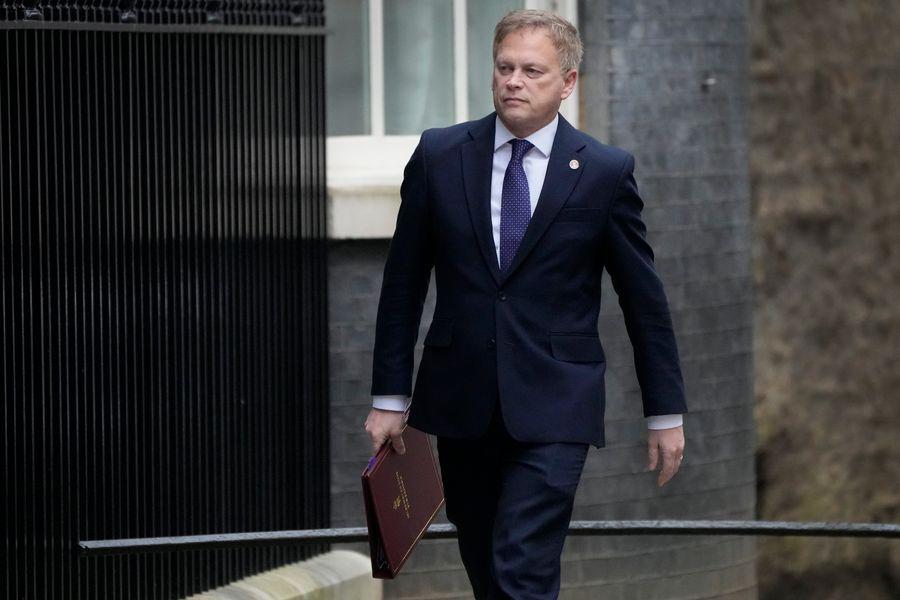
Britain's Defence Secretary Grant Shapps arrives in Downing Street for a cabinet meeting in London, on March 6, 2024. Britain says a plane carrying Defense Secretary Grant Shapps had its satellite signal jammed as it flew near Russian territory. (AP Photo/Frank Augstein, File)
Russian strategy attacking NATO with hybrid warfare is a dead-end street if the West keeps financing, training, and arming Ukraine.
Vladimir Putin stung by two and a half years failures and stalemate on the Ukrainian battlefield has tried everything for a decisive win and has now turned to a dual strategy of conventional war against Kyiv and hybrid war against NATO. NATO has warned for months in the run up to this year’s 75th Anniversary of NATO and European elections that Russia is out for revenge and out to destabilize western countries with hybrid warfare. NATO’s support for Ukraine in terms of training, treasure, and equipment has angered the Kremlin, and from Moscow’s point of view the West is using Ukraine as a proxy in war with Vladimir Putin. Former Russian President Dmitry Medvedev, Deputy Chairman of Russia's Security Council and Vladimir Putin’s close ally has called for Russians to mobilise to inflict "maximum harm" on Western societies and infrastructure. In response to the Russian hybrid warfare threat, NATO Secretary General Jen Stoltenberg held a Defence Ministers meeting in Brussels to counter the "Russian campaign of hostile activities against NATO allies."
Hybrid Warfare
Hybrid Warfare is an amalgam of political, unconventional, and conventional actions geared to subvert and destroy a target state without crossing the threshold to open war. In hybrid warfare, the lines between war and peace are blurred and used against the target state. Russian attacks in Europe have come in diverse ways including arson and sabotage, assassination, cyber attacks, disinformation, GPS jamming, migration, and potentially disruptions of power and energy flow and undersea cables. All hybrid attacks are geared to destabilize NATO democracies and distract their attention from Ukraine War and even to dissuade them from their continued support of Ukraine. Poland, the Baltic States, Germany, the UK, and the Czech Republic have all reported incidents of hybrid warfare in the last year and Russia is ratcheting up its campaign against NATO Countries as a quick review of Moscow-linked attacks show.
Russian Missiles Land in Poland As Europe Held Military Drills Nearby
The Summit as Mirror
Moscow Expresses Warnings on Kaliningrad Defense Against NATO
Strengthening Deterrence Against Russia’s Conventional Attack of Latvia, Lithuania, and Estonia
Arson and Sabotage
For instance, Russia is suspected of conducting arson attacks in London, German, and the Baltic States. In Britain, Russian is believed to have been behind attacks on British based assets of Ukrainian nationals in March. In Estonia, Russian nationals and duals stand accused of attacks on the car of the country’s Interior Minister, Lauri Läänemets and a journalist in May. In German, Russian nationals were arrested on suspicion of plotting attacks on a military base in Bavaria using explosives, arson, and being in contact with Russian intelligence. Poland and Lithuania both had shopping centres of the Swedish giant IKEA attacked in arson events in May. A factory related to Germany’s air defence industry Diehl Metal Applications was destroyed by fire in June. The Czech government has blamed Moscow for an arson attack on the capital Prague’s main bus depot in the same month. Russian intelligence has reportedly hired and trained agents to target warehouses in Europe storing military equipment for Ukraine. In July, US military bases in Europe were placed on high alert after intelligence suggested Russian agents were preparing for attacks on US bases and personnel on the continent. While not currently linked to the Russian sabotage attacks, in April, the BAE plant in Glascoed, Wales, the UK's last remaining ammunition filling facility suffered an explosion.
Assassination
As well, it was revealed very recently that Russia planned to kill the German Chief Executive Officer of Rheinmetall Armin Papperger, in a plot earlier this year. It seems Russia has had other plots to assassinate business leaders associated with NATO and supporting Ukraine’s war efforts but officials have not released details on these unreported events.
Cyber
Furthermore, in Germany, a cyber group linked to Russian intelligence carried out cyber attacks throughout 2023. In January, Moscow carried out a ransomware attack against Sweden’s only digital service provider for government services and also hit Microsoft systems in the same month. In February, Russian-linked hackers went after the Embassy’s of Georgia, Poland, and Ukraine. In March, Russian hackers went after Germany targeting the phone calls of officials talking about Ukraine and then making the conversations public. In May, Germany’s main opposition party, the Christian Democratic Union fell victim to a Russian -linked cyberattack ahead of European Parliamentary elections. Poland, and the Czech Republic both suffered cyber attacks by Russian hackers targeting government and infrastructure networks.
Disinformation
Additionally, in France, Russia is blamed for carrying out a series of graffiti related anti-Semitic attacks trying to exasperate racial tensions in the country. The US has just released information about Moscow using AI-driven bots to spread malicious materials and information over social media in 2022 and 2023. Russia has been accused of running a massive information and disinformation campaign during the recent French elections to destabilize France and Ukraine supporter French President Emmanuel Macron. The UK recently uncovered Russian linked Facebook pages spreading disinformation relating to attacking support for the governing Conservative Party and boosting Nigel Farage’s Reform Party. Moscow targeted European institutions and pro-Ukraine candidates in all 27 countries ahead of recent European Parliamentary elections. Stories circulated on social media in the run up to the NATO summit that French military trainers were killed in a Russian strike in Ukraine after news that France was considering sending troops to backstop Kyiv. The stories were false and geared to push back on the French and NATO countries willing to send troops to Ukraine.
GPS
Moreover, this spring has witnessed attacks on the Global Positioning System (GPS) in the Baltic, the Black, and the eastern Mediterranean Seas leaving civilian passenger flights without access to the critical navigation aid. In March, a Royal Air Force flight transporting then UK Defence Secretary Grant Shapps GPS was jammed while flying close to Russian territory near Kaliningrad. Russia is accused of disrupting flights into Estonia from neighbouring countries like Finland and Sweden. The Russian GPS blocking has become so great some Baltic countries have said that it is a direct threat to the safety of commercial airline travel in the region.
Migration
On top of those attacks, Russia uses waves of migrants directed at Europe and its fallout in terms of economic, humanitarian, security, and social challenges to divert European governments from their support of Ukraine and to destabilize their governments from within. Just mere days ago a soldier was murdered at the Polish border by a migrant unleashed by Vladimir Putin on Central Europe. In May, the Estonia government warned that Russia was using the conflict in both Syria and Africa and the Wagner Group to further weaponize migration. Poland is facing 400 illegal border crossers from the Middle East, Asia, and Africa a day herded to its borders by Russian ally Belarus and Russia. Finland has closed its border with Russia after almost a thousand unruly Middle Eastern migrants were sent at its borders. Some 61,000 Belarusians have migrated into Lithuania setting up a potential fifth column in the country along with about 16,000 Russians and others. Belarus has sent migrants from Africa, the Middle East and particularly from Syria and Afghanistan.
Undersea Cables
Finally, the Russian Navy and the Main Directorate for Deep Sea Research (GUGI) are known to have several submarines geared to attack undersea telecommunications cables and pipelines. In April, NATO's Allied Maritime Command's Deputy Commander Vice Admiral Didier Maleterre warned that undersea cables are vulnerable to attack that are critical to the security of one billion NATO citizens. He warned that NATO has detected suspicious activity around underwater infrastructure within the past few years and that Russia has "developed a lot of hybrid warfare under the sea to disrupt the European economy, through cables, internet cables, pipelines." Some 97 percent of global data runs through 1.4 million kilometres of undersea cables that are vital to the global economy spanning the globe. Russian submarines have conducted missions in the areas around the Irish Sea twice since the 2022 invasion of Ukraine that may be geared to attacking a cluster of transatlantic cables. The Irish Sea is strategically important in that 75 percent of transatlantic cables in the northern hemisphere pass through Irish waters, with four cables connecting to Ireland, and 12 connecting Ireland and Britain. Russia is believed to have sabotaged a Norwegian research cable in 2021 with 4.3 kilometres of cable cut and likely stolen. In February this year, three undersea cables in the Red Sea were cut that carry telecommunications services to Africa, and between Europe and Asia. Ninety percent of communications between Europe and Asia and 17 percent of global internet traffic moves through undersea cables in the 14-mile-wide Bab al Mandab Strait. While, it is not known what country cut the cables in the Red Sea, Russia supporting its ally Iran, and their proxy the Houthis, is the top contender. These acts are geared to intimidate European countries and others into not supporting Ukraine.
North America is not immune to Russian hybrid warfare, and the US is the centre of gravity of the NATO alliance and its support for Ukraine. Canada, America’s next-door neighbour viewed by Russia, China, and Iran as an easy mark in hybrid warfare with a minority government still reeling from an on-going foreign interference scandal, home to the second-largest Ukrainian diaspora in the world and plagued by military and security inaction and weakness is a prime target for Russian attention. The US with a bitter Presidential election underway, a President viewed as suffering from age, and that has already seen the worst kind of political violence in an assassination attempt on a Presidential candidate is potentially ripe as a potential target state. Russian media sources are now blaming both the Democrats and Ukrainians for the assassination attempt on former US President and Presidential candidate Donald Trump’s life to further destabilize the US.
But for now, Russia has seemingly not moved to North America perhaps in part because Moscow’s dual strategy has not been a success. So far Moscow’s hybrid warfare offensive has been a nuisance of disruptions with low grade tactical successes, but it is a long way from having strategic effect. Russian hybrid attacks on NATO have been a cheap but wasted effort unless Vladimir Putin really wants to roll the dice and risk moving from the hybrid realm to conventional war with the West. Russia’s much heralded early use of hybrid warfare to seize Crimea and other territories from Ukraine in 2014 has resulted in a two decade long conventional war with no end in sight. Given the frustrations on the conventional battlefield in Ukraine, a new conventional war with NATO at this time is likely not a good strategy for Russia to pursue. That means more hybrid attacks from Moscow, more vigilance from Brussels and Washington, and continued support for Ukraine, while we build up our conventional military power. In the end, Russia’s strategy of hybrid warfare against NATO will fail. When your enemy is making mistakes in war—let him.
Joe Varner is the author of Canada’s Asia-Pacific Dilemma, former Director Policy to Minister of National Defence the Hon. Peter MacKay in the Harper government, and a former Adjunct Scholar at West Point’s Modern War Institute.

A Sweet American Original
By Greg Maresca • RealClearDefense
South Korea's OPCON Debate Is a Test of Alliance Readiness
By Daewon Cho • RealClearDefense
When Does Peacetime Access Become Wartime Capability?
By Alp Cenk Arslan • RealClearDefense
The Missing Seats at the Table
By Dennis T. Cosgrove • RealClearDefense
We Exported Our Arsenal Manufacturing, Now We Must Rebuild It.
By Justin Fulcher • RealClearDefense

Sign of the Times: CCAs Dominate a Major Fighter Conference
By Bill Sweetman • The Strategist (ASPI)
Marines Want Naval Strike Missiles With Double The Range
By The WarZone
U.S. Navy Targets 79 New Cutter-Based FF(X) Frigates
By A. Servaes, Global Defense
The Hegseth Grenade: A Sea Change at Newport
By Robert C. Rubel, CIMSECSign of the Times: CCAs Dominate a Major Fighter Conference
By B. Sweetman, ASPI