
Russia's 90-Day Warning
Last updated 06:59 AM EST • Read time: 4m
How Trump's 500% Tariff Ends Putin’s War
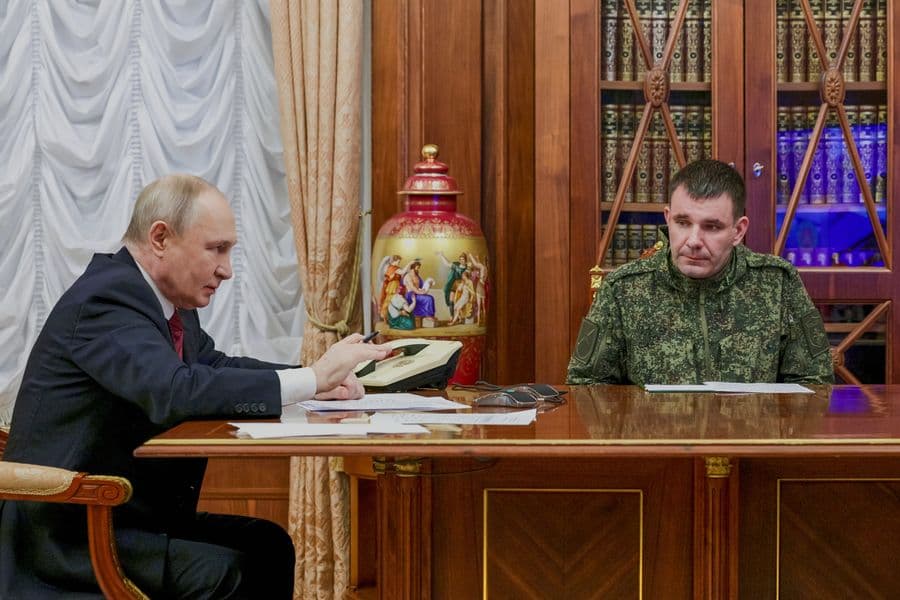
For three years, the world has waited for the Russian economy to implode. Instead, we watched a "Kalashnikov economy" defy gravity, fueled by high oil prices and a "friendship without limits" with Beijing. But as of January 2026, the gravity of basic math has finally caught up with Vladimir Putin.
The catalyst isn’t just the stalemate on the front lines; it’s a legislative "kill shot" from Washington and a quiet betrayal from the East. Between the new Graham-Trump Sanctioning Russia Act and a mounting domestic liquidity crisis, the Kremlin isn’t just running out of options—it’s running out of time.
The 500% Solution
The most significant development of 2026 isn't a new missile system; it’s a tariff. The Graham-Trump Bill, greenlit by the White House on January 7, has fundamentally rewritten the rules of economic warfare. By threatening a mandatory 500% tariff on any country—including China and India—that continues to purchase Russian petroleum or uranium, the U.S. has finally weaponized the one thing Russia’s allies value more than cheap crude: access to the American consumer.
The shockwaves were instantaneous. On January 15, reports emerged that China’s largest state banks, including ICBC and Bank of China, began halting Ruble-denominated settlements. They aren't waiting for the bill to be signed into law; they are pre-emptively cutting Russia loose to save their own export margins. When Beijing chooses its $500 billion trade surplus with the U.S. over its "strategic partner" in Moscow, the Russian war machine loses its primary life support system.
The Domestic Cannibalization
While the external walls are closing in, the internal floor is rotting. On New Year’s Day, Russia’s VAT officially jumped to 22%. This isn't a sign of strength; it’s an act of desperation. The Kremlin is cannibalizing its own middle class to plug a federal budget revenue gap that fell 20% short of targets in 2025.
We are now seeing the first signs of a systemic banking fracture. In cities like Yekaterinburg and Novosibirsk, reports of ATM shortages are no longer fringe rumors—they are the physical manifestation of a "liquidity trap." When the state raises taxes while inflation remains double-digit and interest rates hover near 20%, the result is a "medically induced coma" for the civilian economy.
The Myth of the "Fortress"
Putin's strategy rests on the belief that he can outlast Western patience. He points to a low debt-to-GDP ratio and a "rebalanced" budget as evidence of a "Fortress Russia." But a fortress with no gate is just a prison.
The National Welfare Fund, once the Kremlin's $150 billion insurance policy, is being bled dry. With oil revenue projected to hit a "fiscal cliff" by July 2026 as secondary sanctions take hold, the state will be forced to choose between paying soldier bonuses and keeping the lights on in rural hospitals.
The Three-Month Window
The consensus among hard-nosed analysts is no longer if the Russian economy breaks, but how fast. If the Graham-Trump bill passes the Senate next week, Russia enters a 90-day survival window.
Putin may believe he is "winning" because his troops are grinding forward at 50 square miles a month. But in modern warfare, maps are drawn in ink, but armies are moved by bank transfers. If the Ruble collapses to 200 against the dollar—a very real possibility if Central Bank Chief Elvira Nabiullina finds her position untenable and departs—the front line will become irrelevant. A soldier who isn't paid, or whose family can’t buy bread because of hyperinflation, is a soldier who stops fighting.
The Verdict
Washington has finally moved from "punishing" Russia to "asphyxiating" it. By targeting the enablers in Beijing and New Delhi, the U.S. has pulled the plug on the Kremlin’s revenue.
The next three months will be the most volatile in the history of the Ruble. For the first time since 1998, the Russian state faces a total loss of control over its financial destiny. The "Paper Tiger" still has claws on the battlefield, but its wallet is empty. And in 2026, an empty wallet is a more potent weapon than a thousand T-90 tanks.
Matthew Shoemaker is a former Intelligence Officer with the Defense Intelligence Agency and a Naval Officer in the U.S. Navy with extensive experience in the European Command theater. A specialist in nuclear war strategy and counterintelligence, he provides high-level analysis on transatlantic security, focusing on the intersection of U.S. legislative policy and European strategic autonomy.

Putin, Plague, and America’s Biodefense Gap
By Ryan Kane • RealClearDefense
From Hormuz to the South China Sea: Defending Freedom of Navigation in Contested Waters
By David F. Lasseter • RealClearDefense
Checklist for Modern Conflict Readiness
By Sergey E. Ivashchenko • RealClearDefense
AUTOWARCOM Is Heading for a Command-and-Control Collision
By Michael Carvelli • RealClearDefense
The Unfinished Reform
By Mark W. Castillon • RealClearDefense
U.S. and Japan Begin Naval Exercises Near Taiwan
By Mari Yamaguchi • Associated PressFrom Hormuz to the South China Sea: Defending Freedom of Navigation in Contested Waters
By David F. Lasseter • RealClearDefense
National Guard Soldier Shot While Breaking Up Fight in Washington D.C.
By Military.com
‘No Marine Fights Alone’
By Gidget Fuentes, USNI News
Sea Services Weigh How to Embrace Autonomous, Attritable Tech
By Reeves, NatDef