
The Vanguard State: How Ukraine is Redefining the Character of War
Last updated 05:47 AM EDT • Read time: 6m
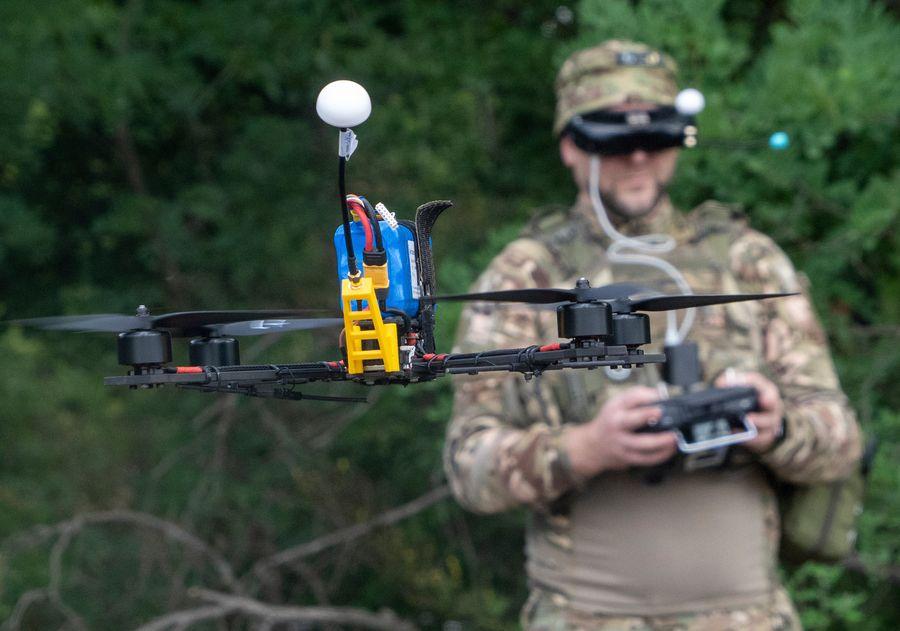
Ukraine is no longer fighting simply as the overmatched side adapting under pressure; it is now shaping the character of modern warfare. Through the ruthless and effective integration of robotic systems across land, air, and sea, it has transitioned from a recipient of aid to a global laboratory for 21st-century combat.
What began as improvised drone use in the early phases of the war has matured into something far more deliberate and dangerous. Ukraine has not simply adopted robotic warfare - it has mastered its doctrine. We are now seeing credible reports of Ukrainian units using unmanned ground systems to probe, fix, and even clear Russian positions before a single soldier steps forward. These are not theoretical trials; these are frontline realities where machines absorb the first contact, drawing fire and shaping the battlefield to reduce the cost in Ukrainian lives.
From Denial to Dominance at Sea
At sea, the change is even more remarkable. Ukraine, a state that effectively lost much of its conventional naval capability early in the war, has managed to hold a far larger adversary at risk through a "denied space" strategy.
The sinking of the flagship Moskva was the turning point that captured the world’s imagination. While land-based Neptune missiles delivered the final blow, the operation showcased a brilliant glimpse of the future: the reported use of Bayraktar drones to divert the cruiser’s attention and saturate its sensors while the lethal strike came from the sea. Since then, improvisation has become a standard. Autonomous and semi-autonomous maritime drones - the "Sea Babies" and "Maguras" - have repeatedly struck Russian assets, forcing the Black Sea Fleet into a defensive posture. Ukraine has proved that a state no longer needs a traditional blue-water fleet to neutralize one; it only needs the ingenuity to weaponize the waves.
Innovation in the Air and Beyond
The transformation of Ukraine’s aerial strategy has turned the concept of the "mothership" from science fiction into a gritty tactical reality. Recent reports of the Antonov An-28 Cash - a Soviet-era light turboprop - being repurposed into a drone-launching hub epitomize this change. By equipping this legacy transport with external pylons to carry interceptor drones, Ukraine has created a high-altitude "perch" that gives small, agile munitions a massive advantage in range and potential energy. This allows FPV drones to dive onto Russian reconnaissance and attack assets from above, solving the persistent problem of chasing down mid-tier UAVs with ground-launched systems or prohibitively expensive surface-to-air missiles.
This adaptation highlights a utilitarian philosophy where nothing is sacred and every airframe is a potential platform. Using a slow-moving, cost-effective turboprop as a command-and-control node - rather than burning the flight hours of a precious F-16 or MiG-29 - represents a masterful prioritization of function over form. In this setting, an aircraft’s original design intent is irrelevant; whether it was built for paratrooper drops or crop dusting, if it can loft a sensor and a payload into the sky, it is a combat asset. The An-28 "mothership" is the ultimate symbol of this mindset, proving that in modern attritional warfare, the most lethal innovations are often born from the creative cannibalization of the past.
Even at the humanitarian level, robotics is reshaping outcomes. The evacuation of elderly civilians from contested zones using robotic assistance is more than a human-interest story; it demonstrates how unmanned systems are now embedded across the full spectrum of war, from high-intensity strike operations to the noble extraction of the vulnerable under fire.
A New Model of Warfighting
What ties this together is not technology alone, but a new doctrine. Ukraine has fused commercial innovation, battlefield necessity, and decentralized thinking into a coherent system. This is not the rigid, top-down model that has historically defined state militaries. This is adaptive, networked and brutally efficient.
Central to this efficiency is the ePoints system, a radical digital procurement framework that effectively gamifies the destruction of enemy assets to bypass traditional bureaucratic bottlenecks. Managed through the Brave1 Market - an "Amazon for the frontline" - units earn virtual credits for verified battlefield successes. By uploading drone footage of a destroyed tank or a captured electronic warfare system to the DELTA situational awareness platform, commanders are rewarded with points they can immediately "spend" on a curated catalog of next-generation drones and robotic systems.
This creates a high-speed feedback loop where the most effective units are automatically the best equipped. It also serves as a real-time market signal for the defense industry; if a certain drone model isn't being "purchased" by soldiers with their hard-earned points, the state knows to stop procuring it. This decentralized approach - where air defense and sniper units can now "buy" their own specialized equipment based on performance - is now being exported. Ukraine’s domestic defense industry is expanding at pace, driven by immediate wartime demand but increasingly oriented toward global markets. Foreign militaries and private firms are watching closely, knowing that expertise developed under fire carries a weight no peacetime R&D program can replicate.
The Evolved Narrative
This is the point many observers are still missing: the traditional "underdog" story is evolving. Ukraine remains the smaller power fighting a larger, resource-rich invader; in terms of raw numbers and sheer attrition, the "underdog" label still carries the weight of a painful reality.
However, in the domain of innovation, the roles have reversed. Ukraine is no longer just catching up to modern standards - it is setting them. It has moved beyond the narrative of mere resilience and into one of asymmetric primacy. A state no longer needs air superiority in the traditional sense to contest the skies, nor a billion-dollar navy to win the sea. It needs networks, autonomy, and the willingness to deploy them at scale.
Ukraine is still fighting for its survival, but in doing so, it is teaching the rest of the world how the wars of the future will be fought.
Casey Christie is a British defence strategist specializing in international security. He is the Managing Director of Christie and Associates, a London-based private military and intelligence firm. His work has appeared in the Times of London, The South African Sunday Times, Ukraine’s Kyiv Post and Small Wars Journal, among others

Don’t Be Swayed by Tactical Nukes
By Benjamin Giltner • RealClearDefense
How Seoul’s Break With Kyiv Serves Trump’s Russia Turn
By Sang Won Pyo • RealClearDefense
When the Grid Goes Down, the Mission Must Go On. Solar and Storage Can Help.
By John Szoka • RealClearDefense
Data and Communications Technology are the Hidden Keys to Success for Golden Dome
By Eric Velte • RealClearDefense
The Dual Threat: Why Beijing’s Collapse Is Just As Dangerous as Its Rise
By Efraín Vázquez-Vera • RealClearDefense
USS Stout Loses Power During Port Visit Due to ‘Engineering Casualty’
By USNI News
Air Force Lessons Learned From Operation Epic Fury
By Tabitha Reeves, National Defense
Marines Need Nine More Amphibious Warships To Carry Out Its Missions
By TWZ
AFRL, ACC Fly XQ-67A Drone To Test Autonomous Teaming
By Airforce Technology
F-35B Releases Meteor BVRAAM for the First Time
By Parth Satam, The Aviationist