
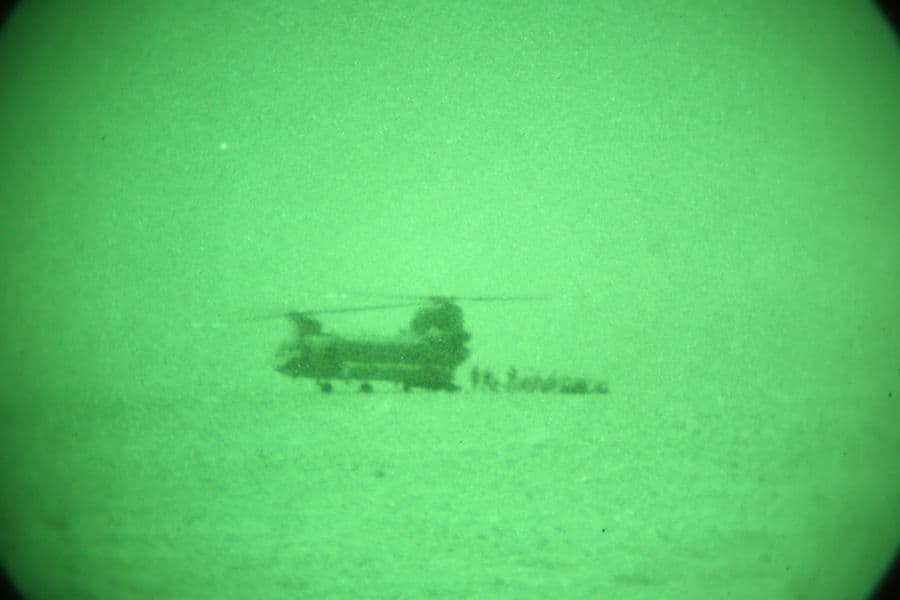
The Warrior's Renaissance
Last updated 06:38 AM EDT • Read time: 4m
Day 2 at SOF Week and the Quiet Battle Within
Day 2 of SOF Week 2025 began with fire and ended with reflection.
The morning keynote from Secretary of Defense Pete Hegseth was delivered with steel-spined clarity, reinforcing three imperatives…
- Restore the warrior ethos
- Rebuild the military
- Reestablish deterrence
“Humans are more important than hardware,” Hegseth declared, echoing the foundational SOF truth that people—not platforms—determine the outcome of war. But beneath the applause and patriotic cadence, the day’s true heartbeat pulsed elsewhere, in the invisible battles many warfighters fight alone.
Following the keynote, General Bryan Fenton and Command Sergeant Major Shane Shorter took the stage to “All I Do Is Win”—a message both confident and complex. Although there were plenty of industry exhibitions to witness, it seemed the human element needed deep attention. The SOF community may win the visible fight, but the afternoon reminded us of the internal war that often follows.
The Battle After the Battle
In two afternoon panels—“Advancing the Warrior’s Edge: Leveraging Breakthroughs in Human Performance for Lasting Impact On and Off the Battlefield” and “The Invisible Enemy: SOF Moral Injury and Intervention”—experts, operators, and caregivers reframed the warfighter not just as a physical or cognitive system, but as a moral and emotional being. The message was unambiguous—the future of SOF must account for the wounds we can’t always see.
Dr. Anna Simons question lingered long after the session ended, “Could it be that in the future, the working assumption is that everybody in SOF has suffered moral injury?” If we accept that premise, then the burden shifts—not to the individual to hide their pain, but to the institution to create the conditions for acknowledgment, healing, and post-traumatic growth.
This is where true evolution is happening. No longer is the battlefield just external. The warfighter is often in battle with themselves—navigating decisions made in the fog of war, reconciling with actions necessary for survival, and managing the emotional residue of missions conducted in the shadows.
Empathy as Doctrine
And yet, this is precisely where SOF is leading—not just in irregular warfare, but in the conversation of irregular care. In this VUCA world—volatile, uncertain, complex, and ambiguous—special operations forces flourish. But they do so not only through superior tactics, but through shared stories, deep bonds, and an unbreakable empathy forged in adversity.
As Reverend Christopher Shimmen reminded us, spiritual resilience is not a luxury—it is a force multiplier. And empathy, both for others and oneself, may well be the most powerful cognitive advantage in the SOF toolkit. “Warriorhood,” he said, “is not an outer role, but an inner spiritual achievement.”
That spiritual achievement demands storytelling—not just after retirement, but throughout a warfighter’s journey. Stories allow the invisible to become visible. They link our common humanity, de-stigmatize struggle, and form the connective tissue of a community built on trust. But when the mission ends, who checks in? Where are the touchpoints post-service? Who ensures the invisible wounds are not left untreated once the uniform comes off?
We need career pipelines that don’t just train for peak performance but build long-term durability. Not just metrics for readiness, but measures for resonance—how connected a warfighter feels to their purpose, people, and past.
The Renaissance Within
If SOF is truly in a renaissance—as both Secretary Hegseth and General Fenton insist—then it is not just technological or tactical. It is moral. It is emotional. It is spiritual. As Dr. David Rudd and others made clear, we can no longer afford to separate the battlefield from the body, the mission from the mind, or the warrior from the human being who returns home carrying more than gear.
Neale Donald Walsch once wrote, “If you don’t go within, you go without.” That may be the most critical line of doctrine for SOF’s future. If we fail to look within—both as individuals and as an enterprise—we risk going without the very thing that makes this community elite, its humanity. This is as true for the institution as it is for the operator. For every command team. For every family. For every soul that walks the long road from the battlefield back to themselves.
The next chapter of deterrence won’t be built on technology alone. It will be written by those who had the courage to do the hardest work of all, to look within—and lead from there.
Chad Williamson is a military veteran and is currently pursuing his graduate degree in national security policy. He lives on Capitol Hill with his wife, Dr. Heather Williamson, and their two chocolate labs, Demmi and Ferg.

The Services Do Not Need a Four-Star Autonomous Warfare Command
By Steven Wills • RealClearDefense
Honor Them While There Is Still Time
By Jeffrey Rosales • RealClearDefense
From Siberia to Fairford: How Operation Spider’s Web Has Changed the Rules of Airpower
By Frank A. Rose • RealClearDefense
Faster Simulations, Better Defense Decisions
By Rut Lineswala • RealClearDefense
Will HASC Have an Oversight Subcommittee in the Next Congress?
By Christopher J. Bright • RealClearDefense
Hegseth Barred Trans Troops. Military Boards Are Rejecting Those Orders.
By NYT
Closing the Sea: Lessons from Ancient Mediterranean Blockades
By DeCasien, CIMSECFrom Siberia to Fairford: How Operation Spider’s Web Has Changed the Rules of Airpower
By Frank A. Rose • RealClearDefenseFaster Simulations, Better Defense Decisions
By Rut Lineswala • RealClearDefense
Bombers Could Have a Major Air-to-Air Combat Role
By Joseph Trevithick, The WarZone