
The Anglo-American Answer to Egyptian Terror
Last updated 05:29 PM EDT • Read time: 4m
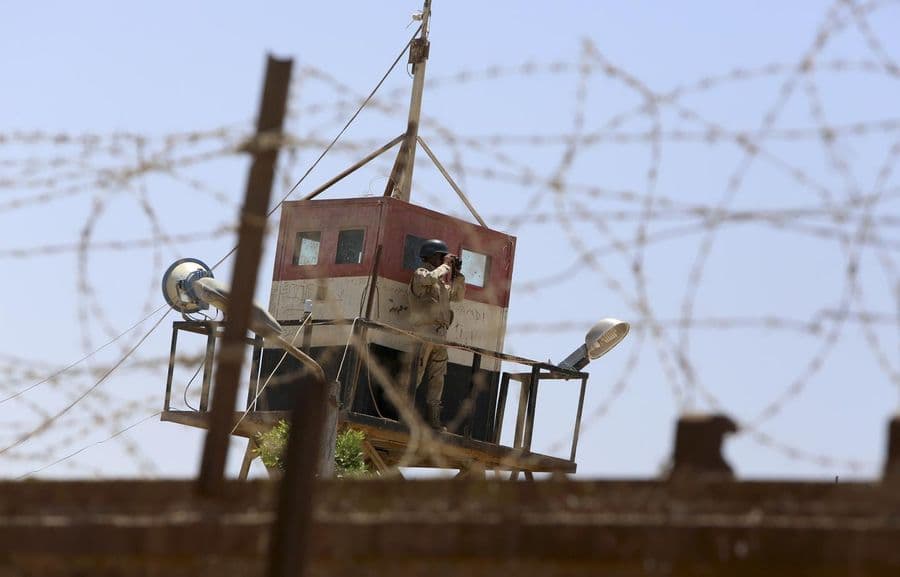
The United Kingdom and now the United States have taken note of the rising threat posed by two Egyptian terrorist groups – and the international community should take note.
In late December, the United Kingdom added Liwaa El-Thwara and Hasm, to its official list of terrorist groups. The United States quickly followed suit. Both groups are, as President Trump might put it, “bad hombres,” responsible for bombings and other terrorist attacks in the Arab world’s most populous.
International observers focused on Da’esh, Al-Qaeda, Boko Haram and other emerging threats have given little attention to the emergence of Hasm and Liwa’ El Thwara. These two Egyptian terrorist groups have made a name for themselves in the recent years with daring assassination attempts of senior Egyptian leaders and now pose an international threat.
The EU, Russia and the United Nations should quickly follow the Anglo-American example. The designation could go a long way to creating a unified counter-terrorism policy.
Liwaa El-Thwara and Hasm became active in following a coup which removed Egypt’s then-President Mohammed Morsi from office in 2013. Morsi’s fall and the subsequent crackdown on other Islamist groups sparked the creation of new terrorist groups in Egypt which were offshoots of or inspired by the Muslim Brotherhood.
The Egyptian government has been largely successful in halting these groups until now. But Liwaa El-Thwara and Hasm have carried out successful attacks on police and military targets throughout the country. They have also launched assassinations of key leaders. Both have been far more resilient than their predecessors.
That may because the groups are better led. Both groups appear to have some ties to the Salafist jihadi leader Hisham al-Ashmawy, the former Egyptian special forces soldier who has emerged as one of President Sissi’s most dangerous terrorist enemies. Al-Ashmawy skillfully lured Egyptian soldiers tracking him into a lethal ambush last year. He is sure to spread his elite training with his fellow Salafi jihadists some of whom may take that training to other battlefields. Indeed, the attacks of both groups show the use of pre-attack surveillance and use of terrain that escaped their predecessors.
The international threat posed by the group was made even more clear following a December raid on the group by Egyptian security forces.
That raid on locations used by Hasm terrorists resulted in the death of at least one Egyptian security forces member, three militants and the arrest of scores more. The raid apparently disrupted an attack which was set to attack Christians and some sites used by international tourists.
It also offered an opportunity to mend a difficult relationship with President Sissi of Egypt. Following Trump’s election, the Egyptian was the first world leader to congratulate Trump on the phone. Since then the relationship between the two countries has frayed as the U.S. has slashed aid to Egypt by some $400 million over human rights and democracy concerns. Egypt has responded by using the controversy over U.S. plans to open an embassy in Jerusalem to take diplomatic measures against the United States. The country drafted a UN Security Council resolution which lambasted the U.S. decision to move its embassy to Jerusalem. The United States vetoed the measure. Furthermore, some senior Egyptian leaders including the Coptic Pope announced they would not meet with Vice President Mike Pence during a planned swing through the region. Pence instead went to Afghanistan though later made a quieter visit to the Middle East when the crisis cooled.
Every foreign policy decision is ultimately one of the tradeoffs. However, the only people who will be angered by America’s decision are terrorist groups and the Muslim Brotherhood – groups that are critical of America regardless.
As a further step the Trump Administration is already mulling designating certain regional chapters of the Muslim Brotherhood terrorist groups, and both of the groups designated by the United Kingdom have ties to the Muslim Brotherhood. Senator Ted Cruz (R-Texas) has submitted legislation to Congress which would do much of the same. Such a designation would involve complicated diplomatic maneuvers and may take months to emerge. Designating the two groups offers a quick win now, and one that if backed by America’s NATO allies could put off the larger and more complex issue of designating the Muslim Brotherhood a terrorist organization.
Regardless, the Trump administration believes that NATO members and other European allies should be doing more to fighting terrorism. On this issue, London and Washington have taken an important stand, one that should soon be replicated on both sides of the Atlantic – and stakeholders around the globe.
Joseph Hammond is a senior contributor with the American Media Institute. As a former Cairo correspondent for Radio Free Europe during the 2011 Arab uprisings, he has also reported from four continents on issues ranging from stability in Somalia to the M23 rebellion in the Eastern Congo.
A Passage to the Middle East: India as a Mediator and Security Partner
By Irina Tsukerman • RealClearDefense
South China Sea is Key to Invigorate Positive U.S.–Malaysia Relations
By Brent D. Sadler • RealClearDefense
The Necropolitics of the Wasteland
By Yunus Emre Tumen • RealClearDefense
AI, Robotics, and Marines
By Gary Anderson • RealClearDefense
The Emerging SQUAD
By Muhammad Shoaib • RealClearDefense
AI, Robotics, and Marines
By Gary Anderson • RealClearDefense
AUKUS Partners Test Autonomous Maritime Systems
By Jangoulun Singsit, Naval Tech
AUKUS: USS Colorado Announced as First Submarine for SRF – West
By USNI News
Navy, Marine Corps Simulate Ship Strikes From Air and Land
By Alex Wilson, S&S
Air National Guard To Stand Up a New Special Tactics Squadron
By Patty Nieberg, T&P