
Bahrain Needs the F-16; The F-16 Needs Bahrain
Published Feb. 2, 2017 • Read time: 3m
Bahrain is a long-time Persian Gulf ally that has hosted the U.S. Navy since 1947, and has granted the U.S. the right to pre-position military equipment on the island in anticipation of future crises. For over 20 years, the Bahrain Defence Force has received military equipment from the U.S., including tanks, attack helicopters, and the F-16 Fighting Falcon.
The Royal Bahraini Air Force was the first F-16 customer in the Gulf region and has fielded 22 aircraft to date. A new sale of 19 F-16s worth $2.8 billion, and a separate $1 billion deal to support the existing fleet were held up in 2016 as the Obama administration, in a vaguely-worded “declaration of concern,” demanded unspecified domestic political changes in Bahrain before it unblocked the sale.
Paradoxically, in 2016 the Obama administration approved $32 billion in fighter jet sales to other Gulf states, such as oil-rich Kuwait and Qatar, on top of a 10-year, $38 billion aid deal with Israel without demanding any political concessions from them.
Senator Bob Corker, R -Tennessee, Chairman of the United States Senate Foreign Relations Committee has urged the incoming Trump administration to address political concerns apart from military issues, to avoid politicizing the Foreign Military Sales process. Also important to Senator Corker is the health of the F-16 production line as it is scheduled to end in 2017, after the sale to Bahrain.
The health of the F-16 production line should be of paramount concern to the U.S. government as it supports the U.S. fleet of over 1200 aircraft and the fleets of 26 partner countries, which number about 1700 aircraft. And on the home front, for over 40 years, the F-16 industrial base has created thousands of high technology jobs across the country. Even more alarming, the original 2025 retirement date of the F-16 fleet has been moved into the indefinite future as the problem-plagued replacement, the F-35 Lightning II suffers from delivery delays and spiraling costs.
If the F-16 line goes dark, the operational readiness of the U.S. and its partners will be degraded, and the cost of operating the fleet will spike. In addition, there are more than 75 major U.S. suppliers of F-16 components, such as GE Aviation, Raytheon, Harris, Northrop Grumman, UTC Aerospace, and Honeywell International, which will be hurt and significant job losses will follow.
The U.S. can avoid an own goal by approving the sale to Bahrain without conditions. Doing so will tell our Gulf allies we stand by them as they modernize their defensive capabilities in the face of the looming Iranian threat. And it will tell American workers their security and contributions are foremost in the mind of America’s leaders.
James D. Durso is the Managing Director of Corsair LLC, a consultancy. He was a professional staff member at the 2005 Defense Base Closure and Realignment Commission and the Commission on Wartime Contracting in Iraq and Afghanistan. Mr. Durso served as a U.S. Navy officer for 20 years, specializing in logistics and Foreign Military Sales. His overseas military postings were in Kuwait and Saudi Arabia, and he served in Iraq as a civilian transport advisor with the Coalition Provisional Authority. He served afloat as Supply Officer of the submarine USS SKATE (SSN 578).
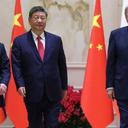
The Pressure Is the Message: What Xi and Putin Faced in Shenzhen
By Emzari Gelashvili • RealClearDefense
China’s Revised Mobilization Law and the Expanding Reach of National Defense
By Muhammad Shoaib • RealClearDefense
U.S. Putting Weapons in Space: A Strategic Blunder?
By Ajey Lele • RealClearDefense
The Clearance Myth Is a Readiness Problem
By Elijah Fernandez • RealClearDefense
The Pentagon's Next Readiness Test Should Begin When the Cloud Goes Dark
By Colton Overcash • RealClearDefense
U.S. Putting Weapons in Space: A Strategic Blunder?
By Ajey Lele • RealClearDefense
U.S. Senate Seeks to Exchange Shipbuilding Funds for More Munitions
By Naval News
F-35C Completes First Launch and Recovery Trials on a Ford-Class Carrier
By Navy T.
USS George Washington Leaves Mideast As Trump Mulls Ending Iran War
By S&S
ULA’s Latest Launch Failure Spells Trouble for Space Force
By Greg Hadley, A&SF