
Anchoring Army Modernization to Operational Problems
Last updated 05:39 AM EDT • Read time: 7m
Project Convergence-Capstone 6 demonstrated the value of testing emerging technology under realistic battlefield conditions. Soldiers at Fort Irwin tested emerging technologies alongside joint and allied forces. Uncrewed systems operated in scenarios that forced soldiers and leaders to make decisions under pressure. Army leaders observed how new equipment performed against threats and conditions designed to resemble combat.
Modernization requires more than proving that technology works. Army leaders should keep asking which battlefield problem a program solves as requirements, acquisition, fielding, and assessment move forward. Technology, threats, organizations, funding, and requirements change over time. Those changes can weaken the connection between a program and the operational need the Army expects the capability to address. Successful modernization requires leaders to revalidate that operational problem as evidence accumulates and ensure the developing capability continues to address the problem under current battlefield conditions.
Speed Needs a Stable Reference
Then-Secretary of the Army Driscoll's Mission Focus direction calls for faster innovation tied to lethality and readiness. Speed serves a battlefield purpose when Army leaders keep modernization efforts connected to a validated operational problem. Rapid development needs a stable reference as technology, threats, requirements, and organizations change. A clear operational problem gives leaders that reference while allowing solutions to evolve.
Army experimentation demonstrates this approach. Army Test and Evaluation Command learned from the AI Challenge that improving a tool for the wrong workflow can add complexity without improving capability. Joint Innovation Outposts and Catalyst Pathfinder allow Soldiers to submit problem statements and capability gaps before connecting those needs with possible solutions, while xTech Adaptive Strike links operational problems directly with nontraditional innovators. Launched Effects uses Soldier feedback throughout testing, and Cross Domain Fires 26 linked capability gaps, experimentation, concepts, and requirements during fires integration.
A clear operational problem gives modernization a common reference from early testing through fielding. Leaders can change designs, requirements, and concepts as new evidence emerges while keeping the program focused on the battlefield need. Experimentation helps Soldiers and leaders judge where a capability works, where it fails, and what changes improve its value. Each major decision can then test whether the program continues to solve a defined problem for a specific formation under expected battlefield conditions.
Where the Problem Linkage Breaks
Modernization becomes harder to manage as a capability moves from experimentation into requirements, acquisition, resourcing, fielding, and assessment. Each phase can change the program through new technology, updated threats, funding decisions, or shifts in responsibility. Soldier feedback can also reveal needs that differ from the problem that started the effort. Leaders need to recheck the operational problem at each major transition so the program stays tied to a current battlefield need.
M10 Booker modernization shows how a program can change as requirements evolve. Program origins focused on giving light infantry formations mobile, protected direct fire against hardened positions, fortifications, dismounted forces, and armored threats. An operational-needs statement from the 82nd Airborne Division in 2013 called for greater mobile firepower for light forces. Army Requirements Oversight Council decisions later removed C-130 transport and airdrop requirements, allowing the program to move forward under different mobility constraints. Army acquisition then moved from rapid prototyping to production in less than four years, supported by Soldier assessments and testing.
Fielding raised new questions about whether the vehicle fit the formations and conditions it was meant to support. Weight growth affected mobility and infrastructure at receiving installations, where eight of eleven Fort Campbell bridges faced load limits involving the vehicle. Doctrine, training, facilities, environmental reviews, and mobility planning also lagged equipment arrival. Army Chief Technology Officer Alex Miller argued that Army leaders should have reconsidered the program when its requirements no longer resembled the need that started the effort.
Army termination of M10 Booker procurement in June 2025 highlights a second modernization problem. Programs can reach formations before the Army prepares the other conditions needed for effective employment. A Government Accountability Office review of six Army priority equipment efforts found that every first-unit fielding occurred with at least one incomplete area across doctrine, organization, training, materiel, leadership, personnel, facilities, or policy. Most programs entered fielding with three or more incomplete areas, showing that successful modernization depends on both solving a valid operational problem and preparing formations to employ the resulting capability.
Keeping the Problem Visible
Repeated problem revalidation helps modernization stay aligned as battlefield conditions change. Long-range fires programs revisited capability gaps as threats, technology, and combat evidence evolved. Analysis from Ukraine confirmed several existing requirements while increasing attention to mobility, survivability, and range. Army leaders used new evidence to refine the problem and adjust requirements without losing focus on the operational need.
Long-Range Hypersonic Weapon teams placed ground support equipment with intended operators and maintainers for two years. Their feedback led the Army to revise system requirements, design features, and concepts for employment. Direct contact with the force gave program leaders evidence about how the capability would function under real operating conditions. Repeated assessment kept the program connected to the formations expected to use it.
Changing battlefield conditions can also lead leaders to end a program. The Army's termination of the Future Attack Reconnaissance Aircraft followed changes in technology, threats, and lessons from recent conflicts. Army leaders concluded that other capabilities offered a better way to meet the reconnaissance need. Revalidation gave leaders a basis for redirecting resources when the planned solution no longer offered the best response to the operational problem.
Problem anchoring also gives experimentation room to identify new uses and new needs. Soldiers testing systems at Fort Irwin may find useful applications, limits, or operational problems that leaders did not identify at the start. Early experimentation should allow broad testing while leaders gather evidence about where a capability provides value. Before major investment and fielding, leaders should connect the capability to a defined operational problem, a specific formation, and a measurable battlefield effect.
Counterargument
Critics might argue that Army modernization already begins with capability gaps and operational needs. Formal requirements processes ask Soldiers and leaders to identify problems, define needed effects, and connect proposed capabilities to operational gaps. Recent Army initiatives also connect problem statements with innovators and move promising solutions toward Soldier evaluation. Critics can therefore argue that faster execution and stronger integration deserve more attention than another method for defining problems.
Problem traceability strengthens existing processes without adding another approval layer. Four questions at existing decision points can preserve the connection between a program and the battlefield need: what operational problem the capability addresses, which formation benefits, which conditions shape the problem, and what evidence supports continued investment. Existing Army regulations require continued assessment and refinement of requirements across the program lifecycle. Regular use of these questions can help leaders identify requirement drift, prepare formations for fielding, and redirect resources when evidence shows that a program no longer provides enough operational value.
Conclusion
Army modernization needs speed anchored to a clear operational problem. Mission Focus encourages faster innovation tied to lethality and readiness, while repeated problem revalidation keeps programs focused as threats, technology, requirements, and organizations change. Leaders can use experimentation to refine solutions, identify new opportunities, and gather evidence before major investment. Existing decision points give leaders regular opportunities to confirm the problem, assess the value of the current solution, and prepare formations for fielding. A clear operational problem gives modernization a stable reference from initial experimentation through fielding and assessment.
Matt Russell is a retired Army infantry officer and strategist. Currently, he is the co-founder and managing partner of Attain Leadership Solutions, LLC, a consulting firm focused on strategy, leadership, and team performance.
Michael Carvelli is an Army officer who writes on strategy, operational planning, protection, and engineering. He has written on large-scale combat operations for Real Clear Defense, War on the Rocks, Parameters, Modern War Institute, and Small Wars Journal.
The views expressed are his own and do not represent those of the U.S. Army, the Department of Defense, or any part of the U.S. government.
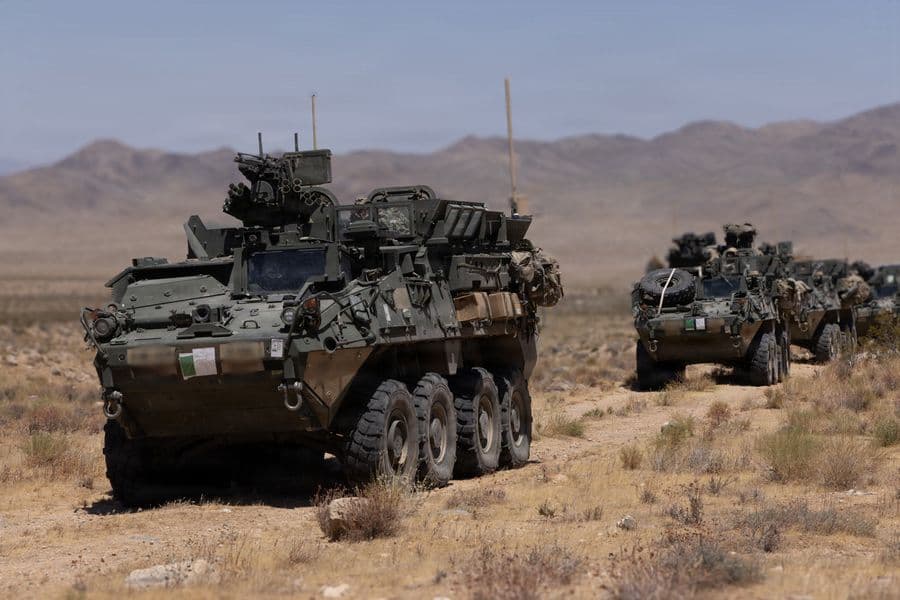
image: U.S. Army Stryker is one of the vehicles outfitted with the integrated NGC2 system during the Project Convergence-Capstone 6 (PC-C6). The U.S. Army Test and Evaluation Command actively participated in the PC-C6 experiment from July 20 to July 29 at the National Training Center in Fort Irwin, California.

In Pursuit of Nuclear Abolition
By Peter Huessy • RealClearDefense
Innovation Alone Won’t Prepare the U.S. for the Future Battlefield
By Joshua Segal • RealClearDefense
The sUAS Tactical Trifecta
By Bryan T. Woody • RealClearDefense
The Revolutionary War: When Strategic Options Share the Same Weakness
By Henry Yep • RealClearDefense
The Houthis Are Testing the Limits of Collective Defense
By Saima Afzal • RealClearDefense

Who Shoots Down the Drone Over the Shipyard?
By John Ferrari & Dillon Prochnicki • RealClearDefense
Northrop Grumman Breaks Out the Big Guns at AUSA
By Daniel Terrill, Defense News
Army Pursuing Diverse Array of New Anti-Air Interceptors
By Trevithick, The WarZoneWho Shoots Down the Drone Over the Shipyard?
By John Ferrari & Dillon Prochnicki, RCD
F-35C Lands for the First Time on a Ford-Class Aircraft Carrier
By The Aviationist