
Judges Are Not Given the Task of Running the Army
Last updated 05:48 AM EDT • Read time: 13m
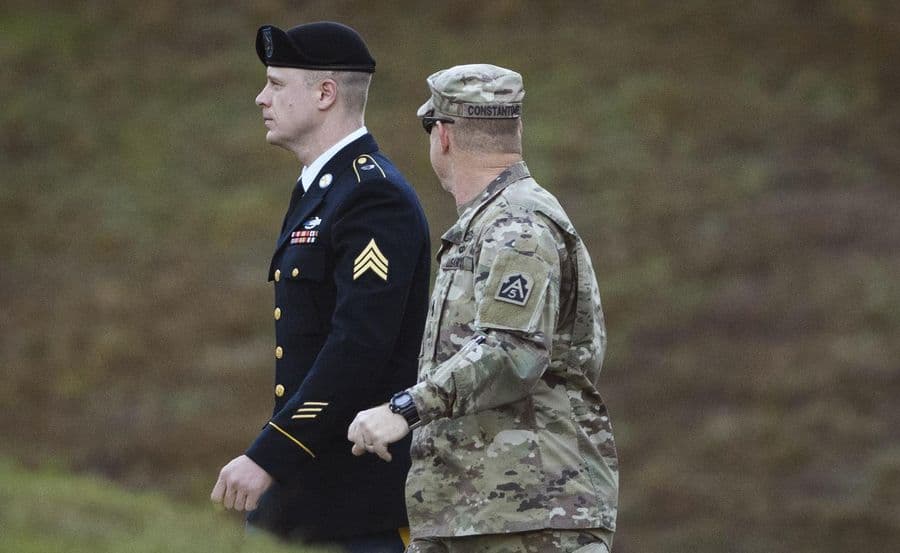
Beaudry Robert “Bowe” Bergdahl claimed he could not get a fair trial in the military courts. Nine military and civilian judges in the military justice system reviewed his claims and rejected them. One federal district court judge undid all their work. On September 1, 2026, the U.S. Court of Appeals for the District of Columbia Circuit held that the federal district court lacked jurisdiction in a civil lawsuit to vacate Bergdahl’s conviction and sentence imposed by a court-martial. While some commentators have celebrated the D.C. Circuit’s decision as an affirmation that Bergdahl was and is a deserter, they miss the point of the court’s carefully reasoned decision. Supporters of the separation of powers doctrine enshrined in the U.S. Constitution, and of the proper role of federal courts in the domain of civil-military relations, should be pleased, but for principled reasons, not merely ideological ones.
Bergdahl’s Desertion, Court-Martial, and Review by Military Appellate Courts
In June 2009, Bergdahl slipped away from his post in Afghanistan under cover of darkness. At the time, Bergdahl was a soldier in the United States Army. He did not have permission from his superiors to leave his post, but he did it anyway, even though he knew he had guard duty and would be needed to serve on a convoy. He later claimed that he was heading to Sharana to report what he claimed were problems in his unit that he believed were life-threatening. He never made it to Sharana. He was captured by the Haqqani network, an insurgent group affiliated with the Taliban. When Bergdahl failed to show up for his appointed guard duty and his unit discovered he was missing, the U.S. military and coalition allies mobilized a massive search, which brought soldiers into direct contact with enemy insurgents lurking in the Afghan countryside. Several service members were wounded by enemy action and a military working dog was killed before the Army called off the search. One soldier who was shot in the head suffered permanent disability and eventually died of his wounds ten years later.
Bergdahl spent the next five years in captivity before President Barack Obama traded five captured Taliban leaders for him as part of a prisoner exchange in 2014. One commentator wrote at the time that “[t]he Bergdahl swap may have been the biggest unforced error in the history of the Obama Administration’s foreign policy.” Senator John McCain said at the time that the prisoner swap was a mistake that put “the lives of American servicemen and women at risk.” Two of the five Taliban leaders were war criminals wanted for the killings of thousands of Shiite Muslims. Several of the “Taliban Five” now hold high-ranking roles in the Taliban government in Afghanistan.
In March 2015, the U.S. Army brought criminal charges against Bergdahl. The Army charged him with desertion and “misbehavior before the enemy,” both violations of the Uniform Code of Military Justice. Most courts-martial do not catch the public eye; Bergdahl’s did. During the course of his court-martial, Senator McCain said that if Bergdahl received “no punishment, we’re going to have a hearing,” and remarked that there were “allegations that some American soldiers were killed or wounded” searching “for what clearly is a deserter.” And then-candidate Donald J. Trump, who was running for President, criticized the prisoner swap and called Bergdahl a “traitor” who “deserved the death penalty.” Later, after candidate Trump became President Trump, he gave a statement to reporters in the Rose Garden where he appeared to ratify his campaign statements about Bergdahl.
After each of these statements, Bergdahl sought to have the charges against him dismissed. He argued that the statements of Senator McCain and candidate-then-President Trump constituted “unlawful command influence.” Broadly speaking, unlawful command influence happens when a commander puts his thumb on the scale in a court-martial, to tip the balance one way or the other regarding the conviction and sentence. Unlawful command influence is a doctrine unique to military courts; civilian courts don’t have anything quite like it. Prosecutorial misconduct in a civilian court is not analogous to unlawful command influence. Military appellate courts have described unlawful command influence as the “mortal enemy of military justice.” Military judges are ever vigilant to prevent unlawful command influence from tainting courts-martial procedures. Military judges take an oath to ensure that the parties in their courtrooms receive a fair trial, and they take that oath seriously.
In Bergdahl’s case, the trial judge held that although the statements were troubling, the prosecution had proved beyond a reasonable doubt that unlawful command influence had not rendered his court-martial unfair. The trial judge held that Senator McCain’s statements did not constitute unlawful command influence because senators are not in the chain of command. The same held for then-candidate Trump: as a candidate, Trump was a private citizen who did not command anyone. That changed when he became President Trump, since the President is the Commander in Chief of the U.S. Armed Forces. The trial judge evaluated President Trump’s statements and concluded that while they were troubling, the prosecution had proved beyond a reasonable doubt that those statements did not influence the court-martial process.
In October 2017, Bergdahl pleaded guilty. The prosecution argued for a sentence of confinement for 14 years. The trial judge instead sentenced him to a dishonorable discharge, reduction in rank to the lowest enlisted grade, and forfeiture of $10,000 in pay and allowances.
Bergdahl appealed his conviction and sentence to the U.S. Army Court of Criminal Appeals, a military appellate court. That court rejected Bergdahl’s unlawful command influence argument and affirmed his conviction and sentence.
Bergdahl then appealed to the U.S. Court of Appeals for the Armed Forces, the highest appellate court in the military justice system. The Court of Appeals for the Armed Forces consists of five judges, drawn from civilian life, who serve for 15-year terms.
While his case was on appeal before the Court of Appeals for the Armed Forces, Bergdahl learned that the trial judge, a senior Army officer who was nearing retirement, had applied for a post-retirement position as an immigration judge with the Department of Justice, and the trial judge had used the order rejecting Bergdahl’s unlawful command influence claim as a writing sample as part of that application. Bergdahl argued that the trial judge’s application created a judicial conflict of interest that violated his right to a fair trial. The Court of Appeals for the Armed Forces rejected the claim but stated that Bergdahl could file a petition for a writ of error coram nobis with the Army appellate court to develop the claim.
Over the next several years, Bergdahl’s case bounced back and forth between the Army appellate court and the Court of Appeals for the Armed Forces. In total, his case was reviewed five times by the two appellate courts. In comparison, most cases in the civilian criminal justice system where a defendant has pleaded guilty receive a much smaller degree of attention from the civilian appellate courts, often going no further than ensuring that the defendant’s guilty plea was voluntary.
Counting his multiple motions at the trial level in his court-martial, Bergdahl had now argued his unlawful influence claim before nine different military and civilian judges operating in the military justice system: one military trial judge; the three military appellate judges of the Army Court of Criminal Appeals; and the five civilian appellate judges of the Court of Appeals for the Armed Forces. He did not raise his judicial conflict of interest claim at his trial because he did not learn of the trial judge’s post-retirement employment application until after his conviction, but his judicial conflict of interest claim was reviewed by three military appellate judges and five civilian appellate judges. A majority at every level rejected Bergdahl’s arguments. Ultimately, the military appellate courts affirmed Bergdahl’s conviction and sentence.
Bergdahl Sought to Undo the Work of the Military Justice System in his Civil Lawsuit in Federal Court
After exhausting his appellate remedies in the military justice system, Bergdahl could have petitioned for review by the Supreme Court. He chose instead to file a civil lawsuit in federal district court. Since Bergdahl was not serving any prison time, he could not file a petition for a writ of habeas corpus, which challenges the legality of a petitioner’s confinement. Instead, Bergdahl filed a freestanding civil lawsuit seeking a declaratory judgment and injunctive relief under the court’s general federal question jurisdiction.
Now in federal court, Bergdahl requested that the federal district court declare his court-martial conviction unconstitutional, expunge his conviction, and restore the rights, pay, and property he lost due to his conviction. Bergdahl argued that his court-martial was unfair because it violated his Fifth Amendment due process right because of the intense political pressure, and he relitigated his unlawful command influence and judicial conflict of interest arguments. Even though Bergdahl’s claims had been fully examined by the judges who work in the military justice system, including the civilian appellate judges sitting at the top of that system, the federal district court judge dismissed their careful work and sided with Bergdahl. Notably, the district court judge ruled against Bergdahl on his unlawful command influence claim but did rule in his favor on the judicial conflict of interest claim.
The district court concluded that the military trial judge had a duty to disclose that he had applied for a post-retirement position with the Department of Justice. The district court held that although the Department of Justice was not a party to Bergdahl’s court-martial, the trial judge’s application for post-retirement employment as an immigration judge violated Bergdahl’s right to a fair trial. The district court argued that Bergdahl’s case was “unique” because “the head of the executive branch during part of” his court-martial made derogatory statements about him—the very statements that the military courts had already ruled did not render Bergdahl’s trial unfair. The district court judge brushed aside the fact that Bergdahl’s claims had been reviewed by at least eight appellate judges in the military justice system. The district court judge vacated all orders issued by the court-martial trial judge after the date of his application, which included rendering “void” Bergdahl’s conviction and sentence.
The D.C. Circuit Correctly Concluded that the District Court Lacked Jurisdiction
The government appealed to the D.C. Circuit. On September 1, the D.C. Circuit vacated the district court judge’s findings and remanded with instructions to dismiss his lawsuit for lack of jurisdiction. The decision by the three-judge panel, consisting of judges appointed by Presidents Obama and Trump, was unanimous. The court held that federal district courts lack jurisdiction to vacate a conviction and sentence issued by a court-martial in a collateral attack. The court said that collateral review of courts-martial convictions is limited to only a handful of exceptions: (1) “habeas corpus petitions from military prisoners serving court-martial sentences”; (2) “Tucker Act claims for backpay or other economic benefits lost due to the court-martial conviction”; and (3) “judicial review of military correction-boards decisions concerning corrections of administrative records.” Since Bergdahl’s freestanding civil lawsuit alleging due process violations did not fit into any of these three narrow exceptions, the district court lacked jurisdiction to hear his case.
The D.C. Circuit emphasized that the form of relief Bergdahl sought—declaring his court-martial unconstitutional and expunging his conviction—was critical in determining that the district court lacked jurisdiction. Had he been serving a prison sentence, he could have challenged the legality of that confinement via a petition for a writ of habeas corpus. He wasn’t serving any prison time, so that option wasn’t available. Instead, his civil lawsuit raised a collateral attack on the conviction itself, which the D.C. Circuit determined wasn’t permitted. If Bergdahl wanted to challenge the legality of his court-martial conviction, he would have to do so in the military justice system itself. Which, of course, he had already done; the two military justice appellate courts had already reviewed Bergdahl’s case five times and upheld his conviction.
The D.C. Circuit reached the correct result in this case. Article 76 of the Uniform Code of Military Justice—which is codified in Section 876 of Title 10 of the United States Code—provides that after the military appellate courts have reviewed a conviction and sentence imposed by a court-martial, that determination is “final and conclusive,” and must be honored by other courts and other federal agencies. In Bergdahl’s case, the federal district court ignored Article 76. Had the district court’s ruling been allowed to stand, it would have likely served as a precedent for future courts evaluating challenges to the legality of a court-martial conviction.
The Supreme Court has previously recognized that military law “is a jurisprudence which exists separate and apart from the law which governs in our federal judicial establishment.” Indeed, while Congress has made numerous changes to the specific details of the military justice system over the past 250 years, including the sweeping reforms of the Uniform Code of Military Justice enacted in 1950, the concept of military justice as its own system predates the Constitution. During the Revolutionary War, General Washington issued orders regarding the regulations that courts-martial must apply. After “We the People” ratified the Constitution, Congress re-enacted the Articles of War which included statutory provisions governing court-martial procedure.
If a court ignores the special status of the military justice system and the finality requirement of Article 76, as the district court did in Bergdahl’s case, it undermines the foundation of the military justice system. For a federal district court judge to say that he or she gives no weight to what nine military and civilian judges in the military justice system have already held, breaks faith with the compact between the military and civil society. The U.S. military is subject to civilian control. But that does not mean that every federal district court judge is more powerful than the numerous military and civilian judges operating in the military justice system. Congress already established civilian control of the military justice system by creating the Court of Appeals for the Armed Forces and authorizing appeals from that court to the Supreme Court. If Congress wants to expand the role of federal district courts in reviewing courts-martial convictions, Congress can do so. Federal courts shouldn’t second-guess Congress’ determination that finality serves the military justice system’s balancing of fair trial rights with the need to maintain good order and discipline.
Over seventy years ago, in a different context, the Supreme Court said that federal “judges are not given the task of running the Army.” The D.C. Circuit reminded the district court judge that principle is still true.
Bryce G. Poole is a Senior Legal Fellow at the Edwin Meese III Institute for the Rule of Law at Advancing American Freedom. Bryce previously served as a senior prosecutor and the Deputy Chief of the Motions and Appeals section at the Office of the Chief Prosecutor of Military Commissions in the Department of Defense. The views presented in this essay are those of the author and do not represent the views of the Department of Defense or its components.

In Pursuit of Nuclear Abolition
By Peter Huessy • RealClearDefense
Innovation Alone Won’t Prepare the U.S. for the Future Battlefield
By Joshua Segal • RealClearDefense
The sUAS Tactical Trifecta
By Bryan T. Woody • RealClearDefense
The Revolutionary War: When Strategic Options Share the Same Weakness
By Henry Yep • RealClearDefense
The Houthis Are Testing the Limits of Collective Defense
By Saima Afzal • RealClearDefense

Who Shoots Down the Drone Over the Shipyard?
By John Ferrari & Dillon Prochnicki • RealClearDefense
Northrop Grumman Breaks Out the Big Guns at AUSA
By Daniel Terrill, Defense News
Army Pursuing Diverse Array of New Anti-Air Interceptors
By Trevithick, The WarZoneWho Shoots Down the Drone Over the Shipyard?
By John Ferrari & Dillon Prochnicki, RCD
F-35C Lands for the First Time on a Ford-Class Aircraft Carrier
By The Aviationist