
U.S. Navy
RealClear Context
Click below to continue reading this story, discover more U.S. Navy stories from over 25 years of RealClear archives, or follow this topic to stay in the know.
Navy MQ-4C Triton's Fate Unknown After Disappearing Over Persian Gulf
Tracking data shows the MQ-4C rapidly losing altitude after declaring an unspecified in-flight emergency.
04/10/26Read it on The WarZoneThe Navy Said Her Son Died by Suicide – the Fight for Truth
A recent book, "A Soul on Trial," chronicles Rosa Sutton's fight for answers...
8h agoRead it on We Are the MightyDefending Freedom of Navigation in Contested Waters
... these foundational rights face unprecedented threats across critical maritime chokepoints, from the Middle East to the Indo-Pacific....
8h agoRead it on RealClearDefenseSea Services Weigh How to Embrace Autonomous, Attritable Tech
The Navy and the Marine Corps are increasingly looking to industry for help with operational hurdles as they look to integrate autonomous and...
8h agoRead it on National Defense MagazineLockheed Delivers C-130J to Become Navy’s TACAMO Plane
The U.S. Navy on Oct. 15 accepted a C-130J-30 Super Hercules plane that it will modify to become the first of its new nuclear command, control, and...
8h agoRead it on Air & Space Forces MagazineMQ-25A Stingray Remotely Controlled from USS Ronald Reagan
The test validated hardware and software in the carrier-based MD-5C Ground Control Station, marking another step toward integrating unmanned aerial...
8h agoRead it on The Aviationist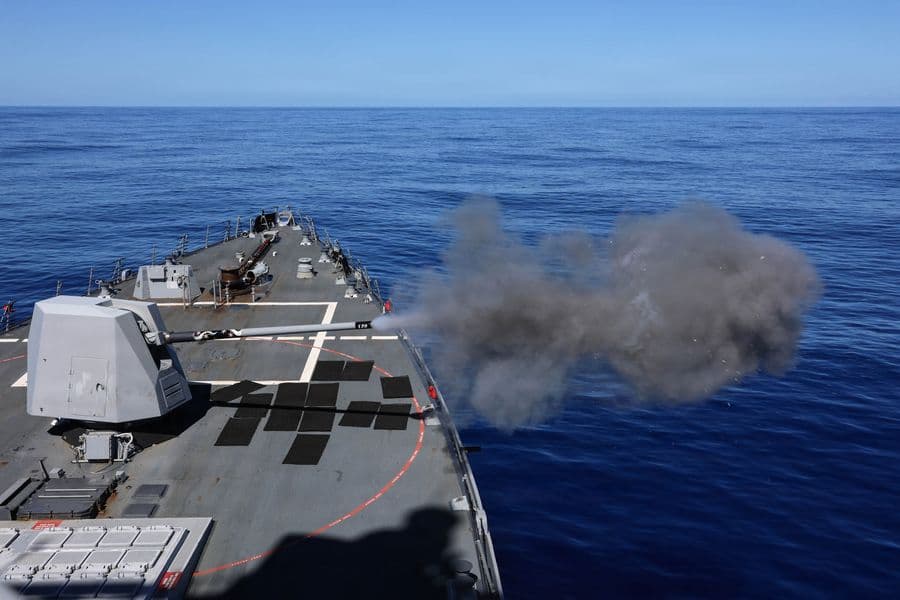
From Hormuz to the South China Sea: Defending Freedom of Navigation in Contested Waters
For centuries, the freedom of the seas principle has sustained the world economy and nations. It has served as an indispensable pillar of international stability, maritime security, and global commerce. The ability of commercial shipping vessels, naval fleets, and fishing boats to navigate international waters unhindered is not a diplomatic luxury—it is the bedrock of international order. Yet today, these foundational rights face unprecedented threats across critical maritime chokepoints, from the Middle East to the Indo-Pacific.
Nowhere is the threat more acute than the months-long conflict in the Strait of Hormuz. Over the course of the last seven months Iran has conducted systematic harassment, unlawful boarding, and illegal seizures of commercial tankers—alongside drone strikes and coercive threats against merchant shipping. All are flagrant violations of international law.
Winning the Data Advantage
The Department of the Navy has invested billions over the past decade modernizing information technology. Cloud migrations, enterprise contracts,...
1d agoRead it on RealClearDefenseThe F/A-XX and the AIM-260 Reclaim the Perimeter
Beginning in the 1960s, the U.S. Navy faced a growing threat from Soviet naval aviation and its developing antiship missile capabilities. Over the...
1d agoRead it on RealClearDefense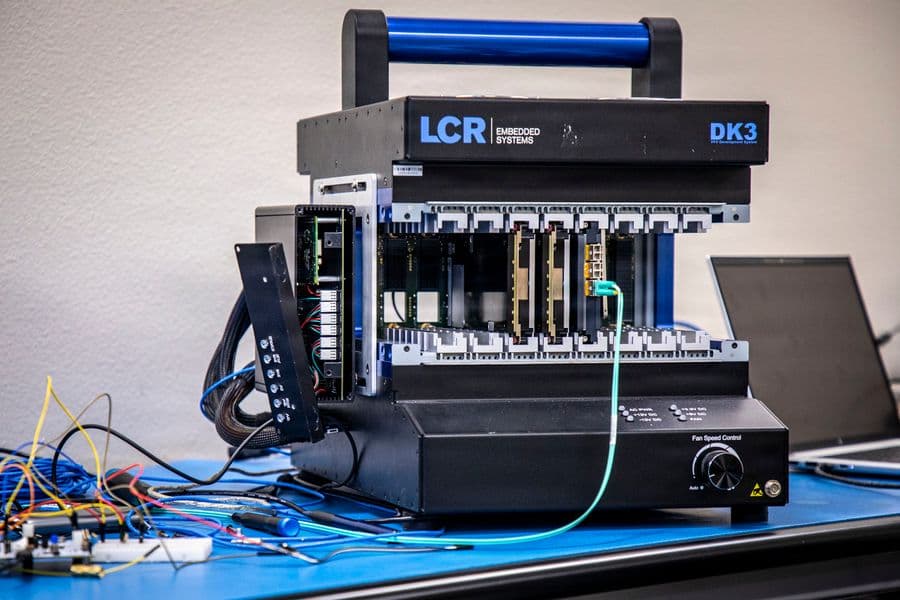
Winning the Data Advantage
The Department of the Navy has invested billions over the past decade modernizing information technology. Cloud migrations, enterprise contracts, cybersecurity improvements, data integration efforts, and digital transformation initiatives have become hallmarks of modernization. Those investments have laid important groundwork for a more connected, more resilient digital enterprise.
Yet despite that progress, commanders still struggle to obtain timely, authoritative information needed to maintain ships, accelerate shipbuilding, improve logistics, modernize acquisition, and make better operational decisions.
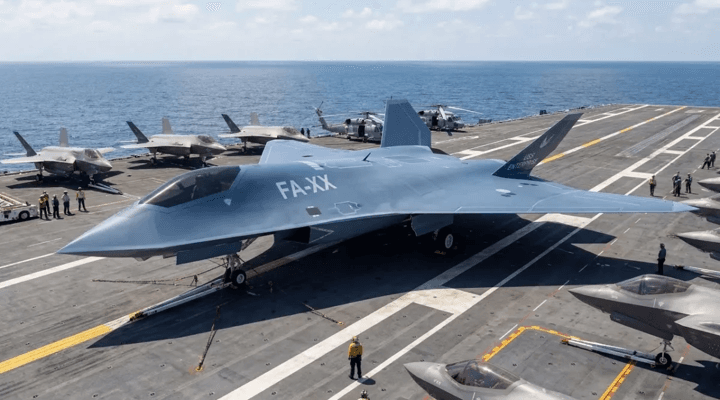
The F/A-XX and the AIM-260 Reclaim the Perimeter
Beginning in the 1960s, the U.S. Navy faced a growing threat from Soviet naval aviation and its developing antiship missile capabilities. Over the following decades, the Soviet Union expanded its ability to launch coordinated attacks against aircraft carriers using long-range bombers and antiship missiles. Aircraft such as the Tu-16 Badger and, later, the Tu-22M Backfire could launch missiles designed to threaten carrier groups.
The Soviet plan was to have bombers approach the fleet, launch their missiles from a distance, and withdraw before U.S. fighters could intercept them. This presented a serious challenge for the U.S. Navy, which needed to defend its carriers against attacks launched from beyond the reach of its existing fighter defenses.

Putin, Plague, and America’s Biodefense Gap
By Ryan Kane • RealClearDefense
From Hormuz to the South China Sea: Defending Freedom of Navigation in Contested Waters
By David F. Lasseter • RealClearDefense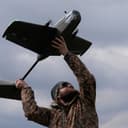
Checklist for Modern Conflict Readiness
By Sergey E. Ivashchenko • RealClearDefense
AUTOWARCOM Is Heading for a Command-and-Control Collision
By Michael Carvelli • RealClearDefense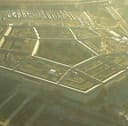
The Unfinished Reform
By Mark W. Castillon • RealClearDefense
From Hormuz to the South China Sea: Defending Freedom of Navigation in Contested Waters
By David F. Lasseter • RealClearDefense
National Guard Soldier Shot While Breaking Up Fight in Washington D.C.
By Military.com
‘No Marine Fights Alone’
By Gidget Fuentes, USNI News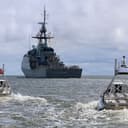
Sea Services Weigh How to Embrace Autonomous, Attritable Tech
By Reeves, NatDef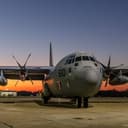
Lockheed Delivers C-130J to Become Navy’s TACAMO Plane
By Stephen Losey, A&SF