
Terrorism
RealClear Context
Click below to continue reading this story, discover more Terrorism stories from over 25 years of RealClear archives, or follow this topic to stay in the know.
U.S.-Led Forces Kill Senior IS Leader in Syria
DAMASCUS, Syria (AP) — A raid by U.S.-led forces in northwestern Syria on Friday killed a senior leader in the Islamic State militant group, the...
07/26/25Read it on Associated Press
Congress Must Reauthorize Section 702 of the Foreign Intelligence Surveillance Act
As Americans recently commemorated the 25th anniversary of the terrorist attacks of September 11, 2001, that killed 2,976 people, politicians, scholars, and members of the public shared many deeply moving speeches and essays about the horror and heroism of that traumatic day. Yet, few people devoted any substantial attention to the intelligence policy failures that made it possible for our enemies to plan and build their forces in the shadows, to conspire and train and ultimately execute the worst terrorist attack in American history. There is considerable value in remembering some of the specific details regarding the intelligence policy failures that made it possible for the terrorists to operate with impunity. Many of those born after 9/11 are unfamiliar with these intelligence policy failures, and many who lived through that dreadful day and its aftermath have forgotten—or were never told about them. More than two decades after the attacks, has the United States adopted policies that could make us vulnerable to the next mass casualty attack?
Notably, the key word in the phrase “intelligence policy failures” is “policy.” The existence of the al Qaeda terrorist network was well known within the intelligence community; indeed, Osama bin Laden made the list of the FBI’s Top Ten Most Wanted Fugitives in the late 1990s. Intelligence collection methods were actually quite sophisticated in the decade-plus before 9/11. Thus, it was not an “intelligence failure” meaning a failure of the collection methods, but a “policy failure.” And what was that policy? The primary policy failure that contributed substantially to the terrorists’ abilities to operate in the shadows, to plan their coordinated attacks, and to launch the attacks that killed almost 3,000 people was the “wall” of separation that Attorney General (“AG”) Janet Reno erected between the “intelligence” side of the house and the “law enforcement” side of the house.
Congress Must Reauthorize Section 702 of FISA
Intelligence collection methods were actually quite sophisticated in the decade-plus before 9/11 ... it was not an “intelligence failure” meaning a...
2h agoRead it on RealClearDefenseThe New Epicenter of Global Terror
How Africa’s Weak States and Rare Earths Drive Transnational Extremism...
1w agoRead it on Foreign AffairsCounterterrorismConvergence in Homeland Security and Homeland Defense
U.S. homeland security and homeland defense activities are converging. Perhaps nowhere more so than in counterterrorism....
1w agoRead it on RealClearDefense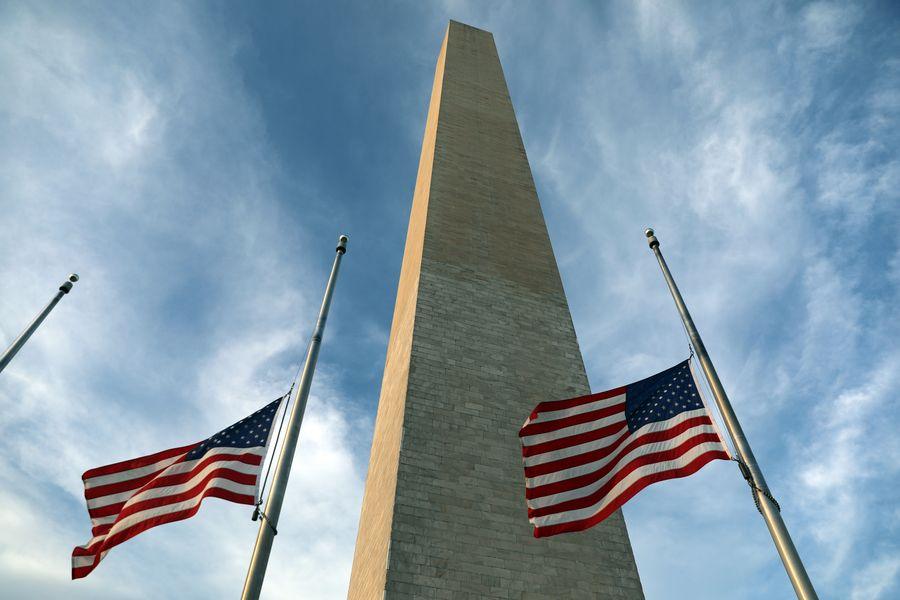
Counterterrorism and the Growing Convergence in Homeland Security and Homeland Defense
U.S. homeland security and homeland defense activities are converging. Perhaps nowhere more so than in counterterrorism.
America rebuilt its national security architecture after 9/11. Since then, it has institutionalized interagency collaboration, and it has developed proficient techniques that disrupt terrorist plots and attacks further upstream. More recently, the country has rebalanced counterterrorism budgets toward other security priorities. This comes as the shifting threat environment – including the terrorist designation of cartels and transnational criminal organizations – is imposing new strains on a lean legacy architecture.
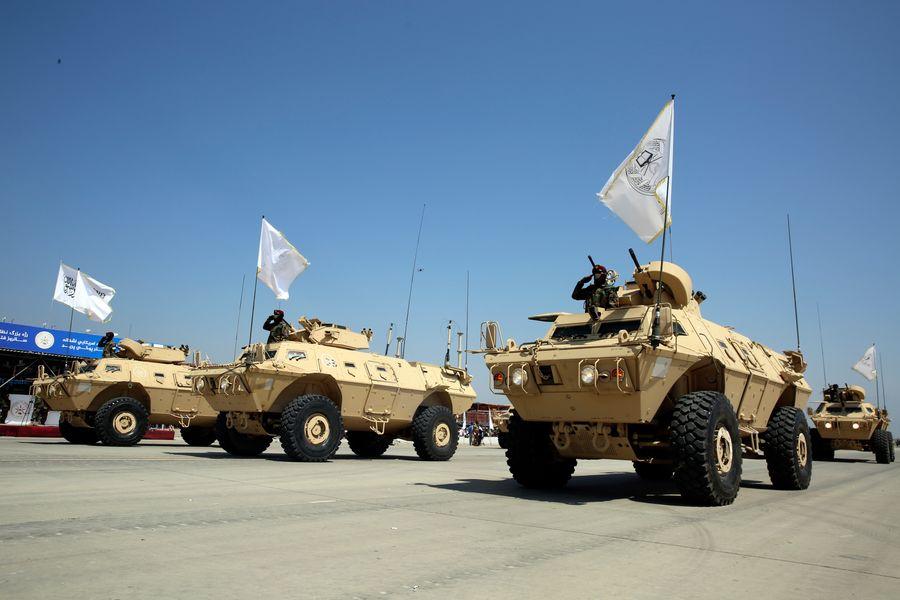
Washington Cannot Ignore Afghanistan’s Weapons Legacy
A war may end with a military withdrawal, but its weapons can continue fighting long after the soldiers have gone. Five years after the United States withdrew from Afghanistan, American-supplied rifles, night-vision devices, and other military equipment have appeared in the hands of militants attacking Pakistan. Weapons intended to strengthen Afghan security forces are now improving the capabilities of armed groups operating across the border. America's longest war ended in 2021, but its security consequences did not.
Washington cannot reverse its withdrawal, but it can address the weapons proliferation that followed. Tracing American-origin arms, strengthening counterterrorism intelligence cooperation with Pakistan, and disrupting trafficking networks offer a practical response. These measures would not require another military intervention. They would help contain a threat that affects regional stability and American counterterrorism interests.
Why U.S. Airstrikes Are Failing to Stop the Global Cocaine Boom
Smugglers are shifting routes and using new tactics to evade military targeting, resulting in record supplies, plunging prices and high purity in...
10/14/26Read it on The Wall Street JournalThe Rocky Path to Prosecuting Terror
The 9/11 attacks were not a standalone
10/14/26Read it on The Washington Free Beacon
Entebbe and the Genesis of U.S. National Counterterrorism
Appropriately, several fine articles have remembered this year’s 50th anniversary of the Israeli Defense Force’s successful rescue of more than one hundred Israeli hostages from the jaws of terrorists aided by Uganda’s reprehensible Idi Amin. But none have noted, to my knowledge, the connection between this worldwide attention-grabbing event and the awakening of official Washington to the need for a national counterterrorism (CT) capability.
As the heroic FlyDubai Flight 1073 in-flight incident reminds civilized societies everywhere, successful, manly ad hoc valor certainly is inspiring, lifesaving, and heart-warming—yet such can in no way substitute for the maintaining of national CT forces capable of responding to larger scale, sophisticated terror attacks.

Operation Epic Fury and the Illusion of Victory
By Stephen D. Cook • RealClearDefense
Previewing The Shenzen Summit: A Critical View
By Stephen Blank • RealClearDefense
How to Win Without Military Victory
By Kevin Eyer • RealClearDefense
We Keep Funding ‘Shared Infrastructure.’ Nobody Has Defined It.
By Frederick Gale • RealClearDefense
Congress Must Reauthorize Section 702 of the Foreign Intelligence Surveillance Act
By Bryce G. Poole • RealClearDefense

Five Takeaways From Navy Nominee’s Rocky Hearing
By Seligman & Weisgerber, WSJ
U.S. Air Force Taps Anduril for Containerized Launcher
By Global Defense News
Time To Say Goodbye to the NMESIS and NSM
By Marine Corps Compass Points
HII and U.S. Navy Break Ground on Shipyard Complex
By George Allison, UKDJ
Rare U.S. Air Force Spy Plane Spotted Over the Black Sea
By D. Malyasov, Defence Blog