
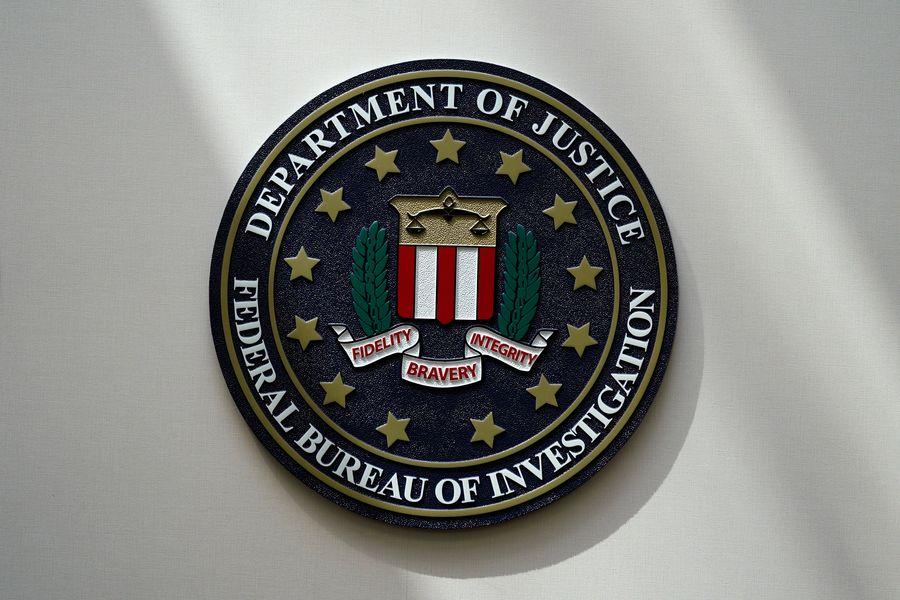
The FBI seal is pictured in Omaha, Neb., Aug. 10, 2022. A White House advisory board is calling for major changes in how the FBI uses a controversial foreign surveillance tool. The President’s Intelligence Advisory Board issued a report Monday, July 31, 2023, with new recommendations related to Section 702 of the Foreign Intelligence Surveillance Act. (AP Photo/Charlie Neibergall, File)
Congress Must Reauthorize Section 702 of the Foreign Intelligence Surveillance Act
Published Nov. 18, 2026 • Read time: 13m

Join the Conversation
0As Americans recently commemorated the 25th anniversary of the terrorist attacks of September 11, 2001, that killed 2,976 people, politicians, scholars, and members of the public shared many deeply moving speeches and essays about the horror and heroism of that traumatic day. Yet, few people devoted any substantial attention to the intelligence policy failures that made it possible for our enemies to plan and build their forces in the shadows, to conspire and train and ultimately execute the worst terrorist attack in American history. There is considerable value in remembering some of the specific details regarding the intelligence policy failures that made it possible for the terrorists to operate with impunity. Many of those born after 9/11 are unfamiliar with these intelligence policy failures, and many who lived through that dreadful day and its aftermath have forgotten—or were never told about them. More than two decades after the attacks, has the United States adopted policies that could make us vulnerable to the next mass casualty attack?
Notably, the key word in the phrase “intelligence policy failures” is “policy.” The existence of the al Qaeda terrorist network was well known within the intelligence community; indeed, Osama bin Laden made the list of the FBI’s Top Ten Most Wanted Fugitives in the late 1990s. Intelligence collection methods were actually quite sophisticated in the decade-plus before 9/11. Thus, it was not an “intelligence failure” meaning a failure of the collection methods, but a “policy failure.” And what was that policy? The primary policy failure that contributed substantially to the terrorists’ abilities to operate in the shadows, to plan their coordinated attacks, and to launch the attacks that killed almost 3,000 people was the “wall” of separation that Attorney General (“AG”) Janet Reno erected between the “intelligence” side of the house and the “law enforcement” side of the house.
The National Commission on Terrorist Attacks upon the United States issued its report over two decades ago. That report is considered by many to be the gold standard for a government commission report in terms of quality and thoroughness—it was even a finalist for the National Book Award (which is almost unheard of for a government report), and hailed as a “masterpiece” by John Updike. According to the 9/11 Commission Report, the FBI had “different tools for law enforcement and intelligence.” Criminal investigations required traditional judicial warrants. When the FBI engaged in intelligence gathering, however, “the rules were different.” Prior to 1978, the Attorney General could authorize surveillance for intelligence purposes of “foreign powers” and “agents of foreign powers.” In 1978, Congress enacted the Foreign Intelligence Surveillance Act (“FISA”), which required “court review of proposed surveillance (and later, physical searches).” Courts interpreted FISA “to require that a search be approved only if its ‘primary purpose’ was to obtain foreign intelligence information. In other words, the authorities of the FISA law could not be used to circumvent traditional criminal warrant requirements.” The Department of Justice went beyond what courts required, and enforced a rule that “criminal prosecutors could be briefed on FISA information but could not direct or control its collection.”
In 1995, AG Reno formalized the procedures governing information sharing between the FBI and prosecutors. “These procedures—while requiring the sharing of intelligence information with prosecutors—regulated the manner in which such information could be shared from the intelligence side of the house to the criminal side.” According to the 9/11 Commission Report, these procedures “were almost immediately misunderstood and misapplied. As a result, there was far less information sharing and coordination between the FBI and the Criminal Division in practice than was allowed under the department’s procedures.” DOJ attorneys and FBI agents referred to AG Reno’s procedural requirements as “the wall,” as in a wall of separation between the intelligence side and the criminal side of the house.
Notably, AG Reno’s requirements initially applied only to the sharing of information “between agents and criminal prosecutors, not between two kinds of FBI agents, those working on intelligence matters and those working on criminal matters.” Bureaucratic pressure within the FBI and at the Foreign Intelligence Surveillance Court (“FISC”), however, eventually led to “the wall” being erected not just between agents and prosecutors, but between criminal agents and intelligence agents, “even agents serving on the same squads.” The Deputy Director of the FBI even cautioned agents that “too much information sharing could be a career stopper. Agents in the field began to believe—incorrectly—that no FISA information could be shared with agents working on criminal investigations.”
Ultimately, FBI agents and DOJ prosecutors came to believe that “the FBI could not share any intelligence information with criminal investigators, even if no FISA procedures had been used.” Because of “the wall” and the erroneous interpretation of the FISA’s requirements, “relevant information from the National Security Agency and the CIA often failed to make its way to criminal investigators. Separate reviews in 1999, 2000, and 2001 concluded independently that information sharing was not occurring, and that the intent of the 1995 procedures was ignored routinely.” In vivid language, the 9/11 Commission Report concludes that “the wall” blocked “the arteries of information sharing.”
And “the wall” had further knock-on effects. While the CIA is responsible for compiling the President’s Daily Briefing (“PDB”), it draws on information from other agencies. The FBI failed to provide a complete threat picture to President Clinton in the late 1990s and to President Bush in the months leading up to the 9/11 attacks. Even worse, other intelligence agencies “deferred to the FBI.” For example, “In the August 6 PDB reporting to President Bush of 70 full-field investigations related to al Qaeda, news the President said he found heartening, the CIA had simply restated what the FBI had said. No one looked behind the curtain.”
The consequences of the failure to share information were, in a word, disastrous. “The FBI did not have the capability to link the collective knowledge of agents in the field to national priorities.” As a concrete example, the 9/11 Commission Report states that the Director of the CIA “knew about the FBI’s Moussaoui investigation weeks before word of it made its way even to the FBI’s own assistant director for counterterrorism.”
Today, the United States once again finds itself hamstrung by a policy of its own making. Unlike the 1990s, however, when it was AG Reno who erected “the wall” that had such disastrous consequences, the responsibility now rests with Congress to fix a broken policy that contributes to a severe intelligence gap. Specifically, on June 12, 2026, Congress allowed Section 702 of the FISA to lapse, reintroducing, through inaction, precisely the kind of self-imposed intelligence gap the 9/11 Commission warned against.
The world is a dangerous place. FISA is one of the U.S. intelligence and law enforcement agencies’ strongest statutory tools to collect information on our adversaries operating in the shadows. Scholars and practitioners distinguish between “regular FISA” and “Section 702,” although this is something of a misnomer. Regular FISA requires probable cause that the target is a “foreign power” or “agent of a foreign power” and applies where the target is a U.S. person or the acquisition of the communications occurs in the U.S. Regular FISA requires a specific court order issued by the FISC and requires “individualized court orders for each target and acquisition.”
In contrast, Section 702 previously authorized U.S. intelligence and law enforcement agencies to collect electronic information on targets overseas using sophisticated collection methods without individualized court orders. Section 702 did not authorize the U.S. government to target U.S. persons. If an intelligence agency gathers information through FISA and puts it into a database, however, and that agency (or another agency) later wants to search the database for identifiers related to U.S. persons, the “query” is subject to specific procedures but does not require pre-approval by the FISC. One U.S. district court has held that querying a database for U.S. person identifiers constitutes a search under the Fourth Amendment and therefore requires a warrant, but the government appealed that decision to the U.S. Court of Appeals for the Second Circuit, which has not yet ruled.
As noted above, Congress allowed Section 702 of the Foreign Intelligence Surveillance Act to lapse on June 12, 2026. Some commentators and officials warned that this lapse would immediately cause the U.S. intelligence agencies to “go dark,” meaning that they would be completely blind to our adversaries’ actions. That’s not quite correct, however, because under FISA’s transition rules, the certifications and directives already in force when Section 702 expired remain valid until the certifications themselves expire. Currently, the FISC has approved certifications of foreign intelligence information including international terrorism, weapons of mass destruction, foreign governments, and counter-narcotics. This means that those certifications are still operational, and the authorizations remain in effect until March 2027. But it is true that the intelligence community will not be able to add any new certifications to the currently authorized slate, meaning that the government cannot add any new categories, and the government’s ability to issue directives to any new electronic communication service providers not already covered by the existing certifications is legally uncertain in practice. And it is also true that if Congress fails to take action, the existing certifications will end in less than five months. If Congress allows that to happen, then we truly will be operating in the dark.
Additionally, even with the existing authorizations in place until March 2027, there is a real risk that service providers may refuse to cooperate with law enforcement and intelligence agencies using their networks to collect information. Senator Mark Warner previously warned that without statutory immunity, service providers may refuse to cooperate. Indeed, refusal to comply with an agency’s directives may be the prudent decision by the service provider simply because of the legal uncertainty. The Brennan Center has observed that service providers may simply not be able to determine if they are able to comply with a directive without incurring liability.
Without Section 702 authorities, so-called “regular FISA” cannot be used at scale to replace what Section 702 accomplishes. Simply put, Section 702 targets vastly outnumber “regular FISA” targets. “Regular FISA” runs on individualized court orders numbering in the hundreds to low thousands each year. In contrast, Section 702 authorities are used for hundreds of thousands of targets each year. In 2023, intelligence agencies relied on Section 702 to track 268,590 foreign targets. In 2024, the number of foreign targets increased to 291,824. Getting a court order from the FISC for each one of those hundreds of thousands of targets is impossible with current staffing at the agencies and at the FISC. Moreover, Section 702 intelligence sits at the very top of the national-security enterprise: the Privacy and Civil Liberties Oversight Board reported that roughly 63 percent of the PDB articles in 2025 contained Section 702 information, and the intelligence community is on record that almost a quarter of the National Security Agency’s intelligence reports draw on Section 702 information. Section 702 is not a marginal program, but is instead a central pillar of the United States’ intelligence programs. It is one of the most productive sources of foreign intelligence the United States possesses, and remains—at least until March 2027—“one of our most important tools for the protection of the nation’s security.”
This is not just a theoretical issue: intelligence collected under the auspices of Section 702 has been critical in thwarting several terrorist attacks on our home soil and abroad. For example, in 2009, the National Security Agency intercepted an electronic communication between “an al-Qaeda courier in Pakistan” and “an unknown individual located in the United States.” The message indicated that the United States-based individual was urgently seeking advice regarding how to make explosives. The NSA passed this information to the FBI. The FBI was then able to identify the individual as Najibullah Zazi. After further investigation, the FBI learned that “Zazi and a group of confederates had imminent plans to detonate explosives on subway lines in Manhattan.” The FBI arrested Zazi and his co-conspirators. Zazi eventually pleaded guilty to “conspiracy to use weapons of mass destruction (explosive bombs) against persons or property in the United States, conspiracy to commit murder in a foreign country, and providing material support for terrorism.” During the plea colloquy between Zazi and the judge, Zazi admitted that he “rented a car and drove from Denver to New York, taking with him the explosives and other materials necessary to build the bombs,” and that he intended to “conduct the attack on Manhattan subway lines.” As the Privacy and Civil Liberties Oversight Board concluded, “[w]ithout the initial tip-off about Zazi and his plans” that came from the NSA’s Section 702 intelligence collection targeting the al-Qaeda courier, “the subway bombing plot might have succeeded.”
Section 702 authorities have also been critical in thwarting terrorist plots overseas. Senator Chuck Grassley stated that as many as 87,000 “lives were at risk in August 2024 when Austrian security services thwarted a devastating terrorist attack on a Taylor Swift concert in Vienna.” There were Americans at the concert, too. As Senator Grassley said, “this tragedy was halted thanks to Section 702.” The U.S. intelligence agencies were able to collect the intelligence with enough time to coordinate with our European allies; without Section 702, the terrorist attack likely would have succeeded. As Senator Grassley said, “Section 702 is our most nimble and effective intelligence collection tool.”
In the modern digital age when a target can use multiple disposable electronic devices—popularly called “burner phones”—the judicial process required for “regular FISA” is simply inadequate to the task. Secretary of State Marco Rubio warned that letting Section 702 lapse would be “devastating to our national security.” Likewise, Speaker of the House of Representatives Mike Johnson said that failure to reauthorize Section 702 risked “a serious calamity on our shores.”
The 9/11 Commission Report states that in the months leading up to the terrorist attacks of September 11, “the system was blinking red.” If Congress allows Section 702 to “go dark” after the current certifications expire in March 2027, we may not even have the capacity to see that the system is once again “blinking red.”
Bryce G. Poole is a Senior Legal Fellow at the Edwin Meese III Institute for the Rule of Law at Advancing American Freedom. Bryce previously served as a senior prosecutor and the Deputy Chief of the Motions and Appeals section at the Office of the Chief Prosecutor of Military Commissions in the Department of Defense. The views presented in this essay are those of the author and do not represent the views of the Department of Defense or its components. The author’s characterizations of the Department of Defense policies, practices, and military operations are based on public sources.


Operation Epic Fury and the Illusion of Victory
By Stephen D. Cook • RealClearDefense
Previewing The Shenzen Summit: A Critical View
By Stephen Blank • RealClearDefense
How to Win Without Military Victory
By Kevin Eyer • RealClearDefense
We Keep Funding ‘Shared Infrastructure.’ Nobody Has Defined It.
By Frederick Gale • RealClearDefense
Congress Must Reauthorize Section 702 of the Foreign Intelligence Surveillance Act
By Bryce G. Poole • RealClearDefense

Five Takeaways From Navy Nominee’s Rocky Hearing
By Seligman & Weisgerber, WSJ
U.S. Air Force Taps Anduril for Containerized Launcher
By Global Defense News
Time To Say Goodbye to the NMESIS and NSM
By Marine Corps Compass Points
HII and U.S. Navy Break Ground on Shipyard Complex
By George Allison, UKDJ
Rare U.S. Air Force Spy Plane Spotted Over the Black Sea
By D. Malyasov, Defence Blog