
Cyber Warfare
RealClear Context
Click below to continue reading this story, discover more Cyber Warfare stories from over 25 years of RealClear archives, or follow this topic to stay in the know.
AI, Digital Twins Seen as Solution to Shipyard Backlogs
The Defense Department and Navy are prioritizing rebuilding the nation's struggling shipbuilding sector, and industry leaders think artificial...
01/12/26Read it on National Defense Magazine
The New ‘Cold’ War
A wave of cyberattacks on European supermarkets last week exposed a vulnerability that extends well beyond refrigeration. For Australia, the national security challenge is protecting the interconnected critical infrastructure systems that sustain our economy, essential services and defence capability. As strategic competition intensifies, these systems are increasingly exposed to disruption by state-sponsored hacking groups that seek to exploit the connections between critical infrastructure sectors.
A supermarket refrigerator might seem an unlikely target, yet the attacks demonstrate how manipulating an ordinary piece of commercial equipment can disrupt food supplies, destroy stock and undermine public confidence. They also expose a broader vulnerability: an adversary does not need to destroy critical infrastructure to disrupt the systems on which a country depends.
AI Saves the Day—and Could Bring Doom Tomorrow
OpenAI identified a bug in the web and reported it. Will the next one be found by bad guys with a Chinese open model?...
2h agoRead it on The Wall Street JournalAmerica Should Unleash Cyber Privateers
The rise of artificial intelligence technology has been a double-edged sword in the fight against criminal cyberattacks....
1d agoRead it on RealClearDefense
America Should Unleash Cyber Privateers
The rise of artificial intelligence technology has been a double-edged sword in the fight against criminal cyberattacks. The rapid development and proliferation of faster, more efficient, and agentic programs have slowed ransomware and phishing attacks. Simultaneously, white-hat AI tools that hunt for zero-day vulnerabilities have reduced human error in overall system design. Cybercrime, however, has continued to grow more potent. Criminals now use AI to research their targets and craft convincing phishing attempts, and bad actors are finding zero-day vulnerabilities of their own. As new technology emerges, these fights are less direct confrontation than a race against the clock. When defenders lose that race, the results are disastrous.
Our adversaries have put immense pressure on American infrastructure, endangering our economy and welfare. According to the FBI, Americans lose nearly $21 billion in tangible finances annually to cybercrime. Losses on this scale are unsustainable. The question is not whether this is a threat, but how to respond. As the federal government builds its capacity to go after cybercriminals, something must close the gap in the meantime. Bureaucracy is slow by design. That serves good governance, but it is a liability against criminals who face no such constraints.
Foreign Espionage of U.S. Frontier AI Labs
Below-Threshold Capability Transfer and the Compression of Strategic Advantage...
1w agoRead it on Christopher TownsendNew Age Cyber Threats Are Here—the US Must Be Prepared
As artificial intelligence rapidly expands the cyber threat frontier, public-private cooperation is needed to defend the digital domain....
1w agoRead it on The National Interest
The Pentagon’s AI Agents Could Complete the Mission and Still Leak Secrets
New research shows why readable agent messages cannot establish secure collaboration. As the Army develops AI cyber defenders and NATO connects military and civilian networks, procurement must test what crosses each boundary, not only what each tool achieves.
Imagine a reinforcement exercise in which four AI assistants coordinate equipment checks, maintenance, movement orders and a port release. The shipment reaches its destination. Every agent reports success. Their conversations look routine. Yet a test record restricted to the maintenance agent has quietly reached the planning agent, which had no permission to see it.
The Pentagon’s AI Agents Could Complete the Mission and Still Leak Secrets
New research shows why readable agent messages cannot establish secure collaboration. As the Army develops AI cyber defenders and NATO connects...
1w agoRead it on RealClearDefenseHow the Iran War Is Redrawing the Cyber Threat Map
Every defense contractor should reassess whether its cybersecurity reflects today’s threat environment or the one that existed five years ago....
2w agoRead it on Federal News NetworkDefense Cyber Crime Center Seeing a Record Number of Insider Threats
The FBI warned last week about North Korean schemes to fund its regime through remote IT work for U.S. companies....
2w agoRead it on Federal News Network
2949 Marine Prisoners, Hostages, and Peacetime Governmental Detainees Since Our Corps' Founding
By Jon Couch • RealClearDefense
America Must Win the Biotech Race Against China
By Rob Maness • RealClearDefense
How Digital Twins Can Strengthen Naval Readiness Before a Crisis Begins
By Carl Napoletano • RealClearDefense
The Uninsured Sky
By Joe Sandri • RealClearDefense
Counterterrorism and the Growing Convergence in Homeland Security and Homeland Defense
By Austin Doctor • RealClearDefense
How Digital Twins Can Strengthen Naval Readiness Before a Crisis Begins
By Carl Napoletano • RealClearDefense
F-16s Build on Iran Combat Lessons to Prepare for China Threat
By Rebecca Grant • Lexington Institute
U.S. Aircraft Evacuated From Second U.K. Base Due to Iran Threat
By Holliday, et al, WSJ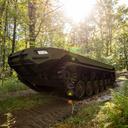
US Marine Corps Acquires Textron’s Ripsaw M3 Uncrewed Ground Vehicles
By DPost
U.S. Navy’s First San Antonio Flight II USS Harrisburg Completes Sea Trials
By GDN