
What Asia Wants from the U.S.-China Great Power Relationship
Last updated 01:00 AM EDT • Read time: 5m
Beijing put forward the idea of a “New Type of Great Power Relationship” to promote cooperation and build trust with Washington. This conceptualization is presented as a rebuttal to power transition theory, which predicts the inevitability of conflict between states quo and rising powers. China sees the growing possibility of confrontation with the United States, especially since the U.S. rebalance to Asia, and wants to show its desire for cooperation by declaring its alleged new great power relationship. The Sunnylands summit between President Xi and President Obama in early June signaled that they both want this bilateral relationship to avoid conflict and be cooperative.
But can they succeed?
Barriers to cooperation and trust-building reside not only in Beijing and Washington, but in the capitals of countries across the Asia-Pacific region. This new type of great power relationship can only be achieved by successfully reassuring other countries that both sides are truly committed to a cooperative approach.
China’s rapidly expanding economic power and perceptions of an increasingly aggressive military and paramilitary action over the past decade has crystallized concern over its intentions. Growing economic ties with its neighbors has gained Beijing more leverage on regional issues. The security concern that China is using its economic power to pursue a tougher diplomatic approach and more robust military capabilities has grown, especially after China took Japan’s place as the second largest economy in the world.
Most, if not all, countries in the region welcomed the U.S. rebalance, as it showed the U.S. readiness to engage in the region on more than just security matters. As Washington expected to maintain stability in the region to secure its interests, some countries anticipated using Washington to increase leverage with China. The strength of the U.S. rebalance lies in other countries’ perception and fear of the Chinese threat. The U.S. place in Asia is secure because these countries expect the United States will help deter China from hurting their interests by asserting its growing economic and military might. In their minds, China and the United States are natural competitors.
Maritime territorial disputes are a critical obstacle to a mutually beneficial relationship between China and the United States. Japan, for example, enjoys an explicit U.S. security guarantee. Since the Diaoyu/Senkaku islands issue escalated in 2009, Sino-Japan relations has been trapped in an impasse amidst constant military tension. Though the United States does not have an official position on the territorial dispute, it has confirmed that defense of the Senkakus falls under the Treaty of Mutual Cooperation and Security between the United States and Japan, which means the U.S. is ready to aid Japan in defense against China.
In “Defense of Japan 2013” published in July, Japan expressed its concern about China’s threat of using force to control the islands and its expanding military modernization, charging that “China has attempted to change the status quo by force based on its own assertion which is incompatible with the existing order of international law.” At the same time, the report emphasized the contribution of U.S. military presence in maintaining regional stability. From Japan’s perspective, China is a threat to its national security and the United States is on its side.
A similar situation can be observed in another U.S. ally, the Philippines. Manila also has territorial disputes with China and a mutual defense treaty with the United States. In the fight against China, the Philippines expects the United States will be on its side.
Furthermore, other countries are not only using the United States for security deterrence against China, but balancing among each other. As Evelyn Goh argues, Southeast Asian states utilize the relationship with one of them as leverage to prevent the over-influence from the other, and this power balancing is a tool to tie both down to the peaceful norms of conduct.
Nations in the Asia-Pacific have attempted—with some degree of success—to push Beijing and Washington into conflicting standpoints in many regional issues. Despite Chinese and U.S. leaders urging that the region is big enough for both powers, the Chinese threat theory endures and with it the perceived need for a strong U.S. balance against China. In the future, this could provoke confrontation. For example, when the United States embraced Myanmar’s democratization, a number of newspaper articles depicted Myanmar as the focus of U.S.-China great power competition, writing as if Myanmar must choose a side.
This perception of conflict as natural to Beijing and Washington is the main barrier to a new great power relationship. As long as the United States is regarded as the counterbalancing power, countries will continue to try to draw the United States to help them deal with the conflict and unwelcomed influence from China, regardless of what the intention of either one of them.
How Beijing and Washington can change these countries' perception is the key to the construction of a new type great power relations. A problem for the United States is that the effectiveness of engagement depends on how it responds the expectations of its partners in Asia, which are demanding a counterbalance to China. Thus, there seems to be a paradox of regional stability and cooperative U.S.-China bilateral relations.
Therefore the crux of the matter for the bilateral relationship is how much China can make other countries feel less threatened. This change cannot be achieved unless it is promoted by both Beijing and Washington. By diminishing the importance of the balance and counterbalance, China will be able to rebut the power transition theory. Cooperation and development are already a cliché to Asian audiences; the challenge for Beijing and Washington is to show why this time is different.
Yanhong Xu is an M.A. candidate at School of Foreign Service, Georgetown University and a resident WSD-Handa Research Fellow at Pacific Forum CSIS.

Trump's Disrupt First, Negotiate Second: Greenland in Focus
By Meda Parameswara Reddy • RealClearDefense
In Seeking Peace With Beijing, Taipei Is an Asset, Not a Burden
By Alexandru Filip • RealClearDefense
Strike First: Israel's Inevitable Doctrine for the Iranian Axis
By Lance Gordon • RealClearDefense
It’s Not President Trump but Thomas Friedman Who Should Be Ashamed
By Francis P. Sempa • RealClearDefense
Putin, Plague, and America’s Biodefense Gap
By Ryan Kane • RealClearDefense
U.S. and Japan Begin Naval Exercises Near Taiwan
By Mari Yamaguchi • Associated PressU.S. and Japan Begin Naval Exercises Near Taiwan
By Mari Yamaguchi, AP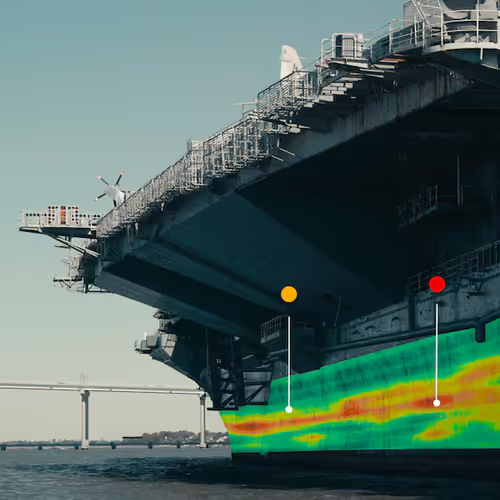
U.S. Navy, Gecko Robotics Surge AI Maintenance Contract
By Ceder, Simkins, Navy T.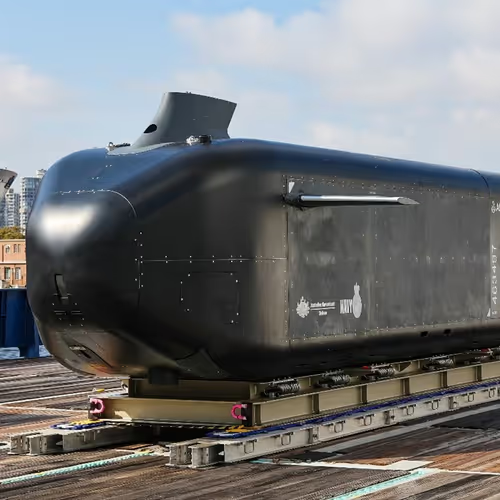
Ghost Shark XL-AUV Payload Bay Seen For First Time
By Thomas Newdick, The WarZone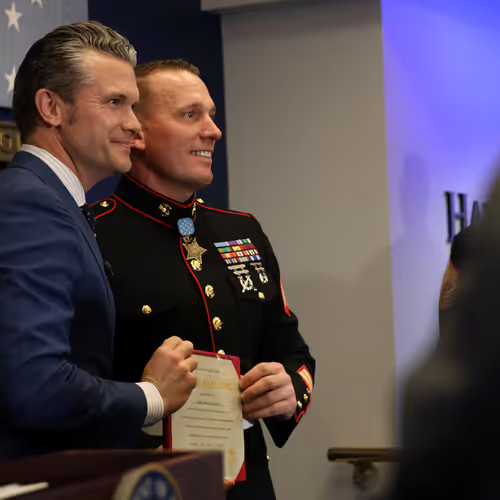
Dakota Meyer Tapped As Barracks Task Force Senior Advisor
By C. Stassis, MC Times