
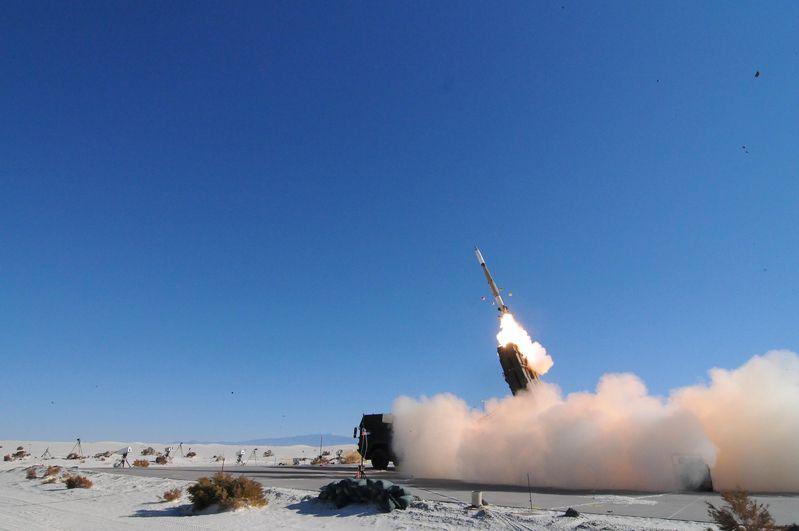
Misleading Missile Defense Claims are Inaccurate and Dangerous
Published April 26, 2018 • Read time: 5m
This week rebels in Yemen again launched missiles against U.S. allies in the Middle East. Unfortunately, this has become all too commonplace in recent months. But the good news is that missile defenses developed by the United States are doing their job.
In spite of these successes, some are casting doubt on U.S. missile defenses, using social media posts from the Middle East and pointing to potential purchases of Russian-made systems. While American missile defenses are not perfect, it would be a mistake to allow these crucial systems to be derailed when there is overwhelming evidence of their effectiveness.
As the former commanding general of the U.S. Army Space and Missile Defense Command, it was my responsibility to ensure the missile defense systems operated by the U.S. Army were capable of defending our deployed forces and allies. In hearings before Congress, I have frequently testified to the critical role the Patriot system has played and continues to play in air and missile defense operations. Bottom line: although Patriot is not infallible, it has proven itself in both testing and more importantly, during combat operations. Ask leaders like General Dave Petraeus, former commanding general, 101st Airborne Division (Air Assault) and many others, who witnessed firsthand its significant success during the 2003 Iraq War.
Recently, the New York Times reported that India is close to completing a $6 billion purchase of a Russian missile defense system, the S-400, which would violate U.S. sanctions against Russia. The article points out that our NATO ally, Turkey, has also signed an agreement to purchase the Russian system, and refers to the sale as a potential setback to the “struggling” Patriot system. This characterization could not be further from the truth.
As Allies' Capabilities Grow, They Need To Work With U.S. on Nuclear Signalling
President Kennedy: MAD & the Lessons of Berlin and Cuba
The Pope of FEMA
Over-Feminization of Journalism and Modern Woke Reporting
In a recent Foreign Policy article, Jeffery Lewis points to social media videos to question and undermine whether Saudi Arabia successfully used the U.S.-built Patriot to intercept missiles launched by Houthi forces in Yemen. Based on social media posts and success rates from the 1991 Persian Gulf War, he concludes that “missile defense systems do not represent a solution to the challenge posed by growing missile capabilities.” Unfortunately, these reviews fail to recognize the significant improvements made to the Patriot since 1991 and the valuable role it played in 2003 and beyond.
What the YouTube-based analysis of missile defense does not take into account is that multiple interceptors are often fired at each incoming missile. In cases where “salvo” or “ripple” engagement methods are employed, the first interceptor to reach the target is often successful. Thus, it is inaccurate to characterize the remaining interceptors as “misses.” The recent report of only one death from debris is more consistent with the Saudi’s claim that the missile defenses were successful. More importantly, if we want to know how successful Patriot is in combat, we do not need to rely on YouTube, Saudi statements, or 27-year-old information from the first Gulf War. The Missile Defense Agency has published its missile defense test record, which states that “76 of 93 hit-to-kill intercept attempts have been successful across all programs since the integrated system began development in 2001.”
Missile defense critics such as Lewis are stuck arguing for unrealistic goals, saying that the “only solution” is to persuade every country to get rid of ballistic missiles. This is a noble goal, but in the meantime, and just in case that doesn’t happen, we need to be realistic and ready.
The reality is that once a ballistic missile is launched, missile defenses are the only credible protection we have currently fielded. Should we believe that missile defenses work perfectly? No. But believing that they don’t work at all is even more dangerous, leading possibly to preemptive strikes and overwhelming retaliation that escalate and destabilize conflicts.
While it is likely that India and Turkey are making their missile defense purchasing decisions as much from an effort to signal stronger economic and political ties to Russia than out of military necessity, the misleading claims of missile defense critics provide cover for allies and partners to turn elsewhere for military equipment, or to not purchase any missile defenses and rely on the United States for protection during a conflict.
Fortunately, many of our allies and partners are relying on Patriot’s proven record of success. Lockheed Martin just won a U.S. Army contract to provide Patriot PAC-3 missiles to Romania and others. In the last two months, Raytheon won a Foreign Military Sale deal to support Qatar’s Patriot system, Poland signed a $4.75 billion deal for Patriot, and a potential sale to Sweden just received U.S. State Department approval. Sweden would then join the 14 nations who currently operate Patriot around the globe. On March 13, delegations from eight countries witnessed a successful test of the Patriot system, as PAC-3 interceptors engaged two tactical ballistic missiles.
What is accurate and factual is that the “struggling” Patriot system is alive and well. Patriot, along with our other U.S. missile defense systems, continues to improve and to do the job of protecting the United States, our deployed forces, and our allies.
LTG David L. Mann, USA (Ret), is the recent former Commanding General of the U.S. Army Space and Missile Defense Command.

A Sweet American Original
By Greg Maresca • RealClearDefense
South Korea's OPCON Debate Is a Test of Alliance Readiness
By Daewon Cho • RealClearDefense
When Does Peacetime Access Become Wartime Capability?
By Alp Cenk Arslan • RealClearDefense
The Missing Seats at the Table
By Dennis T. Cosgrove • RealClearDefense
We Exported Our Arsenal Manufacturing, Now We Must Rebuild It.
By Justin Fulcher • RealClearDefense

Sign of the Times: CCAs Dominate a Major Fighter Conference
By Bill Sweetman • The Strategist (ASPI)
Marines Want Naval Strike Missiles With Double The Range
By The WarZone
U.S. Navy Targets 79 New Cutter-Based FF(X) Frigates
By A. Servaes, Global Defense
The Hegseth Grenade: A Sea Change at Newport
By Robert C. Rubel, CIMSECSign of the Times: CCAs Dominate a Major Fighter Conference
By B. Sweetman, ASPI