
Looking at the Long-Term Ukraine Crisis
Last updated 08:09 PM EST • Read time: 8m
With Russia’s increasingly bellicose rhetoric, growing buildup of troops along the borders of Ukraine, and deployment of sophisticated military equipment to Belarus, the threat of an invasion appears imminent. Experts are studying President Vladimir Putin’s intent and the military capabilities he could leverage forecasting scenarios that would define the early days of a renewed armed conflict. Others are outlining plans for how the West might respond. Some have even proposed pressuring Ukraine to concede to significant Russian demands or fulfill Minsk II measures to defuse the crisis.
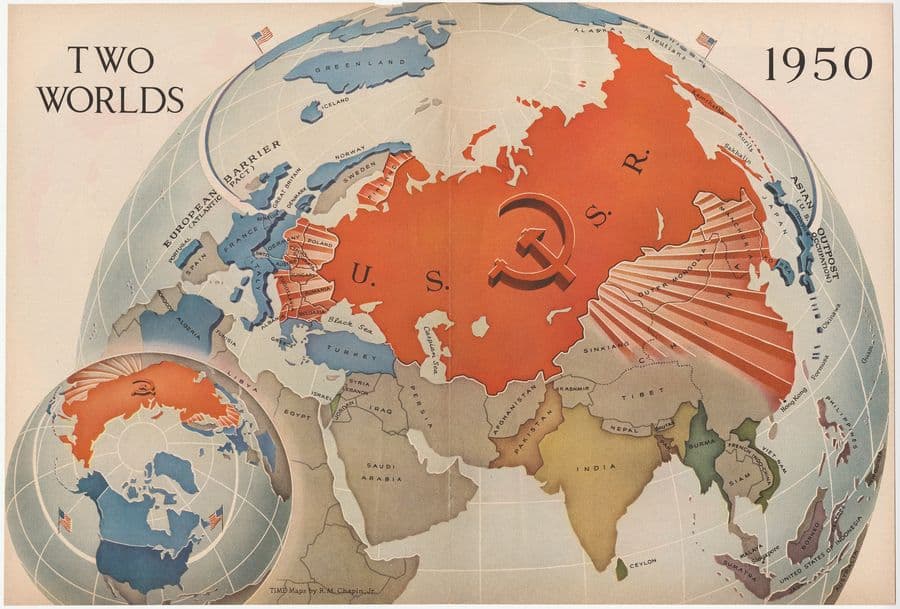
While true that an incursion into Ukraine poses a grave threat to European security, fixating on short-term scenarios and their solutions risks missing the forest for the trees. A Russian invasion — similar to or even more muscular than its annexation of Crimea in 2014 — is not the end game for the Kremlin or the crisis itself. It’s just one phase in a long struggle between the West and Russia. In contemplating policy responses to Putin’s recent aggression, the West must consider the underlying issues that have created the crisis and will extend this long-term competition: ambiguity over Ukraine’s role in Europe, competing views over Russia’s place in the world, and Moscow’s increasingly tight hold on Belarus.
Ukraine’s role in Europe?
Putin sees Ukraine – with its deep historical, cultural, and lingual ties – as integral to “Russkiy Mir,” or a “Russian world.” This view, which is reflected in his public statements, is driven by a frenzied historical nostalgia and is cited as justification for Russia’s actions. It emerged with renewed intensity in Putin’s now infamous essay about the historical unity of Russia and Ukraine — published just months before the Kremlin dramatically escalated its deployment of troops along Ukraine’s border. This portrayal of Ukraine, as not a sovereign state in its own right but a part of Russia’s core, is also shared across much of Russian society.
While one can trace a Ukrainian independence movement almost from the creation of the Soviet Union in the early 1920s, Ukrainians have increasingly understood this crisis as a battle over their existence as a sovereign nation since 2014, which solidified Ukraine’s national identity. Despite the Kremlin’s belligerent and wide-ranging attempts to subjugate Ukraine to its will, the desire among Ukrainians to direct their own path remains strong. And while Ukraine’s progress on legal reform has been difficult and important steps remain to be taken on economic reform, it has proven to be a persevering, albeit flawed, democracy. This political system, however, is incompatible with Putin’s vision of Ukraine. If Ukraine’s embrace of democracy is successful, it will threaten the current authoritarian model Putin has built in Russia and tried to export in his ‘near-abroad.’
Still, with its important geopolitical position, a population of 44 million, and a significant agricultural and industrial base, Ukraine has the potential to become a fully integrated member of the European community, as opposed to a subjugated Russian satellite state. A sovereign Ukraine could mean a significant market and trade partner for the West and a strategic partner sharing democratic values and institutions.
Unfortunately, differing views exist across individual NATO and EU member states concerning Ukraine’s place in Europe. Some would like to see Ukraine integrated into European institutions more rapidly to prevent increased Russian influence in Eastern Europe. Others prefer a slower approach, saying Ukraine is not yet ready for NATO or EU membership, possibly to mollify Russia, but overall, to ensure full Ukrainian reform. This array of views creates challenges for a unified Western response to Russia’s recent actions.
The threat of a Russian invasion due to these conflicting views of Ukraine presents a serious challenge for the West. The United States and NATO must consider whether it would support an armed Ukrainian resistance after Russia commits its armed forces to a combat operation that Europe has not seen since 1968 or whether it should seek a quick ceasefire from both Russia and Ukraine. While some Western European countries might prefer a ceasefire, if the West is not careful, it might have to accept the crisis devolving into a frozen conflict akin to Transdniester or Nagorno-Karabakh scenario that provides diplomatic advantage to Russia in the future. While war should always be the last option and the West should never try to ‘fight Russia to the last Ukrainian,’ we should also not deny Ukraine the right to choose to fight for freedom vice submit to Russian subjugation.
Clashing Visions of Russia in the world
Russia sees itself as an exceptional world power with global ambitions dating back to Byzantium. Though not as capable as the United States or a rising China, the Kremlin believes Russia should be one of a handful of unique countries able to ensure its views are considered when finding solutions to the most pressing international issues. Convinced of its strengths in key dimensions—its nuclear arsenal, diplomatic presence, and oil and gas reserves—Moscow thinks it can challenge other great powers in key locales, especially in its ‘near abroad.’ Inside Russia, the Ukraine crisis showcases Putin’s ability to stand up to the West and potentially achieve one of his central goals: block an encroachment of NATO along Russia’s western border. If successful, Putin will send a strong signal to non-NATO countries on and near Russia’s periphery that Moscow alone decides the security fate of those around it.
Western countries, on the other hand, view Russia through a completely different lens. They see a Russia that is in decline—a shell of the former Soviet Union. At best, it’s a European regional power, but still with a substantial nuclear arsenal and the intent and capability to act as a spoiler on the world stage as opposed to a security exporter. However, this recent crisis underscores that the West cannot wish Russia away based on a view of Moscow’s decline.
Over the long term, the West must determine how to deal with a Russia that aspires to be a world power, advancing a vision that is not only anathema to Western values but incompatible. Also, NATO will need to confront the issue of how to treat a Russia willing to exercise the use of force to change borders in its neighborhood. Since the current Putin regime is unlikely to alter its world view over the next two decades, the West will have to manage this Russia, as it is now, as opposed to a Russia it would prefer.
Don’t forget about Belarus
Depending on the success of a Russian seizure of all or parts of Ukraine, Putin could further consolidate control over Belarus. Attacking through Belarus would require a deployment of significant numbers of Russian military forces to conduct the invasion, protect the western flank of the invading force, and provide another secure logistics line of support. Russia’s upcoming exercise in Belarus appears to set such a plan into action. With a major Russian force presence located in Belarus, President Lukashenko would no longer be able to play the Kremlin and the West off each other as he has so adroitly done over the last three decades. Furthermore, since the turbulent 2020 presidential elections in Belarus, we’ve seen Moscow draw Belarus even tighter into its orbit. If Russia used Belarus territory to support an invasion of Ukraine, it would cement a final break with the West, and it would be difficult for a NATO or EU member state to engage with Belarus in any meaningful manner in the near future.
Belarus certainly poses a conundrum for the West today and in the years to come. If Putin tightens his grip on Ukraine and Belarus, NATO will be faced with a de facto Russian sphere of influence across Eastern Europe. The West will then have to decide whether it will prioritize the containment of Belarus and Russia, driving the two countries closer together, or look for seams to split the two countries apart. But with increased Russian influence, seams may be hard to find and even harder to exploit. Additionally, the United States and NATO will need to take into account the possibility that Putin could shift his attention elsewhere in Europe, such as Poland and the Baltic States, and maybe even Finland if he succeeds in consolidating control in Eastern Europe.
The long term
Ultimately, this Kremlin-manufactured crisis is about more than whether Putin will invade Ukraine or not. It’s about deeper-seated, broader issues of European security that NATO and the EU must contemplate and confront to ensure a free and prosperous Europe for the long run.
R. Taft Blackburn is a retired 30-year Army and Eurasian Foreign Area Officer (FAO), Taft currently works as a Research Staff Member at the Institute for Defense Analyses (IDA). Prior to being assigned as a FAO, he served in the Second Armored Cavalry Regiment, deploying to Haiti as the Ghost Troop Commander, and as an armor platoon leader and executive officer in Germany during the last years of the Cold War.
Miriam Roday is a researcher at the Institute for Defense Analyses where she focuses on Transatlantic security, Russian foreign policy, and hybrid warfare. Miriam has also written extensively on Russian efforts to undermine democracy through the weaponization of information across Europe, Africa, and the United States.
Alex Shykov is a researcher at the Institute for Defense Analyses with native proficiency in Ukrainian and Russian languages. His research focuses on European and East Asian security issues, U.S. foreign policy, and nuclear weapons and operations. He earned his master’s degree from the Fletcher School of Law and Diplomacy at Tufts University.
From Siberia to Fairford: How Operation Spider’s Web Has Changed the Rules of Airpower
By Frank A. Rose • RealClearDefense
Faster Simulations, Better Defense Decisions
By Rut Lineswala • RealClearDefense
Will HASC Have an Oversight Subcommittee in the Next Congress?
By Christopher J. Bright • RealClearDefense
The U.S. is Overpaying for Missiles
By Alex Lee • RealClearDefense
The U.S. Nuclear Deterrent Umbrella
By Peter Huessy • RealClearDefense
From Siberia to Fairford: How Operation Spider’s Web Has Changed the Rules of Airpower
By Frank A. Rose • RealClearDefenseFaster Simulations, Better Defense Decisions
By Rut Lineswala • RealClearDefense
Bombers Could Have a Major Air-to-Air Combat Role
By Joseph Trevithick, The WarZone
Pentagon, Lockheed Agree to 10-Year Deal for 850 F-35 Jets
By M. Scanlon, Military T.
The Marine Corps Has a Boot Problem
By Travis Pike, Sandboxx News