
It Is Written Russia, It Is Read USSRIA
Last updated 06:15 AM EDT • Read time: 10m
For two months, the war in Ukraine has been killing people and destroying cities, with increasing and intolerable intensity, ranging from the devastation of urban centers and territories, to the massacres of the population, crimes that are inadmissible and prosecutable as such. And it is since the beginning of the war that many analysts have wondered what the West could do to avoid Russian aggression, where did we go wrong - and certainly errors of various kinds have been committed - but the main obstacle has been (and still is) that the West has not been able to speak with Russia because it has forgotten the language, the appropriate language, which is made up of words, arguments but also symbols, acts and resoluteness, even on the military level, and of respect for the opponent. The West of Eisenhower, Adenauer, Ronald Reagan and John Paul II knew how to speak to the USSR, because in addition to respecting the enemy, it knew its ideological essence and political practice; and it is also thanks to this language that the Soviet empire collapsed. Today the West has lost that knowledge, and in the meantime the Soviet temptation, always alive not only in the upper echelons of the Kremlin but also in a part of Russian public opinion, has reappeared and found shape, already from the partisan occupation of Georgia and then of Crimea, in the expansionism conveyed by the war, on the Middle Eastern and North African chessboards.
The Putinian novelty, brutal and chilling, consists in having applied the Georgian doctrine today to a totally – both geographic and cultural – European nation, but this could have happened because that doctrine comes from the ideological-pragmatic depths of the Soviet Union and is consubstantial with the political theory of Russia today. In a general historical-logical sense, we should say that the Russian Federation could not act differently towards Ukraine, because it was forced to do so by its own internal tendency, which has an original Bolshevik imprint that aims at goals without worrying about means. and that, considering people as means and not (in Kantian terms) as ends, the problem of the human cost of the wars it wants to wage does not arise. The attack on Ukraine brings us face to face with this ideological reality that the West had forgotten, but it is precisely with this essence that the West should have confronted itself and should now deal to stop the Ukrainian massacre, by imposing a peace.
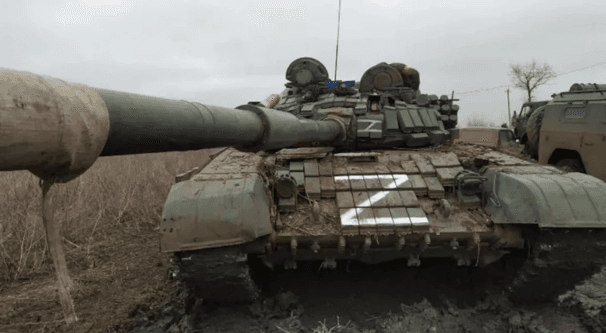
In this pragmatics, symbols matter. Z, the enigmatic letter drawn on Russian military means and weapons operating in Ukraine – which means, as the defense ministry states, "Za pobedu" ("Victory") or which is a mere signal to distinguish them from those in use at the Ukrainian army - has become an ideological symbol of a mysterious and evocative power, which proceeds by emanations rather than by arguments. The Z therefore expresses an entire system of domination, definable as zetism or zygism, according to the formulation of Yuliya Latynina, the regime of the letter Z (a title that Orwell would have liked), an empty ideological structure that simply refers to this infamous Z and which defines the current neo-Sovietism: powerful in propaganda (and disinformation) but empty in values, structured in doctrine but primordial and cynical in action. As Anna Schor-Tschudnovskaja wrote in the Neue Zürcher Zeitung, «just as the symbol "Z" is very charged but devoid of content, so also behind the "zygism" there is theory but intellectual impotence». Today, in the martyred Ukraine, Z symbolizes the orgy of war, to paraphrase the title of a famous film, and represents continuity with Bolshevism. The recent appearance of the hammer and sickle flag on the tanks marked with the Z tells us that the Russian army is still the Red Army; the images of soldiers hoisting the Soviet flag on the flagpoles of buildings in destroyed Ukrainian cities are the terrifying seal of this neo-communist symbol. In fact, there is not, properly speaking, a post-Soviet Russia, but only a neo-Soviet one, with some characters certainly very different but with very similar genetic sequences and in some respects identical to the old USSR.
In the countries of the former Soviet bloc there was, despite the reluctance of interest groups linked to the old USSR, a definitive condemnation of communism, with the consequent public, official and institutional enhancement of historical memory, while in Russia there are no public institutions of remembrance and condemnation, indeed, any attempt in this direction is stifled and its activists imprisoned, as evidenced by the closure of the Memorial Foundation by the Supreme Court of Moscow.
This lack of awareness essentially depends on the fact that present-day Russia is not born from a people's revolution or from the coup d'état of an elite, but from the collapse of the Soviet Union; that is, it does not arise from a project but from a failure; not from a will but from a necessity. From this we understand that the essence and forms of the old regime have been transfused into the veins of the new organism. To use a double formula, the current Russian regime would be: Soviet communism less Marxism-Leninism, and protectionist statism plus financial roguery.
If the West in general has not adequately grasped the symptoms that in the new Russian mythography referred to the old Soviet bureaucracy, some attentive and competent observers, Polish in the first place, had instead understood that this was the key to deciphering and countering the Kremlin's moves. Historian Łukasz Kamiński, for example, had declared that «the warning signs about the preparations for war in Ukraine have been ignored, because communism has not been adequately assessed and condemned».
It is from here that we must start to decipher the background of this absurd war, to face the Russian expansionist aggression and to unmask its proselytizing action towards the West, towards some political, cultural and religious sectors both on the right and on the left; sectors that, for various and sometimes even opposite reasons – ideological, religious, cultural and even financial ones – are sensitive to the Kremlin sirens, now slightly modified with respect to the Marxist-Leninist doctrine, but always identical in terms of operational methods and geopolitical purposes.
The not understood problem is therefore communism, meaning today this term not only as an ideology of Marxism-Leninism, but also as a bureaucratic and control structure (the forms of which arrive even in many Western countries, as we bitterly had to note in the despotic political-health management of the pandemic). After the end of the Cold War, the West stopped dealing with communism, stopped studying it and worrying about it, because it considered it essentially dead. Colossal historical mistake, which could be very costly. One of the premises for this abandonment of the problem was the idea that that ideology had been buried under the rubble of the Wall and that therefore history had undergone such a turn as to stop and, in this hyperbolic sense, end. The thesis of the end of history (Fukuyama) was accompanied by the renunciation of the study of the communist enemy, considered finished in its ideological substance and in its political danger.
But the Soviet past was by no means archived, and Ukraine is undergoing its onset today, according to what Russian opponents of the Putin regime also claim, such as Boris Nemtsov, assassinated in 2015, who in a report on Ukraine, which came out posthumously, pointed out how «Russian propaganda has paid exceptional attention to the Great Patriotic War [World War II] and how Putin made it a key point in his ideological coordinate system». To the point that in the Ukrainian case, «the rhetoric of the war years seemed to be projected on political topicality. In the Russian propaganda, the Ukrainian government became "Nazi" and Russia seemed to be involved in the same situation as in 1941-45, that is, the fight against the Nazis», so a true patriot must necessarily «support the secession of Crimea and Donbass from Ukraine». And so, says Nemtsov, «the anti-fascist rhetoric used by the official media has transferred the political crisis into the language of the war of annihilation». Just as in order to defeat National Socialism Stalin declared it necessary to eliminate as many Germans as possible, so to overthrow the Zelensky government (which, not surprisingly, Russian propaganda wanted to brand with the absurd and defamatory accusation of "neo-Nazism”) the new Kremlin seems to indicate the need to destroy as much Ukraine as possible.
The weakening of the Western identity and system of values has provided the Russian-Soviet superpower with the possibility of aggression also on a spiritual level (grotesque: a regime of atheist Marxist-Leninist mentality which enjoys the almost total acquiescence of the Moscow church and which accuses of secularism the West). The declaimed injection of spirituality of which the Kremlin claims to be the bearer and which it says it wants to oppose to the degenerate West is just a shrewd declination of the Leninist doctrine, adapted to the new global circumstances, and is a trap with which the new politburo tries to deceive Westerners sensitive to tradition. The evocation of the Russian spiritual and literary heritage is a regime operation, with which an attempt is made to embellish a system that is - in facts and values - the antithesis of that tradition. In reality, it is written Russia but it is read USSRIA.
In the Ukrainian crisis, there has been too much (and sometimes inappropriately) talk of a possible entry of Ukraine into NATO, and no action has been taken by improving the location of its strategic armaments in Eastern Europe and thus renewing the policy of deterrence. Ronald Reagan docet, but also Donald Trump seems no less. In fact, Trump, who is anything but a visceral enemy of Russia and has always had an attitude of respect towards Putin, has perfectly understood the Reaganian lesson, to the point of declaring, in a television interview at the end of March with Fox Business, that his strategy towards Russia would be quite different from Biden's hesitation: I, Trump said, would send our nuclear submarines to patrol the Russian coasts, and you will see how Russian friends would calm down.
Today it would be necessary to use diplomacy and deterrence together, avoid insults and calmly and firmly show one's reasons by also exhibiting one's weapons, including conceptual ones, limit improper words and strengthen the arsenal. In a confrontation as hard as this new, no longer cold war is, military strengthening is also a sign of consideration for the neo-Soviet opponent as it was for the Bolshevik one. And it is a language that the neo-Soviets would understand, perhaps they would not like, but to which they would adapt. And if the West is to deserve the respect of the enemy, military deterrence is a symbolic worthy of respect in general and for the Russian-Soviet mentality in particular, which considers manifestations of weakness as a sign of renunciation and decline.
Renato Cristin, Italian philosopher. Professor of Philosophy at the University of Trieste (Italy). Former counselor for cultural affairs to the Italian Embassy in Berlin. Promoter together with Vladimir Bukovsky of the appeal “Nuremberg for communism”. He deals with the cultural and political identity of the West. Author of several books on philosophy and geopolitics, including Memento Gulag (editor), 2005; I Padroni del Caos (The Masters of Chaos), 2018; Quadrante Occidentale (Western Quadrant), 2022.

From Siberia to Fairford: How Operation Spider’s Web Has Changed the Rules of Airpower
By Frank A. Rose • RealClearDefense
Faster Simulations, Better Defense Decisions
By Rut Lineswala • RealClearDefense
Will HASC Have an Oversight Subcommittee in the Next Congress?
By Christopher J. Bright • RealClearDefense
The U.S. is Overpaying for Missiles
By Alex Lee • RealClearDefense
The U.S. Nuclear Deterrent Umbrella
By Peter Huessy • RealClearDefense
From Siberia to Fairford: How Operation Spider’s Web Has Changed the Rules of Airpower
By Frank A. Rose • RealClearDefenseFaster Simulations, Better Defense Decisions
By Rut Lineswala • RealClearDefense
Bombers Could Have a Major Air-to-Air Combat Role
By Joseph Trevithick, The WarZone
Pentagon, Lockheed Agree to 10-Year Deal for 850 F-35 Jets
By M. Scanlon, Military T.
The Marine Corps Has a Boot Problem
By Travis Pike, Sandboxx News