
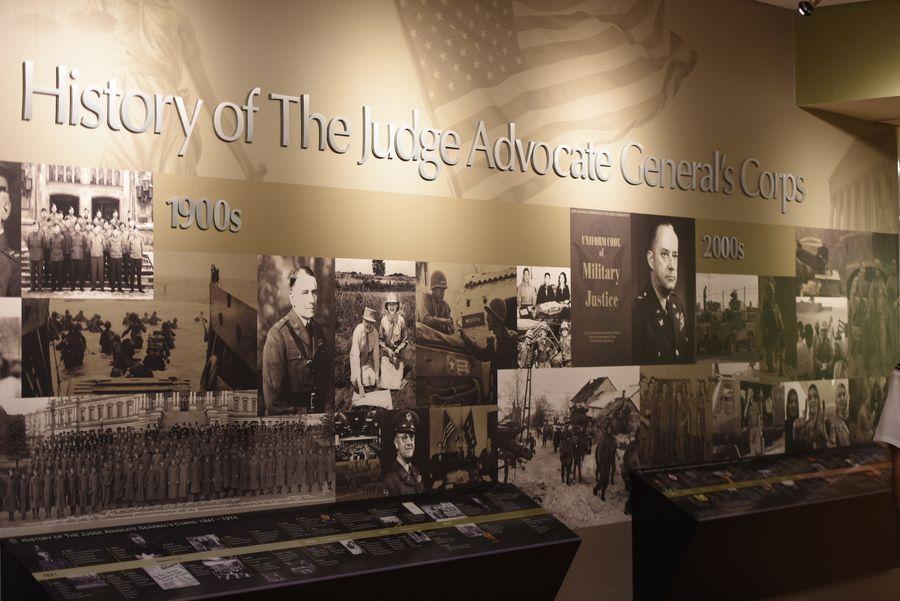
Piercing the Veil of Military Legal Neutrality
Last updated 06:17 AM EST • Read time: 9m
The recent firing of all three service Judge Advocates General (JAGs)—the senior legal officers for the Army, Navy, and Air Force—by the Secretary of Defense shocked many in the military legal community, including myself. One of the dismissed JAGs was my boss. It was a deeply unsettling moment for me, one that forced me to confront an uncomfortable truth about the role of military lawyers.
I started from the premise that the firings appear on their face to be unjustified. The Secretary of Defense argued the lawyers were "roadblocks" to administration policy, just weeks after assuming his position, and arguably before any meaningful roadblocks could be put in place. He also made public comments critical of the JAG Corps’ opaque selection process and gave the general impression that the top attorneys of the services should be aligned with administration policies. That rubs many long-time military attorneys the wrong way. Some would argue that if a military attorney is doing their job right, they are a neutral arbiter of the law—applying the law as it is laid down, not as political appointees aligned with an agenda.
I think reality is far more complex, and I immediately began to question the wisdom behind these complaints. Military legal officers have long been at the intersection of partisan political influence and undue command influence. Government attorneys, in general, have frequently been used to legitimize and advance partisan political agendas. The influence of partisan politics on the practice of law is no surprise. If there is neutrality, it is frequently under threat, and history shows cracks and seams where the principle of the neutral arbiter is put to the test. Military attorneys at our highest levels are not as independent and neutral as we may like to believe.
A Historical Perspective: Legal Advice as Political Influence
The now-infamous "Torture Memo," written by attorney John Yoo in 2002, is an example of how legal advice can be shaped by political priorities. Yoo, serving in the Department of Justice’s Office of Legal Counsel (OLC), authored memos that provided the legal justification for enhanced interrogation techniques employed by the Bush administration during the war on terror. These techniques, widely considered torture, were framed as legally acceptable through Yoo’s interpretation of U.S. law and international conventions. The memo illustrates how partisan policy decisions can be legitimized through legal reasoning, but what was more interesting for our current purposes was the reaction from the service JAGs.
In this case, the several JAG Corps displayed incredible bravery as neutral arbiters of the law. The Department of Defense and the services were expected to ensure compliance with the administration’s new policy, but they instead raised serious concerns in the public forum. Their opposition became a direct legal challenge to the administration’s policy and fodder for the partisan political debate.
That’s where the trouble started.
Eyeing grist for the partisan mill, Congress called upon JAG officers to testify in hearings about the legality of the administration’s interrogation methods. The testimony from leaders in the JAG Corps publicly contradicted the stance of the OLC and the Bush administration, making military lawyers central figures in a highly political debate. Military legal advice became part of the national discourse on torture, executive power, and the rule of law. The very act of providing legal guidance had placed them on one side of a partisan battle. Is it any wonder a new administration could conceive of the service JAGs as a partisan political threat?
This episode in the early 2000s reveals a truth about military legal professionals: they do not merely interpret the law—they write it, shape it, and implement it. As legal drafters, interpreters, and enforcers, they are inherently involved in the policymaking process. Whether it is ensuring compliance with an administration’s priorities, resisting unlawful directives, or testifying before Congress, military lawyers cannot remain detached from the political realities that shape their work. The notion that they are purely neutral arbiters of the law is a convenient fiction. In reality, military lawyers operate at the intersection of law, policy, and power. It’s also a space where neutrality is likely impossible.
Undue Command Influence vs. the Neutral Arbiter
The political fight over the torture memo showed the JAG Corps at their best, upholding the rule of law as neutral arbiters. Unfortunately, there are other, less neutral examples of military lawyers at work that are relevant to the current political climate.
The challenge of navigating legal neutrality within the military is not only about politics from Washington, D.C. It is also about the undue influence exerted by military leadership. A very public example was the 2011 General Amos sniper case: “a case unprecedented in the history of military justice.”[i] The case involved the public release of a video showing U.S. Marines urinating on the bodies of Taliban fighters. While the video was never intended to be made public, once it leaked, it became the subject of intense scrutiny.
General James Amos, then the Commandant of the Marine Corps, came under fire for exerting undue command influence in the handling of the case. The controversy was not just about the actions of the Marines but about how the legal process was influenced by the demands of a high-ranking commander. Commanders, like General Amos, have an outsized influence on military legal proceedings, and JAG officers often find themselves walking a fine line between upholding legal standards and complying with command expectations. In this case, General Amos was ultimately found guilty of undue command influence, two legal officers were removed from their positions, and another was investigated. The lawyers apparently fell on the wrong side of the fine line.
The Firing of General Warren Wells: The Intersection of Partisanship and Command Influence
Perhaps the best example combining both political pressure and command influence comes from the handling of Brigadier General Warren Wells, appointed the Army’s lead special trial counsel. His appointment came as part of the military justice reforms mandated by Congress, which created independent prosecution offices within each branch of service. These reforms aimed to remove serious criminal cases—such as sexual assault—from the chain of command, ensuring more impartiality in military justice.
Wells was relieved of his duties after a 2013 email surfaced in which he criticized political leaders for their handling of military sexual assault cases. He made the comments in the context of an adversarial system where he was defending the rights of accused offenders. His comments were entirely appropriate for the position he then held. In the email, he questioned the objectivity of commanders overseeing such cases, suggesting they were pressured by "political masters" swayed by "misleading statistics" and "one-sided, repetitive misinformation."
The Army, facing political pressure to ensure the new independent prosecution system met congressional intent, acted decisively in removing Wells. The Secretary of the Army cited a "loss of trust and confidence" in his ability to lead. The decision came just as the Army was finalizing its transition to the independent prosecution model. Given that Wells was chosen to lead this newly formed office, his removal raises questions about whether his past comments were a disqualifying factor or a pretext for replacing him with someone more aligned with the administration’s vision for military justice reform.
This case illustrates the difficulty military lawyers face in navigating a system where they are expected to be legally neutral while operating under both political and command pressures. Wells' dismissal serves as a reminder that military legal advice is rarely insulated from broader institutional and political currents. Whether his removal was justified or not, it reinforces the reality that military justice operates at the intersection of law, policy, and power—a space where neutrality is often more aspirational than absolute.
An Uncomfortable Reality: The Veil of Neutrality
The prevailing idea that military lawyers are somehow untouched by political, or command influence is increasingly hard to maintain. The Secretary of Defense’s comment may raise hackles, but it should also raise questions. Why shouldn’t the service JAGs be selected as other appointed civilian attorneys are? Especially when the idea of military lawyers as neutral arbiters—standing above the fray of political maneuvering and command pressure—has already been pierced.
The reality is that military legal officers operate in a complex and often contradictory space. We are called upon to provide legal advice that is not just politically neutral but also aligned with the broader objectives of military and national security policy. At times, this requires us to justify or challenge policies that are deeply political in nature. Other times, it requires us to navigate the pressures of commanders who wield significant influence over the legal processes within the military. Sometimes, as with General Wells, we find ourselves caught in the intersection of both.
Acknowledging this complexity does not mean abandoning the principles of legal integrity and fairness. Instead, it requires us to take a more honest look at the structures that shape military legal decision-making. If service JAGs are expected to function like civilian-appointed attorneys, should their selection process be revised to include greater transparency and oversight? If military legal officers must operate within the dual pressures of politics and command, what safeguards should be in place to ensure their advice remains credible, ethical, and legally sound? These are difficult questions, but ones we must face if we are to preserve the integrity of military justice.
We cannot pretend that military lawyers are simply passive legal actors. We shape and are shaped by the policies we advise on. And the sooner we acknowledge this uncomfortable reality, the better we can address the ethical and professional challenges that lie ahead. The veil of neutrality has already been pierced, and it is time we decide what that means for the future of military legal practice.
MAJ Trent Kubasiak is the Chief of National Security Law with Eighth Army in the Republic of Korea. Previously, he was chief of military justice, 10th Mountain Division and Fort Drum. He deployed three times to Afghanistan and once to Kuwait. He has a JD from Marquette University School of Law, Wisconsin; an LLM from the Judge Advocate General’s Legal Center and School, Virginia; and an MBA from Capella University.
(The views expressed in this article are my own and do not represent the official position of the Department of Defense.)
Notes:
[i] Scarborough, R. (2017, November 10). Ex-Marine commandant guilty of unlawful command influence in war-crimes case, military court rules. The Washington Times. https://www.washingtontimes.com/news/2017/nov/10/james-amos-found-guilty-unlawful-command-influence/
2949 Marine Prisoners, Hostages, and Peacetime Governmental Detainees Since Our Corps' Founding
By Jon Couch • RealClearDefense
America Must Win the Biotech Race Against China
By Rob Maness • RealClearDefense
How Digital Twins Can Strengthen Naval Readiness Before a Crisis Begins
By Carl Napoletano • RealClearDefense
The Uninsured Sky
By Joe Sandri • RealClearDefense
Counterterrorism and the Growing Convergence in Homeland Security and Homeland Defense
By Austin Doctor • RealClearDefense
How Digital Twins Can Strengthen Naval Readiness Before a Crisis Begins
By Carl Napoletano • RealClearDefense
F-16s Build on Iran Combat Lessons to Prepare for China Threat
By Rebecca Grant • Lexington Institute
U.S. Aircraft Evacuated From Second U.K. Base Due to Iran Threat
By Holliday, et al, WSJ
US Marine Corps Acquires Textron’s Ripsaw M3 Uncrewed Ground Vehicles
By DPost
U.S. Navy’s First San Antonio Flight II USS Harrisburg Completes Sea Trials
By GDN