
Averting Unconstrained Nuclear Risks with Russia
Last updated 07:27 AM EDT • Read time: 4m
The New START Treaty, a nuclear arms reduction agreement, will expire next February, ending limits on U.S. and Russian long-range nuclear forces. Negotiations on a new treaty have not begun and may take years. In the interim, nuclear risks might be contained if the U.S. and Russia do not undercut New START limits. Hardline rule in Russia and the nuclear buildup in China, however, could impede restraint.
President Barack Obama negotiated New START, a successor to President Ronald Reagan’s 1994 START I Treaty. START I cut long-range, or strategic, nuclear arsenals by 30-40 percent. New START slashed accountable deployed strategic arms by another three-quarters. In 2021, Presidents Joe Biden and Vladimir Putin extended New START until next February.
After its full-scale invasion of Ukraine, however, Russia suspended participation in New START. Moscow no longer exchanges data, provides notifications, or allows onsite inspections, thereby weakening verification and confidence.
New START does not provide for another extension, and a new treaty may be delayed. START I negotiations stretched over nine years.
Other considerations might slow the conclusion of a new treaty.
The ex-KGB cohort in Russia’s Kremlin may resist transparency. START I defined a new, intrusive verification system. But if, as some urge, a new treaty is to encompass hard-to-detect non-strategic (tactical) nuclear arms, even more intrusive verification may be in order. Further, Russia might oppose ceding some of its large advantage in tactical nuclear weapons.
Second, if, as some urge, China joins the talks on a new treaty, this may be a barrier. At present, China shows no interest in negotiations. As its nuclear buildup continues and if parity with Russia and the U.S. is achieved, China could become more open to arms control.
Third, the U.S. might seek an expanded nuclear force to deter the combined forces of Russia and China. In 2023, A congressional commission saw an “urgent” need for the U.S. to rebuild nuclear infrastructure and modernize U.S. nuclear forces.
A fourth potential obstacle is that Russia might attempt to link arms control to other issues, such as Western support for Ukraine. This would be a nonstarter.
In sum, a new treaty is unlikely to be ready when New START expires. What might the U.S. do in the interim?
In the 1980’s, President Ronald Reagan faced a similar question. Even though he had called the unratified SALT II Treaty negotiated by President Jimmy Carter “fatally flawed,” Reagan pledged that the U.S. “would not undercut” its limits. He conditioned this on the USSR’s “exercising equal restraint” and “actively pursuing” arms cuts in Geneva talks. To keep the U.S. within SALT II limits, Reagan agreed to dismantle two older Poseidon ballistic missile submarines.
Why did Reagan pursue restraint? He may have thought many Americans, some influenced by “nuclear freeze“ protests, would see restraint as stabilizing. He might also have calculated that restraint would help sustain political support for modernizing the U.S. nuclear arsenal.
Some current circumstances, however, differ from those in the Reagan era.
In the mid-1980s, prospects for arms control brightened when a liberalizing Soviet leader, Mikhail Gorbachev, came to power. He and Reagan reached the historic Intermediate-range Nuclear Forces Treaty, eliminating a whole class of nuclear arms. Today’s Kremlin leader, President Vladimir Putin, seems to revel in spouting irresponsible nuclear threats. Beholden to ultranationalist backing for the war on Ukraine, Putin might be wary of cozying up to the U.S. on arms control.
A second difference is that SALT II verification was largely unilateral, relying on satellite monitoring of missile silos, bombers, and submarines. New START also limits less visible warheads, making onsite inspection valuable. On the other hand, remote monitoring is now far more advanced.
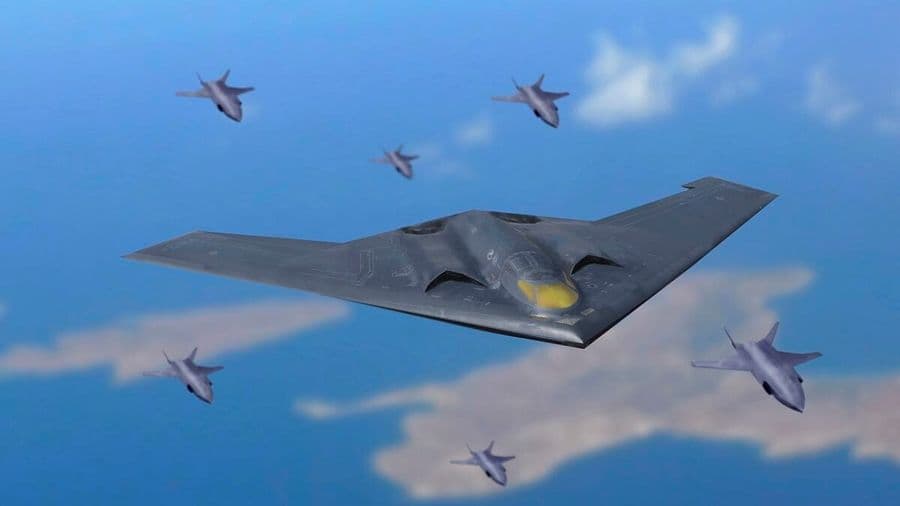
Looking to the expiration of New START, the U.S. could pursue an interim regime of mutual restraint with Russia. As in the 1980s, this could reassure publics and allies. If, however, risks of verification, noncompliance, and China’s buildup were to weaken the regime, the U.S. could take steps to mitigate risks. The U.S. might add nuclear warheads to some U.S. missiles or bombers. Or it might bolster the ongoing nuclear modernization program, which includes Columbia-class ballistic missile submarines, land-based Sentinel missiles, and stealthy B-21 bombers.
Decades of nuclear arms control have improved strategic stability and reduced the risk of nuclear conflict. Continued mutual restraint might help sustain these gains if risks can be managed.
William Courtney is an adjunct senior fellow at RAND and professor of policy analysis at the RAND School of Public Policy. In a career in the Foreign Service, he was deputy negotiator in the U.S.-Soviet Defense and Space Talks and ambassador in negotiations to implement the Threshold Test Ban Treaty.
The Unfinished Reform
By Mark W. Castillon • RealClearDefense
Winning the Data Advantage
By Turin Pollard • RealClearDefense
The Pentagon’s Quantum Race Needs a Warfighter’s Scorecard
By Burak Oktenli • RealClearDefense
The F/A-XX and the AIM-260 Reclaim the Perimeter
By Bruce Allen Lubbering • RealClearDefense
Iranian Cyber Operations
By Michael Groen • RealClearDefense
Winning the Data Advantage
By Turin Pollard • RealClearDefenseThe F/A-XX and the AIM-260 Reclaim the Perimeter
By Bruce Allen Lubbering • RealClearDefenseWinning the Data Advantage
By Turin Pollard, RealClearDefenseThe F/A-XX and the AIM-260 Reclaim the Perimeter
By Bruce Allen Lubbering, RCD
F-22 Pilot Directs CCA in Flight as ‘Airborne QB’
By Stephen Losey, Air & Space Forces