
U.S.'s Iran Strike May Have Strengthened Tehran's Nuclear Resolve
Published June 27, 2025 • Read time: 5m
Donald Trump could be having his Mission Accomplished moment. He said in a nationally televised address Saturday night, ‘Tonight, I can report to the world that the strikes were a spectacular military success. Iran’s key nuclear enrichment facilities have been completely and totally obliterated.’
But maybe they were not.
In a preliminary report, the U.S. Defense Intelligence Agency has written that the strikes delayed Iran’s nuclear program by less than six months, according to U.S. media including The New York Times.
Worse, the strikes may have hardened Iran’s resolve to pursue a nuclear weapon, not abandon it.
Iran appears still to have a stock of 400 kg of 60-percent enriched uranium. This is can be further enriched to 90 percent and become fuel for several bombs.
The U.S. intelligence community has concluded that since 2003 Iran has not been weaponising its program, a finding made public in a National Intelligence Estimate in 2007 and reiterated a few months ago. Instead, Iran has remained a latent nuclear power. Trump’s bomb and missile attacks may have damaged infrastructure, but they have not destroyed Iran’s nuclear potential.
In 1988, Iran’s first supreme leader, Ruhollah Khomeini, compared accepting a ceasefire with Iraq to ‘swallowing a cup of poison’. On 24 June 2025, Iran accepted a tenuous ceasefire with Israel, but both sides have allegedly violated it.
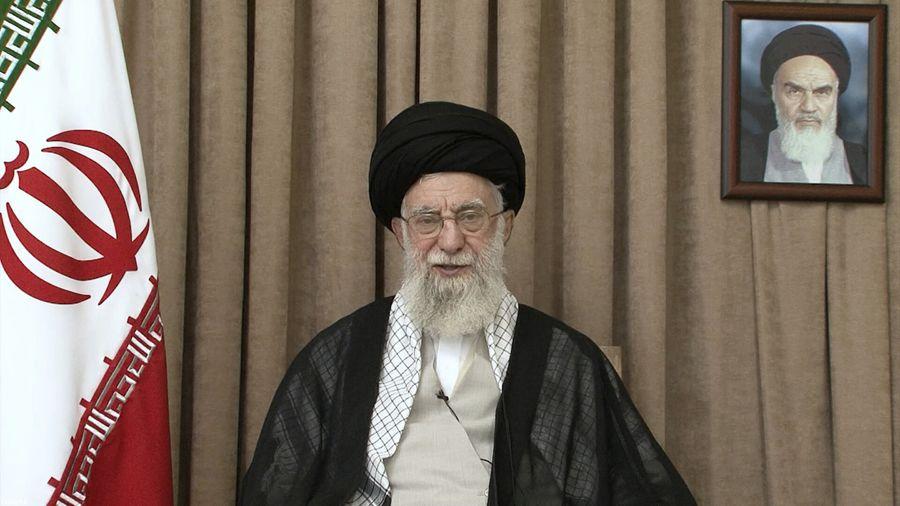
Supreme Leader Ayatollah Ali Khamenei’s bitter choice today is similar to Khomeini’s: escalate conflict or accept a humiliating deal to reduce pressure on his regime.
Toward a Continental Approach for Arctic Homeland Defense
The Pentagon Is Dismantling Its Own Arctic Defense
Stockpiles, Countermeasures, and Deterrence: A Blueprint to Fix America's Biodefense Gap
Do Nuclear Numbers Matter
After a cascade of setbacks—including Israeli airstrikes and the assassinations of top Islamic Revolutionary Guard Corps leaders and Hamas leader Ismail Haniyeh—Khamenei’s regime is facing its gravest crisis since the Iran–Iraq War. The Axis of Resistance is battered, with Bashar al-Assad in exile and Hezbollah and Hamas weakened.
The regime’s instinct will be to double down, not back down.
Khamenei’s personal stake is immense. He is navigating a delicate succession process and is believed to have drawn up a shortlist of three potential successors. His son Mojtaba, a frontrunner, is favoured by regime insiders who want to preserve the system’s patronage networks. But that plan hinges on projecting strength.
Any perception of weakness—failing to respond to U.S. and Israeli strikes, relinquishing Iran’s right to enrich uranium or giving up the stock of enriched material already accumulated—would threaten not just Iran’s regional position but the internal stability of the regime itself. It is worth remembering that Mahmoud Ahmadinejad’s rise to the presidency in 2005 was driven in part by his opposition to the more conciliatory 2003 nuclear deal.
Despite recent losses, Iran retains an ability to escalate. Its nuclear program is now dispersed across multiple sites, and enrichment could resume. Saddam Hussein did the same after Israel’s 1981 strike on the Osirak reactor. Khamenei may also draw inspiration from North Korea: hold on to the highly enriched uranium, withdraw from the Non-Proliferation Treaty and gamble that the world will not risk war with a nuclear-armed Iran.
Iran’s conventional options are weak. Recent drone and missile attacks didn’t meaningfully dent Israeli defences. Horizontal escalation, starting with the targeting of U.S. bases in Iraq and Qatar (and, potentially, other military installations) risks major retaliation. Khamenei would risk alienating key partners, such as China, if he acted on Iranian parliamentary support for closing the Strait of Hormuz or targeting other Gulf oil infrastructure.
But Tehran does not need to win militarily to succeed strategically. It can bleed U.S. resources, destabilise oil markets or force political backlash in fragile regional alliances. And while Iran’s missile stockpile is reportedly running low, so too is Israel’s supply of Arrow missile interceptors.
Even if negotiations were to restart, Iran would have little reason to trust Washington. Trump himself withdrew from the former agreement aimed at restraining Iran’s nuclear ambitions, the Joint Comprehensive Plan of Action, despite Iran’s compliance at the time. That history looms large. From Tehran’s perspective, the United States cannot offer a credible long-term deal without a treaty ratified by the Senate, something politically unthinkable in the current climate.
Iranian leaders also see the fates of other disarmed regimes—Ukraine, Libya, Iraq—and could draw a simple lesson: states that give up their nukes don’t last.
That is why Trump’s strikes, rather than compelling Iran to disarm, may have pushed it closer to the nuclear threshold.
Trump’s ‘spectacular military success’ may have destroyed facilities, but it did not entirely destroy capacity. Worse, it confirmed the Iranian regime’s core strategic fear: that only nuclear weapons can ensure survival.
U.S. and Israeli policymakers must recognise that pressure alone—absent credible security guarantees and an understanding of Iran’s internal dynamics—risks accelerating the very outcome they seek to avoid. Khamenei is not weighing peace versus war. He is choosing between capitulation and survival. With 400 kg of enriched uranium, he may not have to swallow poison after all.
Albert B Wolf is a global fellow at Habib University. He has acted as a consultant on U.S. foreign policy in the Middle East for three U.S. presidential campaigns.
This article appeared originally at The Strategist (ASPI).
When the Warfighter Becomes the Sensor
By Elise G. Annett • RealClearDefense
The U.S. and its Allies Need a Collective Maritime Strategy
By Antonios Marios Giannakopoulos • RealClearDefense
Making Maneuver Great Again
By Gary Anderson • RealClearDefense
Ending the Conflict with Iran
By Anthony Cowden • RealClearDefense
Going After the Cyprus Money Laundering Hub
By Lise Korson • RealClearDefense
Making Maneuver Great Again
By Gary Anderson • RealClearDefenseMaking Maneuver Great Again
By Gary Anderson, RealClearDefense
Bandwidth as a Service for Naval Forces
By Brandan R. Schofield, CIMSEC
The Army and the Marine Corps in a Pacific War
By Van Horrick & Bancroft, MWI
Coast Guard’s Updated Force Design Plan Includes Maven Smart System
By DS