
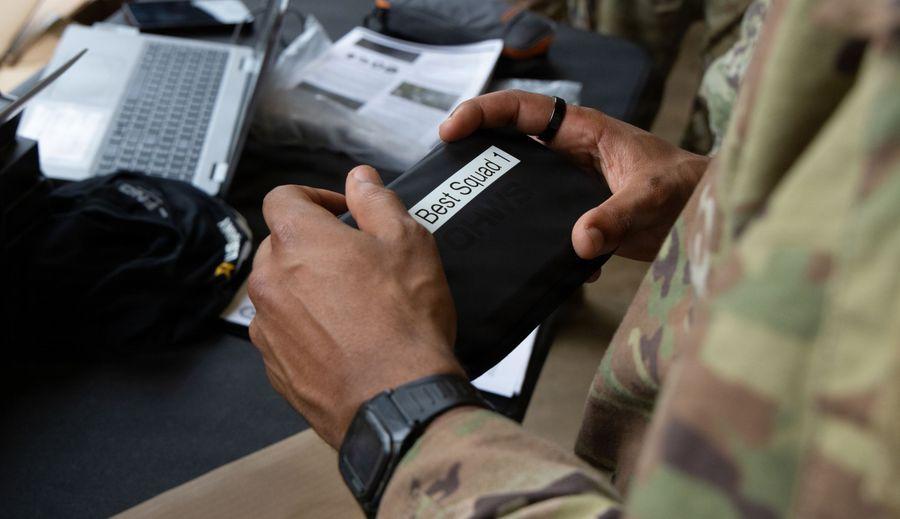
U.S. Army Sgt. Keyshawn Johnson, assigned to the U.S. Army Transformation and Training Command, receives a wearable fitness tracker during the 2026 U.S. Army Best Squad Competition, at Fort Benning, Georgia, Sept.11, 2026. The Best Squad Competition showcases the discipline, training, and global reach that make our force the ultimate guarantor of the Nation's security. (U.S. Army photo by Pfc. Kathy Rodriguez)
When the Warfighter Becomes the Sensor
Published Nov. 28, 2026 • Read time: 13m


Join the Conversation
0A Strava fitness tracker once exposed more about military locations than its wearer intended. In 2018, a public exercise heat map revealed patterns around sensitive installations, prompting the Pentagon to examine the risks of connected devices. The Army’s own account made the lesson plain: Data collected for individual performance can become intelligence for an adversary.
Now consider the next iteration. A wristband, skin sensor, or smartphone could report not merely where a service member has been, but whether that person is fatigued, heat-stressed, recovering poorly, or displaying signs associated with illness. Combined across a formation, these signals could help a commander preserve combat power. Intercepted, exposed, or misinterpreted, the same signals identify a force at the moment it is least capable of fighting.
But as we noted, the Strava episode exposed more than just movement. Biological telemetry can depict individuals’ fitness and in so doing, disclose the condition of a force. A location trace suggests where personnel have been; patterns of fatigue, heat strain, and recovery may suggest when a formation is approaching the limits of its endurance. Such inferences depend on data quality and adversary access, but their potential intelligence value warrants consideration, concern and we believe, distinct protection.
Our argument is that the convergence of artificial intelligence (AI) and biotechnology is making the warfighter an assessable and affectable node in military data network architectures. The advantage will belong to forces that can generate reliable biological insight, translate it into sound decisions, and deny adversaries access to the underlying signals. Thus, this is rapidly becoming a priority of command and operational security as much as of medicine or engineering.
When Losing Control of AI Becomes a Weapon
Megaspeed Proves: Congress Must Act on Chip Security
We Keep Funding ‘Shared Infrastructure.’ Nobody Has Defined It.
Can Commanders Tell When Artificial Intelligence Is Wrong?
From medical information to operational intelligence
Biological data include expansive information, and precision in the terminology and particularity of data matter. Physiological signals include heart rate, sleep, respiration, temperature, and measures related to exertion. Behavioral data can capture activity or phone-use patterns. Clinical records contain diagnoses, prognoses, and treatment information. Genomic and other molecular data reveal a different, potentially enduring kind of biological information. These sources have differing reliability, sensitivity, and uses, and regarding and treating them as interchangeable simply because they can be digitized would be a technical and strategic error.
The military has pursued physiological monitoring for years. The Army’s research portfolio describes wearable systems intended to assess thermal strain, energy expenditure, and cognitive or physical performance. The Defense Advanced Research Projects Agency’s Smart Non-invasive Assays of Physiology program explored molecular biomarkers associated with readiness, while its Warfighter Analytics using Smartphones for Health program examined digital signals that might indicate injury and/or disease. These examples demonstrate serious institutional interest, but should not be mistaken for proof that a universal, battlefield-ready biological prediction system already exists.
The strategic challenge becomes opportunity for change when such measurements feed decisions beyond the clinic. Imagine, for example, a commander considering an extended operation in severe heat. Individual sensor readings might identify a person who needs clinical care. Aggregated and validated trends might indicate that a company needs more water, a modified movement schedule, or a change in personnel rotation. That shift, from describing a person’s condition to informing the employment of a force is what we refer to as the “data-centric warfighter.”
This potential is considerable, and creates a new intelligence problem. A readiness estimate becomes sensitive both because it concerns an individual, but also because it can reveal how long an organization can sustain its assigned mission. The Government Accountability Office has warned that aggregated digital footprints can expose military personnel, operations, and capabilities. Biological telemetry would add another layer to the same vulnerability.
Predictive readiness must survive operational reality
AI could be valuable to turn scattered measurements into timely assessments of fatigue, recovery, environmental exposure, or medical risk. But prediction is not equivalent to understanding. A model trained on a well-rested population in controlled conditions may perform differently when applied to dehydrated troops operating at altitude, under fire, or with intermittent connectivity.
That distinction matters because commanders need decisions, not seductive numbers. A system might classify a service member as a fatigue risk and recommend reassignment. If its baseline is stale, its sensor has shifted, or the individual’s physiology differs from the training sample, a seemingly precise score can create false confidence. The military’s own medical research priorities emphasize the need for validated wearables, and the National Institute of Standards and Technology stresses validity, reliability, and testing under intended conditions of use.
Indeed, any operational readiness model should answer a set of hard, acquisition and command questions before it is fielded. These include what outcome does the model actually predict? What are the estimated or anticipated false-positive and false-negative rates? Across which populations, missions, and environments was the model tested? When does the model’s confidence degrade to the extent that a human user should disregard its recommendation?
The Department of War’s (DoW) artificial intelligence ethical principles require development and demonstration of responsible, equitable, traceable, reliable, and governable systems. The aforementioned National Institute of Standards and Technology’s risk-management framework similarly calls for documented limitations, ongoing evaluation, and mechanisms for human intervention in AI-based systems’ operations. We argue that a biological readiness algorithm deserves this same level of scrutiny because its errors can redirect personnel, influence medical decisions, and alter a commander’s assessment of operational risk.
A signaling warfighter is a targetable warfighter
The central operational security questions go beyond whether a system can be encrypted to query whether the system should emit signal(s) at all, under which conditions; under whose authority, and at what point in the mission. Encryption may protect message contents, but does not automatically remove the risks created by device discovery, traffic patterns, compromised endpoints, or a concentration of sensitive data. A battalion whose wearables transmit continuously has created a data exhaust that may be as revealing as the information on its display.
For illustration, consider a hypothetical special operations team moving through contested terrain. A sensor network that shares real-time health alerts could warn of emerging heat injury. It could also produce a recurring signal at the same moments, among the same personnel, across a recognizable route. If an adversary can map those transmissions (or compromise the service collecting them) the force has exchanged a source and form of protection for one of exposure. The solution to this dilemma might be local processing, delayed synchronization, restricted reporting, or command-directed periods of information transmittal or silence.
Here there is a consequential tradeoff; continuous monitoring could prevent heat casualties, preserve operational tempo, and keep personnel in the fight. A commander may reasonably judge those benefits worth a measured signature risk. That judgment should weigh demonstrated readiness gains against the threat, and should balance alternatives such as local analysis or delayed release. The goal should be an explicit, revisable risk decision rather than presumption that every transmission is either acceptable or prohibited.
Thus, we believe that commanders should treat biological sensing as part of emission control and mission security. Operational orders should specify when devices may collect and transmit data, which channels are authorized, whether raw data leave the device, and the conditions for allowing or suspending transmission. A system that is useful only with continuous access to a commercial cloud may be least useful in a contested environment where the military needs it most.
To establish such authority, the services could develop and add a biological-telemetry control system to unit standing operating procedures and operational orders, cross-referenced in medical-support and electromagnetic-spectrum instructions. Incorporating this system into an operational matrix could enable defining authorized devices and recipients, collection and transmission windows, local-only mission phases, emergency medical exceptions, and the officer(s) empowered to suspend or restore release. The J-3 would integrate mission requirements, clinical value and necessity could be determined by the command surgeon, and the J-6 could establish communications exposure. The commander could then evaluate and decide the operational benefits and risk while clinicians would retain authority over medical interpretation.
In a system of this sort, it’s important to heed the difference between safeguarding an individual’s identity and securing collective readiness. Removing names from ten warfighters’ sensor records may still enable an adversary to infer the tempo or condition of a small unit. Combining those records with location traces, timing, and other indicators place the force itself in an identifiable position.
The missing authority: Over the data itself
If the warfighter is generating operational intelligence, it becomes essential to ask who is authorized to collect, interpret, and act upon it? The answer changes with the purpose. For instance, a medic may require detailed individual readings to diagnose injury or illness. A commander may need a mission-relevant determination that a person can or cannot perform a duty. Logistics staff may need only aggregate estimates of heat exposure, hydration demand, or expected personnel availability.
Current rules recognize that military health information can be shared for defined command purposes. The Military Health System’s Military Command Exception guidance explains that such disclosures are permitted in specified circumstances, while its frequently asked questions section describes the importance of approved recipients and minimum-necessary disclosure. But this does not afford a blanket license to put raw health records or speculative psychological labels on a commander’s dashboard, and emerging operational sensing also raises questions about data that are generated outside traditional clinical systems.
Thus, we believe that a workable architecture should separate at least three functions: clinical assessment of the person, operational assessment of the mission, and protection of the data as sensitive military information. Clinicians should retain medical interpretation. Commanders should receive information needed for authorized decisions, with visibility into uncertainty and limits. Technical custodians should control access, retention, logging, and secure deletion. Contracts should define who may train models on the data, whether vendors can retain or reuse these models and data, and what happens to information when the military disconnects.
This division also requires a defined taxonomy. DoW health, operational, cyber, and acquisition authorities could jointly develop a biodata-use profile in concert with existing medical-privacy and information-protection requirements to distinguish raw individual clinical and physiological records, authorized individual duty-status determinations, and aggregated unit-readiness indicators. For each, a data steward, permitted recipients, retention period, vendor-reuse restrictions, and release authority could be identified. These are categories of use and consequence, not new classification markings, and as such extant security rules would still determine the protection required for each product.
These parameters seek to preserve the operationally essential relationship between judgment and responsibility. In our research of synthesized command and control ( SYNTHComm) in human-AI teaming , we argue that human authority and accountability must be built into the architecture of AI -enabled decisions. We believe that the same logic applies here. An automated assessment may inform a decision about force employment, but should not assume the commander’s responsibility for that decision, nor should it silently substitute a statistical score for a clinically grounded determination.
Govern the capability; win the competition
As noted by the National Security Commission on Emerging Biotechnology (NSCEB), biodata matter beyond the individual and the unit formation. The NSCEB 2025 report stated that biotechnology has become a strategic competitive issue, and the Congressional Research Service’s summary identified biological data, defense applications, and technology protection among the commission’s priorities. Likewise, the National Academies have examined how AI -enabled biotechnology could support key aspects of defense innovation. Leadership in these arenas will depend upon the quality and security of data, and the role of human stewardship as much as upon the sophistication of the algorithms.
In this light, we assert that the United States should pursue advantage through a deliberately bounded program of biotechnology and biodata security. Toward such goals we offer the following recommendations:
First, the DoW should establish mission-specific categories for biodata; defining what may be collected for clinical protection, what may be converted into operational readiness indicators, and what must remain tightly restricted. The categories should be reflected in contracts and device design rather than added after procurement. This would build upon the call to treat high-quality biological information as secure national infrastructure, while accounting for the unusual risks of using human beings as sources of intelligence.
Second, the services should test biological decision support in war games, tabletop exercises and field maneuvers that deliberately degrade sensors, communications, connectivity, and data quality. Exercises should include the use of misleading readings, compromised devices, adversarial attempts to infer a unit’s condition, and moments when a commander must act without a model recommendation. Success should be measured by better decisions and preserved mission capability rather than simply by how much telemetry the program collects.
Third, commanders require c explicit data-release and emission-control authority. The unit should be able to suspend external transmission, operate locally, restrict who has access to individual records, and should be able to record when an algorithmic recommendation affected an operational decision. The Army’s discussion of getting usable information to commanders points to the broader truth that data become military advantage only when they reach the right decision-maker in a form that supports sound judgment.
Finally, the DoW should prioritize independent model validation, access auditing, incident reporting, and vendor-data restrictions as components of the acquisition process from the outset. A 2026 Government Accountability Office review identified continuing shortcomings in the department’s responsible AI implementation. Biological applications make resolving such shortcomings particularly important because a defective AI-based prediction can affect personnel welfare, operational choices and mission success.
The timing of system component activities is vital and practical. The near-term issue is the collection, cloud synchronization, and retention of sensitive data by systems that already exist, and the ability of an adversary to infer unit readiness at scale remains a capability to be tested, rather than assumed. A 90-day inventory of devices and data flows, followed by six-to-twelve-month field pilots could establish what efforts and outcomes are feasible. To be operationally valid and valuable, trials should compare various types and levels of telemetry, local- and distal sensing, and methods of controlled transmission to prevent or mitigate injury, fortify mission endurance, and identify false alerts, and detectable emissions before wider fielding is considered, authorized and executed.
Command the signal, protect the force
The data-centric warfighter is an iterative aspect of the so-called “cybernetic soldier” construct. The building blocks of the data-centric warfighter include wearables, clinical information systems, digital biomarkers, and machine learning tools and techniques that already exist in varying stages of development. Their military promise is genuine in affording earlier intervention against preventable injury, more adaptive sustainment, and more informed force employment. Their real value, however, will be determined in the friction of operations, where data are incomplete, communications are contested, and adversaries exploit every observable pattern.
The strategic objective is to give commanders the biological insight necessary to preserve combat readiness and force effectiveness while preserving the warfighter’s security, dignity, and the integrity of human judgment. The future contest will be shaped both by the military that can most effectively, efficiently, and we believe ethically turn biological signals into decision advantage, and that can keep such signals from becoming an adversary’s intelligence and strike-advantage.
Elise G. Annett, Ph.D. is a research fellow at the Institute for National Strategic Studies at the National Defense University and develops command and accountability frameworks for military artificial intelligence. She is also a Senior Digital Domain Fellow at the Center for the Application of Grand Strategy. Institutional biography.
James Giordano, Ph.D. is Special Advisor to the Assistant Secretary of War for Nuclear Deterrence and Chemical and Biological Defense, and is Head of the Center for Strategic Deterrence and Studies of Weapons of Mass Destruction of the Institute for National Strategic Studies at the National Defense University. Institutional biography.
The views and opinions expressed in this essay are those of the authors and do not necessarily reflect those of the United States government, the Department of War, or the National Defense University.
When the Warfighter Becomes the Sensor
By Elise G. Annett • RealClearDefense
The U.S. and its Allies Need a Collective Maritime Strategy
By Antonios Marios Giannakopoulos • RealClearDefense
Making Maneuver Great Again
By Gary Anderson • RealClearDefense
Ending the Conflict with Iran
By Anthony Cowden • RealClearDefense
Going After the Cyprus Money Laundering Hub
By Lise Korson • RealClearDefense
Making Maneuver Great Again
By Gary Anderson • RealClearDefenseMaking Maneuver Great Again
By Gary Anderson, RealClearDefense
Bandwidth as a Service for Naval Forces
By Brandan R. Schofield, CIMSEC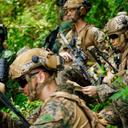
The Army and the Marine Corps in a Pacific War
By Van Horrick & Bancroft, MWI
Coast Guard’s Updated Force Design Plan Includes Maven Smart System
By DS