
2025 NATO Summit: Time to Include the Asia-Pacific Democracies
Published June 30, 2025 • Read time: 4m
As NATO prepares for its upcoming summit at The Hague, the alliance must confront the reality that the security threats of the 21st century are not confined to the Atlantic or Europe. The rise of authoritarianism, expansionist behavior by China and Russia, coupled with declining American interest in Europe, demands a broader, more adaptive NATO. Now is the time to begin formal steps toward including key Asia-Pacific democracies — Japan, South Korea, and Australia — into NATO’s framework, not as distant partners, but as full-fledged members.
At its founding in 1949, some justified NATO as a means to “keep America in and Russia out” of Western Europe. Today, both justifications are under stress. Russia’s invasion of Ukraine and increased aggression makes the NATO alliance more relevant than ever for Europeans. But American interest is waning with an increasing threat from China in the Asia-Pacific. The solution is not an American withdrawal but establishing a global democratic alliance that includes the advanced capitalist democracies in the Asia-Pacific.
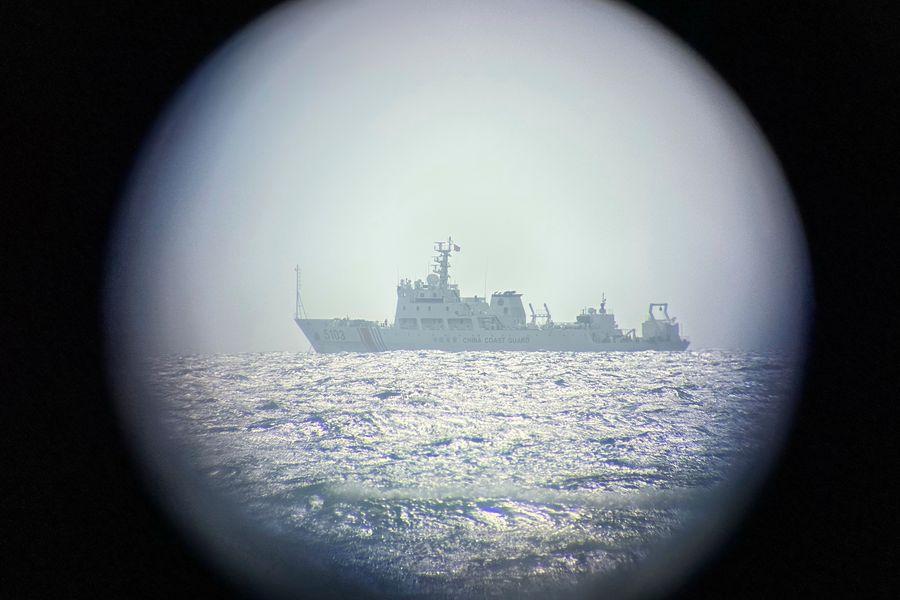
For decades, NATO has served as the backbone of transatlantic security. But today, the Indo-Pacific is as strategically vital as Europe to the world’s democracies. China’s aggression in the South China Sea, threats to Taiwan, and economic coercion tactics directly impact global stability. Russia’s alignment with China—and its ongoing war in Ukraine—further reveals the emerging autocratic bloc that seeks to undermine the rules-based international order. To counter this, democratic nations must stand together, regardless of geography.
NATO’s New Spending Pledge Must Buy Real Energy Resilience
Patriot Delays Force a New Air Defense Doctrine on NATO’s Eastern Flank
Bogged Down
NATO Defense Budgets Need to Prioritize Munitions Spending
The inclusion of Asia-Pacific democracies would not be unprecedented. NATO already has a global network of “partners across the globe,” including Japan, South Korea, and Australia. These countries have contributed to NATO missions, share democratic values, and possess advanced military capabilities. Japan and South Korea face daily threats as much from Russia as countries in Western Europe. Australia has a long history of fighting alongside NATO members in conflicts from Afghanistan to the Pacific theater of World War II. Their defense spending, strategic positioning, and technological contributions would enhance NATO’s collective security as much if not more than the recent addition of Finland and Sweden to NATO.
Furthermore, integrating Asia-Pacific democracies will serve as a deterrent to authoritarian adventurism in both Europe and Asia. Just as NATO deterred Soviet aggression during the Cold War, a more globally inclusive alliance can deter Beijing from miscalculating in Taiwan or the South China Sea. Extending this umbrella would stabilize the Indo-Pacific and support a free and open international Western order globally.
Adding the major Asia-Pacific democracies of Japan, South Korea, and Australia will also help keep the US interested and integrated with Europe. The Trump administration has voiced significant concerns about the value of American geostrategic interests in Europe as US concerns in the Indo-Pacific are increasing. A global NATO alliance of democracies that includes clear defense of interests in the Indo-Pacific benefits the US and helps Europe.
The path forward need not necessarily require immediate amendment to the NATO charter and full membership. NATO can create a Pacific security charter or a new class of membership that includes implied mutual defense commitments and strategic integration. This would lay the foundation for deeper cooperation while managing risk and ensuring alignment.
The world’s most advanced democracies must no longer operate in silos. NATO’s founding purpose—collective defense of free nations—remains relevant. By embracing its democratic allies in the Asia-Pacific, NATO can evolve into the global alliance democracy needs for the challenges of this century. The upcoming summit presents a historic opportunity. Let us not waste it.
Charles K. Djou is a former member of Congress, where he served on the Armed Services Committee, and an Afghanistan War veteran. Djou is a graduate of the University of Pennsylvania, Wharton School of Finance, holds a law degree from the University of Southern California Gould School of Law and an MA in Strategic Studies from the U.S. Army War College.
The Pressure Is the Message: What Xi and Putin Faced in Shenzhen
By Emzari Gelashvili • RealClearDefense
China’s Revised Mobilization Law and the Expanding Reach of National Defense
By Muhammad Shoaib • RealClearDefense
U.S. Putting Weapons in Space: A Strategic Blunder?
By Ajey Lele • RealClearDefense
The Clearance Myth Is a Readiness Problem
By Elijah Fernandez • RealClearDefense
The Pentagon's Next Readiness Test Should Begin When the Cloud Goes Dark
By Colton Overcash • RealClearDefense
U.S. Putting Weapons in Space: A Strategic Blunder?
By Ajey Lele • RealClearDefense
U.S. Senate Seeks to Exchange Shipbuilding Funds for More Munitions
By Naval News
F-35C Completes First Launch and Recovery Trials on a Ford-Class Carrier
By Navy T.
USS George Washington Leaves Mideast As Trump Mulls Ending Iran War
By S&S
ULA’s Latest Launch Failure Spells Trouble for Space Force
By Greg Hadley, A&SF