
America First: The Iran Strike and Current U.S. Strategy
Published July 2, 2025 • Read time: 10m
The America First Debate
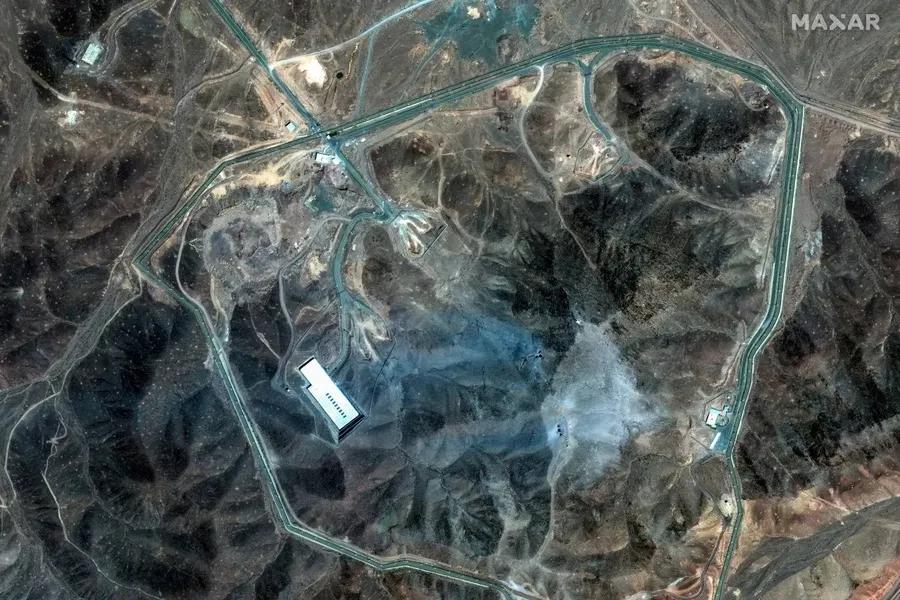
President Trump's decision to strike Iran's nuclear facilities has set off serious debate among conservatives, who disagree over the action for both pragmatic and ideological reasons. Critics argue the President's intervention is a departure from his America First messaging, which means opposing costly military adventures that rarely yield midterm election victories. Defense hawks, on the other hand, argue that Iran's threat to Israel and the world demands a military response irrespective of the strikes' implications for the President's stated foreign policy. As the debate shakes out, one unfortunate implication is that "America First" means "isolationism," such that almost any military action represents either a de facto embrace of neocon/liberal internationalism or proves that the administration acts without a coherent strategy. Neither judgment is correct. There is no question this administration means to exercise restraint compared to earlier presidents—especially by avoiding expensive interventions that lack a clear theory of victory. And yet, mistaking "America First" for either isolationism or incoherence betrays a limited recognition of the administration's strategy for American power in the next half-century. Whether or not the strikes destroyed Iran's nuclear capability, the President’s decision exemplifies the kind of interest-based approach to foreign affairs this administration has consistently articulated.
Deciding whether or not the President's decision to strike Iran is a departure from the America First principle requires we first establish what the strategic principles of America First actually are. This should not be difficult, since that strategy has been articulated and implemented in this term and the last, but analysts’ uncertainty may be forgiven, especially when high-level deputies fail to carry the message. Nonetheless, confusion in the twitter-verse should not obfuscate the weightier message sent by prepared statements, official memoranda, and air-strikes. If "strategy" is a coherent method for coordinating ends, ways, and means to achieve a desired end-state, too many still scoff at the idea of attributing such coherence to this administration's actions. Others, failing to recognize that coherence (or mistaking it for something merely evil), mistake America First for their own isolationist politics. Bad punditry issues from both kinds of error.
The America First Strategy
One important, but perhaps under-recognized, statement of the America First Strategy is found in Vice President Vance's 2025 Commencement Address at the United States Naval Academy. More than a farewell to graduates, the address explains current American strategy in terms that satisfy long-standing military doctrinal definitions. The VP contrasted the "generational shift in policy" of this administration with an earlier era when American leaders "traded national defense and the maintenance of alliances for nation-building and meddling in foreign countries' affairs." Vance described this administration as "returning to a strategy grounded in realism and protecting our core national interests." For the VP, these aims amount to "a principled foreign policy [that] will help restore the credibility of American deterrence in 2025 and beyond." And there we have a positively stated "desired end state": restoring American deterrence in order to secure the country at home and its core interests around the world. Vance contrasts this end state with the "lofty incoherent abstractions" that guided a previous generation. And he specifically names "national defense and the maintenance of alliances" as a geopolitical good needing renewed attention. Technically, we could argue about whether these statements identify a true "end state" or merely a strategic "end," but that would reinforce the point: this is not an administration lacking coherent theory. The Vice President does, however, articulate a new principle, which reasserts the
nation-state as the primary actor in geopolitics and rejects presumptive commitments to any "rules-based international order" which cannot demonstrate tangible benefit to the nations it claims to serve.
Vance's strategic doctrine, centered on the nation and its core interests, elucidates recent Trump administration actions that many find alarming, or even incoherent. First is recent economic engagement with the Gulf States and the use of tariffs for diplomacy. On May 13, in Riyadh, Pres. Trump used his address to articulate the same doctrine Vance explained in Annapolis: "this great [economic] transformation has not come from Western interventionists...giving you lectures on how to live and how to govern your own affairs." Instead, the President emphasized that the Middle East belongs to Middle East countries, "developing your own sovereign countries, pursuing your own unique visions, and charting your own destinies in your own way." The comment carries a specific geopolitical message: interest-based economic cooperation will guide American diplomacy. The same point holds for the administration's other initiatives - tariffs, the Panama Canal, and even the President's rhetoric about Greenland. In each case, the simple aim is to secure core national interests and extend American diplomatic, economic, and military power. An upshot: there is nothing disengaged or isolationist about any of this. America is not "withdrawing" from the world or accepting some putative inevitable decline. Rather, the administration is maneuvering in new and controversial ways according to new and controversial principles.
In this context, what some regard as a retreat from America's hegemonic role is better framed as an adjustment to new circumstances and aims. The White House has consistently named China as America's main strategic rival and thus subordinated other geopolitical goods to the primary goal of "restoring credible deterrence." Deterring China requires the U.S. to find capable, rather than merely cultural, allies. (Admittedly, it would be better if the two were one.) That objective explains the administration's approach to NATO and Ukraine. Deep military investment in Ukraine risks U.S. deterrence in the Indo-Pacific, while the threat from Russia actually motivates European rearmament. From this perspective, it is better to have a contained war in Ukraine, than to spend American blood and treasure relieving Europe of the central factor motivating a much-needed renaissance of its military power. The President’s tariff policy is no less explicable. The administration thinks it can improve the economy and restore the American defense industrial base by recalibrating global market arrangements. And to the extent that frightening the Europeans inspires them to rearm, tariff policy also serves the broader diplomatic aim. Economists will argue the (de)merits of tariffs, but we can observe the strategic goals uniting these several actions: restoring European combat power, investing in Indo-Pacific alliances, and strengthening the U.S. economy and industrial base all serve the strategic end-state of restoring credible deterrence viz-a-viz China and securing material American interests. If these actions do not reveal the point, we might look to Sec. Hegseth’s April 30 directive on “Army Transformation and Acquisition Reform,” which makes the point in Reaganesque terms: “To achieve [peace through strength], the United States Army must prioritize defending our homeland and deterring China in the Indo-Pacific region.”
The Iran Strike
The choice to strike Iran's nuclear facilities fits squarely into the strategy outlined above and is consistent with the President's past actions. As Niall Ferguson points out, the Iran strike fits into an observable pattern: "We saw [him order airstrikes] three times in his first term: in April 2017, when he dropped the “Mother of All Bombs” on Afghanistan; a year later, when he ordered missile strikes on Syria...and in January 2020, when he authorized the assassination of...Qassem Soleimani." To Ferguson's list we may add recent strikes against the Houthis, an Iran proxy. Ferguson suggests the President takes pleasure in air-power; maybe that's right. But Ferguson's events list also reveals a consistent precedent of using military power to impose America's will on enemies, while refusing geopolitical missionary work, whether in Yemen, Syria, or even Afghanistan. In simplistic terms, refusing to enter Syria in 2018 and seeking immediate withdrawal from Afghanistan seem to fly in the face of getting involved in Iran or deepening ties with the Gulf States. In fact, these actions represent a consistent pattern of evaluating each particular situation according to its geopolitical implications for American deterrence in the near and long-term.
Depending on outcomes in the coming weeks, the Iran strike may also serve the administration's main strategic objective of "restoring credible deterrence" viz-a-viz the People's Republic of China (PRC). Iran's alignment with China and Russia make it a serious potential threat in any escalation with the Communists. America's alliance with Israel compounds that threat, since no administration is likely to abandon Israel to a regional conflict. Both factors make Iran a dangerous PRC proxy, which could be leveraged to tax American focus and resources in the event of a major escalation. By reducing that threat now, the recent ISR-US actions reduce regional liabilities that undermine U.S. deterrence in the Indo-Pacific. Put otherwise, the Iran strike accomplishes in Israel/the Middle East what the administration's NATO diplomacy has done in Europe: reduce the ability of enduring alliances to compel future U.S. policy. That aim secures diplomatic freedom-of-maneuver for this and future American executives. The President's recent unvarnished scolding of Israel is an early sign of that flexibility.
The Way Ahead
The coming weeks and months will tell whether this recent strike on Iran’s nuclear facilities accomplished its specific operational objective. It seems possible that the Iranians have either hidden and preserved a substantial amount of their enriched nuclear material and finding that material will be difficult. Producing a weapon would also require access to enrichment facilities; and so, the real effect of the strike on Iran’s nuclear aspirations will take time to assess. Whatever the result, analysts should not overlook the total effect of this operation. First, the president has made U.S. actions unpredictable. No one really knows if he either a) believes for good reason that the nuclear facilities are destroyed or b) would be willing to send in further assets to ensure the job, if they were not. Few doubt that if he threatens over-whelming retaliation, that retaliation will come. As in Taiwan, so in the Middle East, America’s “strategic ambiguity” arguably bolsters deterrence. Second, Israel has substantially reduced Iran's conventional combat power; we don’t yet know just how much. That reduction strengthens America’s regional allies and could enable them to handle future troubles from the region’s major PRC-RUS proxy. Third, the Iran strike demonstrates that the U.S. is a better friend to its smaller proxies than are Russia and the PRC to theirs. Russia did not – and no one believed they would – provide the Iranians with any serious military or even diplomatic aid to fight this conflict, just as they did not help Assad. The point is not useless to U.S. interests in the Black Sea region and around the world, especially given Iran's supply of weapons technology to the Russian war in Ukraine. Third, (and this point is mere speculation) it seems reasonable to suggest that a humiliated regime may experience an internal transformation in some form - only time will tell.
Whatever happens in Iran, U.S. and global policy analysts should not wonder if these actions are geopolitically coherent or consistent with the administration’s domestic politics. In fact, they represent a straightforward application of what the Vice President calls "principled foreign policy." That principle does not amount to and never has been synonymous with "isolationism."
Jason M. Gehrke is Assistant Professor of History and Associate Director of the Center for Military History and Strategy at Hillsdale College. His work focuses on the intellectual, religious, and military history of the Roman world with special focus on the ideological dimension of war and politics. Dr. Gehrke is a Mackinder Forum Fellow and member of the Hoover Institution's Working Group on the Role of Military History in Contemporary Conflict. An Afghanistan veteran, he is an officer in the U.S. Army Reserve.
Why Iran Cannot Simply Surrender
By Eric Garland • RealClearDefense
The Formation Left Us Behind
By Mark W. Castillon • RealClearDefense
Can Commanders Tell When Artificial Intelligence Is Wrong?
By Jonathan K. Corrado • RealClearDefense
The Summit as Mirror
By Stephen Blank • RealClearDefense
The False Choice That Could Get Us Killed
By Adam Strickland • RealClearDefense
Why Iran Cannot Simply Surrender
By Eric Garland • RealClearDefense
U.S. Navy Cuts Submarine Maintenance Delays by 40%
By Ethan Gossrow, Naval News
Air Force Bets on Hybrid-Electric Aircraft for Transport
By L.C. Williams, Defense One
Roosevelt Joins 2 Other Carriers in Mideast As Pressure on Iran Rises
By Stars & Stripes
Fight Now? Time to beef up III MEF
By Marine Corps Compass Points