
Use AI to Improve Navy Shipbuilding
Last updated 08:16 AM EDT • Read time: 4m
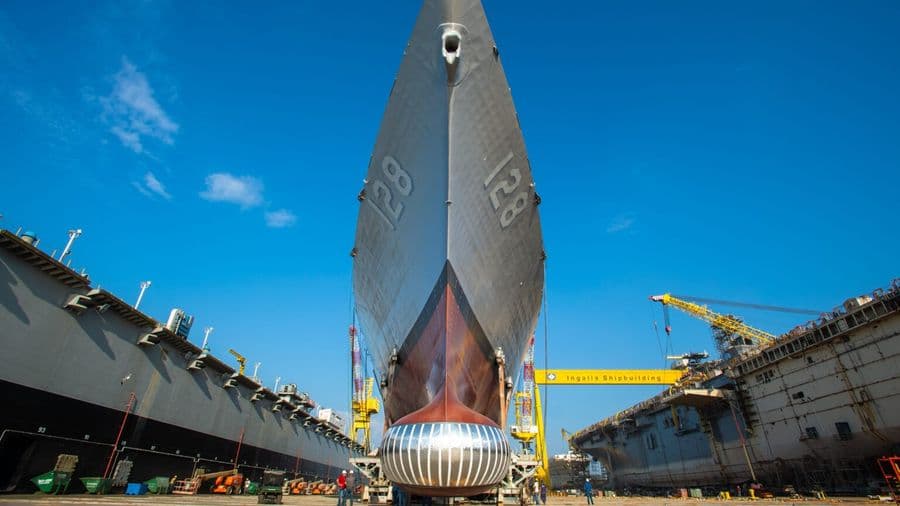
On the Senate Armed Services Committee, I secured a series of wins for implementing artificial intelligence and reforming Navy shipbuilding. As a Navy veteran serving in the United States Senate, I understand the importance of our military adopting an entrepreneurial mindset and innovative approach to solve the complex challenges facing our shipbuilding industry.
My provision, included in this year’s NDAA, mandates that the Navy must tell Congress its plan to use commercial software and artificial intelligence to reduce costs and delays at our shipyards. There’s no reason this provision should not make it into the bill’s final version. My amendment to fund the Artificial Intelligence Maritime Maneuver program at Trine University in Indiana also advances the use of AI to develop less expensive, fully autonomous ships for the Navy. Another amendment I inserted requires the Navy to study moving the manufacturing of ship components from our coasts to other parts of the country like Indiana to reduce costs and bolster our industrial base.
It wasn’t too long ago when America was ranked first in global shipbuilding. Today, American military shipbuilding struggles to stop the fleet from shrinking, and our commercial shipbuilding is non-existent. Today, it costs more to build one ship in the United States than it does in China or South Korea. Beijing last year built more commercial ships by tonnage than the United States produced in total since World War II.
The Government Accountability Office (GAO) recently laid out in alarming testimony that our “Navy’s shipbuilding acquisition practices consistently resulted in cost growth, delivery delays, and ships that do not perform as expected.” The Navy recently admitted the same: “cost and schedule performance remains poor; deliveries are approximately one to three years late and costs continue to rise faster than overall inflation.”
Fortunately, President Trump’s reconciliation bill contains $450 million for applying autonomy and artificial intelligence (AI) to naval shipbuilding.
This relatively small investment could transform Navy shipbuilding by digitally modeling, collecting, and sharing real-time shipbuilding data. This could unlock billions in savings and deliver warships months or maybe years earlier, under budget, and ahead of schedule.
By automating and digitizing ship blueprints, specifications, and other data, the Navy could use AI to evaluate thousands of ship design trade-offs much faster than they are currently.
AI can also help the Navy optimize material, workflow, and workforce decisions. It could forecast demand for components from subcontractors and reduce slack in the supply chain.
Today, when a U.S. shipyard worker has a question, he stops working and waits for his foreman to become available. Our shipyards should be using AI today to capture that foreman’s knowledge and answer workers’ questions not just with text but with pictures, diagrams, and video.
Currently, a change order forces shipyards to stop work to see how the ship will be impacted. With fully digital designs and engineering, instead of emailing PDFs of change orders, AI could do this analysis in minutes.
These digital and AI technologies are already being used by our allies. The “Future of Shipyard” project, deployed to major shipyards in Korea, aims to reduce the time to build ships by 30%. America should implement similar systems that can reduce similar costs and delays in our own shipyards.
That’s why programs like Palantir’s Foundry are the safest and quickest way to accomplish these important goals. By bringing our industrial base into the twenty-first century, we can get shipbuilding back on track, grow our fleet to meet the China challenge, and put ourselves in a better position for our shipbuilders to compete on the world stage. The stakes could not be higher.
Jim Banks is a United States Senator from Indiana. Senator Banks was deployed to Afghanistan during Operations Enduring Freedom and Freedom’s Sentinel in 2014-2015.

Is It Déjà vu All Over Again: The 2012 Report on Global Zero
By Peter Huessy • RealClearDefense
As Private Investment Pours Into Defense, the Clock Is Ticking
By Elaine McCusker • RealClearDefense
The First Test of Peace Lies in Ukraine's Borderlands
By Dennis T. Cosgrove • RealClearDefense
The VFW’s Gambling Addiction Victimizes Veterans
By Jack Yoest • RealClearDefense
Superintelligence Exposes a Gap in the Law of Delegated Authority
By Sue Ghosh Stricklett • RealClearDefense
When Your Navy is too Small, the Bill Comes Due Bigly
By CDR Salamander
Quo Vadis MCU?
By Marine Corps Compass Points
When the Network Goes Dark, Who Controls the Battlefield?
By Jonathan K. Corrado • RealClearDefense
Air Force Should Buy 250 Blended-Wing Tankers, as 2027 Demo Looms
By A&SF Mag.
Long Deployments to Be Navy Standard For Next Couple Years
By Mongilio, USNI News