
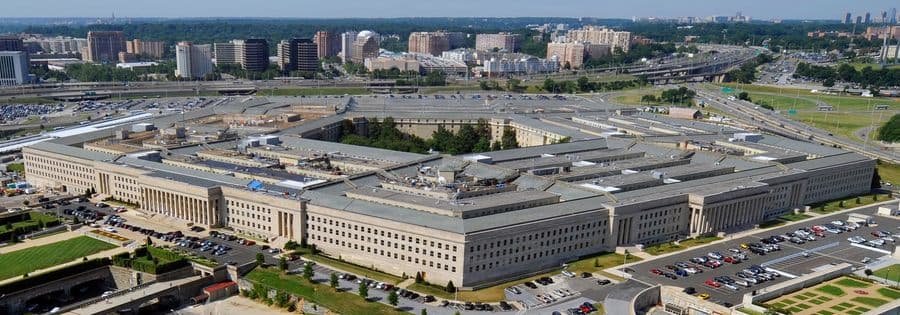
Risk of a Potemkin Force
Last updated 06:27 AM EDT • Read time: 7m
Over the past six months, many influential voices have hailed the One Big Beautiful Bill Act (OB3) as a generational victory for national defense. With much fanfare, Congress provided $150 billion in new investment to modernize the fleet, recapitalize elements of our nuclear enterprise, and accelerate cutting-edge technologies from drones to missile defense. Washington celebrated the legislation believing that writing the check was a critical down payment on solving the problem. At the same time, leaders across the defense ecosystem continue to champion this moment as one for real and lasting acquisition reform and cite recent policy adjustments and provisions in the NDAA to accelerate defense procurement.
Now that the Pentagon has finally published its spend plan for these OB3 funds, and the initial euphoria fades and the hangover of execution sets in, we face a sobering truth: we are on the verge of buying the greatest military we cannot afford to operate. The danger lies not in what OB3 funds, but what remains missing. By pouring billions into procurement for new ships, planes, and sensors, without a corresponding transformation in how we budget for their operations and sustainment across their lifecycle, we are jeopardizing future readiness for acquisition speed today. Until the planning, programming, budgeting, and execution (PPBE) process is materially transformed, and unless the Administration explicitly programs the operations and maintenance (O&M) and sustainment funding for OB3 assets, the likely outcome is stranded capital, degraded readiness, and a political backlash that undermines the promises of acquisition reform. The Administration and Congress must seize on the opportunity presented by the newly released spend plan to transform PPBE and deliver a modern and ready joint force.
This is not an entirely new situation. In the late 1970s, the U.S. military experienced a phenomena known as the "Hollow Force." At the time, the Air Force fielded new F-15 Eagle jets, but flight lines were littered with aircraft grounded and cannibalized for parts because there was no funding for engines or spare parts. We bought the airframes, but the budget process failed to account for the operational reality of sustaining them. Pilots were grounded without ready planes to fly, maintainers went without the necessary parts and tools to repair those planes, and readiness plummeted. While an important lesson from the past, the hollow force of the 1970s is not a direct comparison to today. Senior leaders of that era understood the budgetary reality and intentionally accepted the near-term readiness risk to recapitalize after Vietnam. They assumed that if global crisis demanded US action, they could more easily buy spares and fund flying hours than rebuild a shrunken and outdated force. Today, by contrast, we are actively bombing Iran and expending a finite supply of air defense munitions, while witnessing a heightened risk of conflict in the Indo-Pacific. Unlike the 1970s, we do not have the luxury of absorbing a near-term readiness risk while we modernize.
For decades, the Joint Chiefs and Combatant Commanders have struggled with finding the right balance between readiness, modernization, and force structure. The combination of OB3-driven procurement, chronic continuing resolutions (CRs), and an unreformed PPBE system, risks toppling attempts at balance, to a degree we have not seen in fifty years. Inaction will lead us to motor pools full of Ferraris but no money for fuel.
This is a problem that requires a structural, not an ad hoc, solution. The OB3 provides a massive, time-limited injection of largely investment dollars (procurement and R&D). The acquisition reform efforts underway in the Pentagon and on the Hill aim to make these funds easier to spend on new hardware and certain enabling infrastructure. However, the long-term costs to crew, fuel, repair, and update that hardware come from O&M and other sustainment-related accounts that remain constrained by the traditional appropriations framework and recurring CRs. The Pentagon’s spend plan sequences major investments in new ships, space capabilities, air and missile defense systems, and other assets. As new platforms arrive in the fleet between FY28 and FY30, they will collide with an unreformed budget system. Under our current PPBE rules, O&M is funded annually and is frequently capped by CRs that freeze spending at prior-year levels. Imagine a squadron receiving 20 new autonomous systems in 2028. Under a CR, that squadron’s maintenance budget will be frozen at prior year levels when those systems did not exist. Commanders will be forced to park the new gear or raid funds from legacy units, degrading the readiness of the entire force.
This dynamic is not limited to hardware. OB3 expands investment in the industrial base and critical minerals supply chains, and it increases the lending authority for the Office of Strategic Capital for support dual-use technologies. These are wise bets for long-term resilience, but they will only translate to real capability if the services can afford to sustain the new capacity. We are at risk of building a readiness bow wave that will crest just as these new capabilities are supposed to deter adversaries in a more dangerous strategic environment. We cannot simply hope that future budgets will catch up. We must re-wire the system now, while the OB3 money is still being obligated. Fortunately, the Commission on PPBE Reform issued a final report last March with 28 recommendations to address this problem. If we distill them down to just three and align them with the OB3 execution window, we can largely address the risk we are incurring.
First, we must fully commit to capability-based portfolios. The current budget system locks money into thousands of specific silos. If a program manager saves money on buying a drone, they cannot easily use those savings to buy spare parts for it or to harden the associated software and data infrastructure. Congress should allow the Pentagon to consolidate these microscopic line items into capability-focused portfolios and ensure that those portfolios explicitly include lifecycle sustainment resources, not just development and procurement. This would give leaders the flexibility to shift funds between buying gear, fixing gear, and expanding mission-critical software as real-world needs dictate, without waiting months for Congressional permission. Both Congress and the Pentagon agree on the value of portfolio-based acquisitions, but the real test will be whether appropriations law and committee practice allow portfolio managers to balance buying gear, fixing equipment, and expanding mission-critical software within a coherent construct.
Second, we need execution-year agility tailored to sustainment. The rigid rule that O&M funds must be spent in a single year leads to wasteful spending sprees in September and fiscal starvation in October. Congress should allow carryover authority for sustainment funds, treating them like the multi-year investments they effectively are. This would stabilize the industrial base, allowing companies to invest in the depots, supply chains, and software pipelines needed to keep OB3 assets alive.
Third, we need to exercise true expectation management with regards to lifecycle costs, backed by enforceable budget discipline. The Administration should mandate that no new OB3 start is approved without a validated, 15-year sustainment wedge identified in the future budget. We must stop the credit card cultural practice of buying into programs with procurement dollars while assuming the O&M bill will be paid by a future administration and a future Congress. If we cannot afford the tail, we should not buy the tooth.
The One Big Beautiful Bill Act offers a historic opportunity to recapitalize the American military for an increasingly less-stable world, but procurement is only the down payment on power. Real military capability and power are the product of hardware and software multiplied by readiness over time. If we simply spend the OB3 billions through the same old brittle, bureaucratic pipes, we will build a force that looks formidable in a parade but fails in a fight. We must have the courage to reform the PPBE system that has failed to meet the needs of our 21st century military. These much-needed reforms will ensure that the promises of the OB3 are realized and produce a modern ready force, rather than a Potemkin one.
Brian McSorley is a Director at Pallas Advisors and a retired U.S. Coast Guard Captain. In addition to multiple leadership positions at sea and ashore, he served for over two years as a Special Assistant to the Chairman of the Joint Chiefs of Staff and has extensive experience in military budgeting and leading legislative negotiations.

The Services Do Not Need a Four-Star Autonomous Warfare Command
By Steven Wills • RealClearDefense
Honor Them While There Is Still Time
By Jeffrey Rosales • RealClearDefense
From Siberia to Fairford: How Operation Spider’s Web Has Changed the Rules of Airpower
By Frank A. Rose • RealClearDefense
Faster Simulations, Better Defense Decisions
By Rut Lineswala • RealClearDefense
Will HASC Have an Oversight Subcommittee in the Next Congress?
By Christopher J. Bright • RealClearDefense
Hegseth Barred Trans Troops. Military Boards Are Rejecting Those Orders.
By NYT
Closing the Sea: Lessons from Ancient Mediterranean Blockades
By DeCasien, CIMSECFrom Siberia to Fairford: How Operation Spider’s Web Has Changed the Rules of Airpower
By Frank A. Rose • RealClearDefenseFaster Simulations, Better Defense Decisions
By Rut Lineswala • RealClearDefense
Bombers Could Have a Major Air-to-Air Combat Role
By Joseph Trevithick, The WarZone