
æ?æ??é? and ?è¶?å?å±?: Trump Cards and Leapfrogging
Last updated 05:47 PM EDT • Read time: 16m
THE CHINESE PEOPLE’S LIBERATION ARMY’S TRAJECTORY FROM ASYMMETRY TO INNOVATION
Since the 1990s, the Chinese People’s Liberation Army (PLA) has focused on the development of asymmetric capabilities that target U.S. vulnerabilities. At present, the PLA’s approach is starting to evolve toward a strategy centered upon technological and defense innovation. The PLA is pursuing innovations in “strategic frontier” (æ??ç?¥å??) technologies with disruptive military applications, including directed energy, hypersonic weapons, artificial intelligence, and quantum technologies. The PLA intends to achieve “leapfrog development” (?è¶?å?å±?), seeking to surpass the U.S. military within critical technological domains in which the U.S. does not possess, and may not be able to achieve, a decisive advantage.
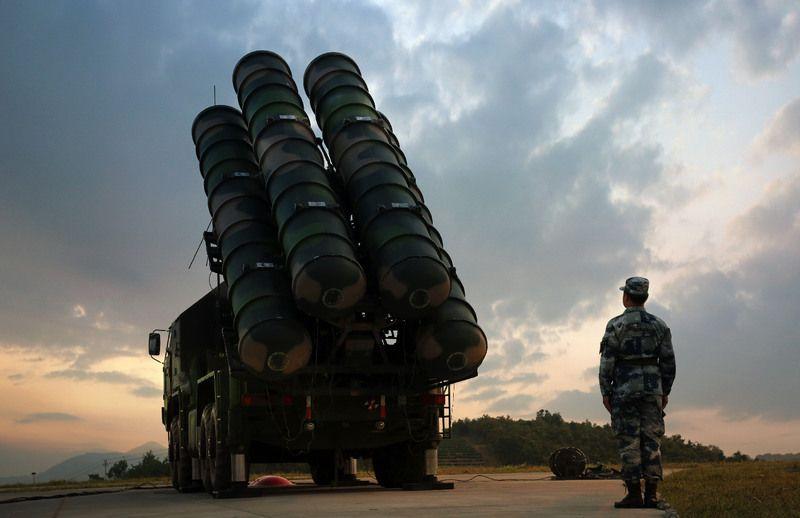
A command and control technician assigned to a missile brigade of the air force under the PLA Central Theater Command operates counter-jamming system during a ground-aerial confrontation drill at a military training base in China's northern Fujian province on Oct. 10, 2016. (81.cn/ Li Ming)
The PLA came late to the information technology revolution in military affairs and has since struggled to develop the capabilities necessary for modern, “informatized” (??å??) warfare. During the first Gulf War, the PLA initially recognized the full extent of its own backwardness relative to the U.S. military, which then revealed transformative U.S. advances in network-centric warfare.[1] Consequently, the PLA embarked upon an ambitious agenda of “informatization,” seeking to enhance its capacity to utilize information in warfare and advance its command, control, communications, computers, intelligence, surveillance and reconnaissance (C4ISR) systems.[2]
“WHAT THE ENEMY IS MOST FEARFUL OF, THIS IS WHAT WE SHOULD BE DEVELOPING.”
As the PLA struggled to catch up with U.S. military, the accidental U.S. bombing of the Chinese embassy in Belgrade in May 1999 served as an impetus for urgency in these efforts. Chinese leaders were skeptical that the bombing was in fact accidental, especially given their impression of the sophistication of U.S. military and intelligence capabilities.[3] In the aftermath of the incident, the Central Military Commission (CMC) reportedly convened an emergency meeting during which it decided to “accelerate the development of shashoujian (æ?æ??é?) armaments.”[4] The term shashoujian, variously translated “trump card” or “assassin’s mace,” is generally used to refer to asymmetric capabilities that could target U.S. vulnerabilities. The term also alludes to a Chinese folktale in which such a weapon was used for unexpected incapacitation of a stronger enemy through a trick (æ??æ?°).[5] Reportedly, CMC Chairman Jiang Zemin’s guidance at the time was “what the enemy is most fearful of, this is what we should be developing.”[6]
Consequently, the PLA launched the secretive “New-Type High-Technology Weapons Plan” or “995 Plan” (æ?°å??é«?ç§?æ???å?¨?å??, 995?å??), which prioritized advanced asymmetric capabilities and ‘trump card’ weapons systems.[7] Although the specific projects associated with the 995 Plan have never been publically disclosed, the PLA has reportedly developed multiple new generations of weapons systems, including the “carrier-killer” DF-21D anti-ship ballistic missile, through this program.[8]
Command and control technicians assigned a missile brigade of the air force under the PLA Central Theater Command deal with flight information during a ground-aerial confrontation drill at a military training base in China's northern Fujian province on Oct. 10, 2016. (81.cn/ Li Ming)
At that stage in its development, the PLA saw particular advantage in the pursuit of an asymmetric (é???) approach that targeted perceived vulnerabilities in U.S. ways of warfare. Chinese advances in cruise and ballistic missiles have since enabled “counter-intervention” (?ä»?å?¥) capabilities, referred to as Anti-Access/Area Denial (A2/AD) capabilities by the U.S., which constrain U.S. forces from operating in proximity to China’s coastline. Concurrently, the PLA’s electronic and cyber warfare capabilities could target critical U.S. battle networks. Chinese non-kinetic and kinetic counter-space capabilities, ranging from directed-energy weapons to the HQ-19 space intercept system, have the capability to threaten satellites integral to U.S. operations.[9] To date, the PLA’s asymmetric approach seems to have achieved its intended objective, through the creation of capabilities that U.S. forces must fear, thus constraining the U.S. ability to operate in China’s “near seas” within the first island chain.
At present, the PLA recognizes a new strategic challenge — the military transformation and potential military revolution resulting from the emergence of disruptive new technologies. As the U.S. recently embarked upon the Third Offset strategy to advance defense innovation, the PLA has become concerned U.S. success in this emerging revolution in military affairs could once again place China in a position of disadvantage. The PLA is acutely aware of the criticality of adapting to and capitalizing upon current technological trends. It fears the emergence of another generational gap between its capabilities and that of the U.S. military, which is perceived as a powerful potential adversary and is the standard to which the PLA compares itself.[10]
LOOKING FORWARD, THE PLA’S INTENSIFIED FOCUS ON DEFENSE INNOVATION REFLECTS ITS INTENTION TO OVERCOME EXISTING U.S. ADVANTAGES IN MORE FAR-REACHING AND DISRUPTIVE WAYS THAN ITS INITIAL ASYMMETRIC STRATEGY.
Looking forward, the PLA will compete with the U.S. military to take advantage of the military applications of strategic frontier technologies with disruptive potential in future warfare. When the Leading Small Group for the 995 Plan was last known to be convened, in December 2014 during an All-Army Armament Conference (å?¨å??è£?å¤??ä½?ä¼??), Xi Jinping emphasized the importance of “innovation-driven development” (å??æ?°?å?¨å?å±?).[11] Xi called for the PLA to “keep in step with the direction of the global military revolution, especially military scientific and technological development.” Furthermore, Xi has highlighted that the PLA must “vigorously advance military innovation,” taking advantage of this opportunity to “close the gap as rapidly as possible.”[12] Beyond a high-level rhetorical commitment to “strengthening the military through science and technology” (ç§?æ???å??), the PLA has the opportunity to capitalize upon China’s advancing capabilities for indigenous innovation (è?ª?å??æ?°) through a national strategy for military-civil fusion (å??æ°?è?å?) that can leverage synergies in dual-use technologies.[13]
The PLA thus seeks to overtake the U.S. military through “cutting corners” (?é?è¶??) to achieve a decisive advantage in future warfare, attempting to achieve “leapfrog development,” and rapid advances in disruptive technologies.[14] China is prioritizing research and development in emerging, disruptive technologies, striving to take the lead in domains in which the historic U.S. advantage in Second Offset and information technologies may not enable a decisive edge. Although a detailed review of Chinese defense innovation would be beyond the scope of this article, there are active efforts to advance the development of “new concept weapons” (æ?°æ¦???å?¨) across several critical domains. The PLA intends to take advantage of advances in such disruptive technologies as directed energy, hypersonic weapons, artificial intelligence (AI), and quantum technologies to enhance its future military capabilities. China is also likely to leverage nanotechnology and biotechnology for military purposes. Each of these emerging technologies also offer the potential to disrupt existing military and strategic balances.
Presumptive Chinese high-power microwave. (Popular Science)
The PLA is actively pursuing advances in directed energy weapons, including high-energy lasers, high-power microwaves, and railguns. There have been recent reports of advances in Chinese high-power microwave weapons, which could be used as a ship-borne anti-missile system or to reinforce China’s air defense systems.[15] The Chinese defense industry also appears to be progressing in its development of railguns to launch high-velocity projectiles and even electromagnetic aircraft launch systems that might be used on future Chinese aircraft carriers.[16] For the PLA, such directed energy and electromagnetic technologies could cause the advent of “light warfare” (å??æ??äº?) that leverages the speed as well as economy and reusability of these weapons, in conjunction with autonomous systems, to dramatically increase operational tempo.[17]
Chinese graphic depicting DF-ZF flight path (Popular Mechanics)
Chinese advances in hypersonic technology already rival and could surpass the U.S. To date, China has conducted seven tests of its hypersonic glide vehicle, the DF-ZF (designated the Wu-14 by U.S. defense officials) since January 2014, six of which have reportedly been successful.[18] Future hypersonic weapons, capable of achieving speeds greater than Mach 5, could have a dramatic impact on strategic-level deterrence and the existing military technological balance between offense and defense, including their capability to possibly overcome ballistic missile defense systems.[19] Finally, the DF-ZF could find potential use for both conventional and nuclear purposes, enhancing the future of China’s deterrence posture.
ALTHOUGH THERE ARE REMAINING UNCERTAINTIES REGARDING THEIR TECHNICAL TRAJECTORIES AND TIMEFRAMES, QUANTUM TECHNOLOGIES MIGHT BECOME A SOURCE OF RADICAL DISRUPTION IN MILITARY AFFAIRS IN THE LONG TERM.
China’s rise in artificial intelligence has become a reality and could act as a force multiplier for the PLA’s future capabilities. Chinese leadership intends to pursue a first-mover advantage to become the premier global AI innovator by 2030, surpassing the U.S. in the process.[20] In this, the PLA seeks to advance and research, develop, and test a range of military applications of AI. For instance, the PLA plans to employ machine learning, including deep neural networks, to enable rapid processing of data and imagery in support of intelligence analysis, while Chinese advances in swarm intelligence could enable asymmetric assaults against high-value U.S. weapons platforms such as aircraft carriers.[21] Looking forward, the PLA anticipates a revolution in military affairs leading to future “intelligentized” (æ?ºè?½å??) warfare, in which AI will be as integral as information technologies have been to “informatized” warfare.
A J-11 fighter jet attached to a missile brigade of the air force under the PLA Central Theater Command soars over a radar to implement electronic attack to the mock ground enemies during a ground-aerial confrontation drill in China's northern Fujian province on Oct. 10, 2016. (81.cn/ Li Ming)
China intends to lead the coming “second quantum revolution,” betting heavily on the revolutionary potential of quantum technologies.[22] China’s expanding dual-use of quantum communications infrastructure will be employed in an attempt to ensure the security of military communications against foreign signals intelligence capabilities, perhaps even enabling secure underwater communications.[23] Chinese advances in quantum computing could enable future military applications, including enhancing China’s offensive cyber capabilities through the capacity to defeat most prevalent forms of encryption.[24] In addition, progress in quantum radar, quantum navigation, and quantum sensing could have uniquely disruptive applications—from quantum radar which might overcome stealth technology, to the quantum compass which might become a more accurate successor to inertial navigation beyond GPS-aided capabilities and would be highly useful for submarines.[25] Although there are remaining uncertainties regarding their technical trajectories and timeframes, quantum technologies might become a source of radical disruption in military affairs in the long term.
A Chinese Navy submarine takes part in an international fleet review to celebrate the 60th anniversary of the founding of the People's Liberation Army Navy in Qingdao, Shandong province, April 23, 2009. (Reuters)
Looking forward, the PLA’s intensified focus on defense innovation reflects its intention to overcome existing U.S. advantages in more far-reaching and disruptive ways than its initial asymmetric strategy. Pursuant to its military strategic guideline of active defense (?æ?é?²?) — which involves “unity of strategic defense and operational and tactical offense” — the PLA will seek to ensure that conflict only occurs on its own terms.[26] When China was in a position of technological inferiority, its guiding maxim of “you fight your way and I fight my way” resulted in an asymmetric strategy that took advantage of U.S. vulnerabilities, but this same approach now tends towards a focus on disruptive innovation in domains in which China has the potential to compete with or even surpass the U.S.[27]
Could the PLA succeed in leapfrogging the U.S. in defense innovation? Possibility is not necessarily probability. More certainly the PLA will confront considerable obstacles in its attempts to actualize innovation, but its potential for success cannot be discounted. China’s future advances in these strategic emerging technologies could be enabled by critical structural and systemic advantages, including long-term national strategic planning; the availability of extensive funding and investment; and robust human capital resources, including aggressive recruitment of world-class talent. Ultimately, this emergent Chinese innovation-driven strategy could transform to trump the future military balance, and U.S. defense innovation initiatives must take this strategic challenge into account.
Elsa B. Kania is an independent analyst and consultant focused on the PLA’s strategic thinking on and advances in emerging technologies. She is fluent in Mandarin Chinese.
This article appeared originally at Strategy Bridge.
NOTES:
[1] See, for instance: Dean Cheng, “Chinese Lessons from the Gulf Wars” in Chinese Lessons Learned from Other People’s Wars, Strategic Studies Institute, November 2011, http://ssi.armywarcollege.edu/pdffiles/pub1090.pdf
[2] For an authoritative perspective on informatization, see this article by the director of the former Informatization Department: Wang Kebin [ç??å??æ??], “Resolutely Take the Path of Strengthening the Military by Informationization with Chinese Characteristics” [å?å®??å¤???å?½ç?¹è?²???å??ä¹??], China Military Science [?å?½å??äº?ç§??], 2015. For an informative analysis of the PLA’s advances in informatization, see: Joe McReynolds and James Mulvenon, “The Role of Informatization in the People’s Liberation Army under Hu Jintao,” in Kamphausen, Lai, and Tanner,Assessing the People’s Liberation Army in the Hu Jintao Era, 2014, p. 207-256. For discussion of the PLA’s evolving approach to informatization in the context of current military reforms, see: Elsa Kania and John Costello, “China's Quest for Informatization Drives PLA Reforms,” The Diplomat, March 04, 2017, http://thediplomat.com/2017/03/chinas-quest-for-informatization-drives-pla-reforms/
[3] For a journalistic account of the incident and Chinese leaders’ reaction, see: Steven Lee Myers, “Chinese Embassy Bombing: A Wide Net of Blame,” New York Times, April 17, 2000, http://www.nytimes.com/2000/04/17/world/chinese-embassy-bombing-a-wide-net-of-blame.html
[4] Zhang Wannian, Biography of Zhang Wannian [?ä¸???], p. 416-17. qtd. in: Tai Ming Cheung, Thomas Mahnken, Deborah Seligsohn, Kevin Pollpeter, Eric Anderson, and Fan Yang, “Planning for Innovation: Understanding China’s Plans for Technological, Energy, Industrial, and Defense Development,” US-China Economic and Security Review Commission, July 2016, p. 26-27.
[5] This usage of the term is described in its Baidu entry: “æ?æ??é?,” http://baike.baidu.com/item/%E6%9D%80%E6%89%8B%E9%94%8F/681697
[6] Zhang Wannian, Biography of Zhang Wannian [?�??], Liberation Army Press, 2011, 416, quoted in Tai Ming Cheung, Forging China's Military Might: A New Framework for Assessing Innovation, Johns Hopkins University Press, 2014.
[7] Tai Ming Cheung, Thomas Mahnken, Deborah Seligsohn, Kevin Pollpeter, Eric Anderson, and Fan Yang, “Planning for Innovation: Understanding China’s Plans for Technological, Energy, Industrial, and Defense Development,” US-China Economic and Security Review Commission, July 2016, p. 25-27.
[8] Ibid. The original source, as discussed by Tai Ming Cheung et al. is no longer available online: “Talk by Yao Youzhi at the Shenzhen Culture Forum,” August 18, 2012, http://www.szccf.com.cn/wqhg_content_662.html.
[9] For a great analysis of this system, see Jeffrey Lewis, “CHINA’S HQ-19 HIT-TO-KILL INTERCEPTOR,” Arms Control Wonk, November 7, 2016, http://www.armscontrolwonk.com/archive/1202166/chinas-hq-19-hit-to-kill-interceptor/. See also: Minnie Chan, “Why did China release rare videos of its successful anti-missile system tests?,” South China Morning Post, July 19, 2016, http://www.scmp.com/news/china/diplomacy-defence/article/1996388/why-did-china-release-rare-videos-its-successful-anti
[10] China Military Science Editorial Department [?å?½å??äº?ç§?? ç¼?è¾?é?¨], “A Summary of the Workshop on the Game between AlphaGo and Lee Sedol and the Intelligentization of Military Command and Decision-Making” [å?´æ£??æ?º?æ??ä¸?å??äº?æ??æ?¥å?³ç?æ?ºè?½å??ç ??ä¼?è§?ç?¹??], China Military Science [?å?½å??äº?ç§??], April 2, 2016.
[11] “Xi Jinping: Equipment Construction Must Adhere to the Basic Traction of Combat Requirements” [?è¿??ï¼?è£?å¤????å?æ?ä½?æ??é??æ±?ç???æ?¬ç?µå¼?], Xinhua, December 4, 2014, http://news.xinhuanet.com/politics/2014-12/04/c_1113525477.htm
[12] “Xi Jinping: Accurately Grasp the New Trend in Global Military Developments and Keep Pace with the Times, Strongly Advancing Military Innovation” [?è¿??:å???æ???ä¸?ç??å??äº?å?å±?æ?°è¶?å?¿ ä¸?æ?¶?è¿??å??æ?¨è¿?å??äº?å??æ?°], Xinhua, August 30, 2014, http://news.xinhuanet.com/politics/2014-08/30/c_1112294869.htm
[13] For a more detailed analysis of the dynamics of China’s military-civil fusion strategy, see: Greg Levesque and Mark Stokes, “Blurred Lines: Military-Civil Fusion and the “Going Out” of China’s Defense Industry,” Pointe Bello, December 2016, http://www.pointebello.com/researchandinsights/
[14] This phrase (?é?è¶??) implies literally (in the context of driving) overtaking someone around a bend, or metaphorically achieving rapid progress through cutting corners. For an authoritative commentary on military innovation and “leapfrog development” see: PLA Daily Commentator [?æ?¾å??æ?¥è¯??å??], “Step Up Leapfrog Development in Crux Domains” [å? ?å?¨å?³é?®é¢?å??å®?ç?°?è¶?å?å±?], PLA Daily, June 25, 2016, http://www.81.cn/jmywyl/2017-06/25/content_7651158.htm. For an influential Chinese defense academic’s take on military innovation, see also: Xiao Tianliang [è????], “Seize the Reform Initiative, Conform to the Tide of Military Transformation” [?åº?å??äº?å????æ???æ?¹??å?¨], PLA Daily, January 5, 2016, http://jz.chinamil.com.cn/n2014/tp/content_6843416.htm.
[15] Elsa B. Kania, “The PLA’s Potential Breakthrough in High-Power Microwave Weapons,” The Diplomat, March 11, 2017, http://thediplomat.com/2017/03/the-plas-potential-breakthrough-in-high-power-microwave-weapons/
[16] Jeffrey Lin and Peter Singer, “An Electromagnetic Arms Race Has Begun: China Is Making Railguns Too,” Eastern Arsenal, November 23, 2015, http://www.popsci.com/an-electromagnetic-arms-race-has-begun-china-is-making-railguns-too
[17] Hu Shengning [è?¡??], Li Bingyan [æ?ç?³?], and Wang Shengliang [ç??å?£è?¯], Light Warfare: The New Trend in the Global Revolution in Military Affairs å??æ??äº?: ä¸?ç??å??äº??å?½æ?°è¶?å?¿], PLA Press, 2015.
[18] Erika Solem and Karen Montague, “Chinese Hypersonic Weapons Development,” China Brief, April 21, 2016, https://jamestown.org/program/updated-chinese-hypersonic-weapons-development/
[19] For a more detailed account of Chinese advances in hypersonic technologies, eee: “Prepared Statement of Mark A. Stokes, Executive Director Project 2049 Institute, Before The U.S.-China Economic and Security Review Commission Hearing on Chinese Advanced Weapons Development,” February 23, 2017, https://www.uscc.gov/sites/default/files/Stokes_Testimony.pdf
[20] China hopes to achieve a first-mover advantage in order to establish technological leadership in this critical technology. For a more detailed analysis and translation of China’s New Generation AI Development Plan, see: Graham Webster, Rogier Creemers, Paul Triolo, and Elsa Kania, “China’s Plan to ‘Lead’ in AI: Purpose, Prospects, and Problems,” New America, August 1, 2017, https://www.newamerica.org/cybersecurity-initiative/blog/chinas-plan-lead-ai-purpose-prospects-and-problems/
[21] See the author’s prior and forthcoming publications on the topic for a more detailed analysis, including: Elsa B. Kania, “China’s Quest for an AI Revolution in Warfare,” Strategy Bridge, June 8, 2017, https://thestrategybridge.org/the-bridge/2017/6/8/-chinas-quest-for-an-ai-revolution-in-warfare. See also: Elsa Kania, “Swarms at War: Chinese Advances in Swarm Intelligence,” China Brief, July 6, 2017, https://jamestown.org/program/swarms-war-chinese-advances-swarm-intelligence/
[22] Jonathan P. Dowling and Gerard J. Milburne, “Quantum Technology: the Second Quantum Revolution,” Philosophical Transactions of the Royal Society of London A: Mathematical, Physical and Engineering Sciences 361, no. 1809 (2003): 1655-1674. “China Leads the Second Quantum Revolution” [?å?½é¢?è·?“?äº??é???å?½”], Xinhua, August 16, 2016, http://military.china.com/news/568/20160816/23303785_all.html
[23] “Ten Years Casting a Shield for Information Security” [??é?¸???å®?å?¨ä¹?“ç?¾”], China Science and Technology [?å?½ç§??æ?¥], August 16, 2016, http://webcache.googleusercontent.com/search?q=cache:fceV54osQjgJ:www.ahkjt.gov.cn/technologi/dynamic/mtjj/webinfo/2016/08/1462867995124557.htm+&cd=1&hl=en&ct=clnk&gl=us. See also: Yuan Yi [?è?º], Quantum Cryptography: The “Magic Weapon” in Future Warfare [é??å¯??ï¼?æ?ª?æ??äº?“ç¥?å?¨”], Guangming Daily [å??æ??æ?¥æ?¥], May 28, 2014. Yuan Yi is a researcher at the PLA’s Academy of Military Science. Ling Ji et al., “Towards quantum communications in free-space seawater,” Volume 25, Issue 17, https://www.osapublishing.org/oe/abstract.cfm?uri=oe-25-17-19795
[24] For a recent discussion of the military impact of quantum technologies, see “How Quantum Technologies Will Disrupt the Form of Future War” [é??æ??æ?¯å°?å¦?ä½??è¦?æ?ª?æ??äº??æ?], China Youth Daily, August 31, 2017, https://www.chinanews.com/mil/2017/08-31/8318647.shtml. The authors are professors at the PLA’s NDU.
[25] Elsa Kania and Stephen Armitage, “Disruption Under the Radar: Chinese Advances in Quantum Sensing,” China Brief, August 17, 2017, https://jamestown.org/program/disruption-under-the-radar-chinese-advances-in-quantum-sensing/
[26] See the English translation of China’s 2015 National Defense White Paper for a description of the concept of active defense: “China’s Military Strategy,” State Council Information Office, May 26, 2015, https://news.usni.org/2015/05/26/document-chinas-military-strategy
[27] The author would like to thank John Costello for raising this point and for his insights on these issues.

The Gulf of Finland’s Forgotten Islands
By Ben Poulin • RealClearDefense
NATO’s New Spending Pledge Must Buy Real Energy Resilience
By Chuck Dockery • RealClearDefense
The Army Needs a Data Logistics Discipline Before the Next Surge
By Steve Ferenzi • RealClearDefense
2949 Marine Prisoners, Hostages, and Peacetime Governmental Detainees Since Our Corps' Founding
By Jon Couch • RealClearDefense
America Must Win the Biotech Race Against China
By Rob Maness • RealClearDefense
U.S. Air Force To Arm C-17 Cargo Aircraft With Cruise Missiles
By C. Jones, Defence Blog
How Marine Vet Ernest Langdon Became a Renowned Shooter & Gunsmith
By WATM
In First, Two CCAs Fly Air Combat Maneuvers Using Autonomy Software
By A&SF
Space Force Launches Mission Operations Center
By Jon Harper, DefenseScoop
Pentagon Mulls Placing Fleet of Military Satellites Around the Moon
By Ars Technica