
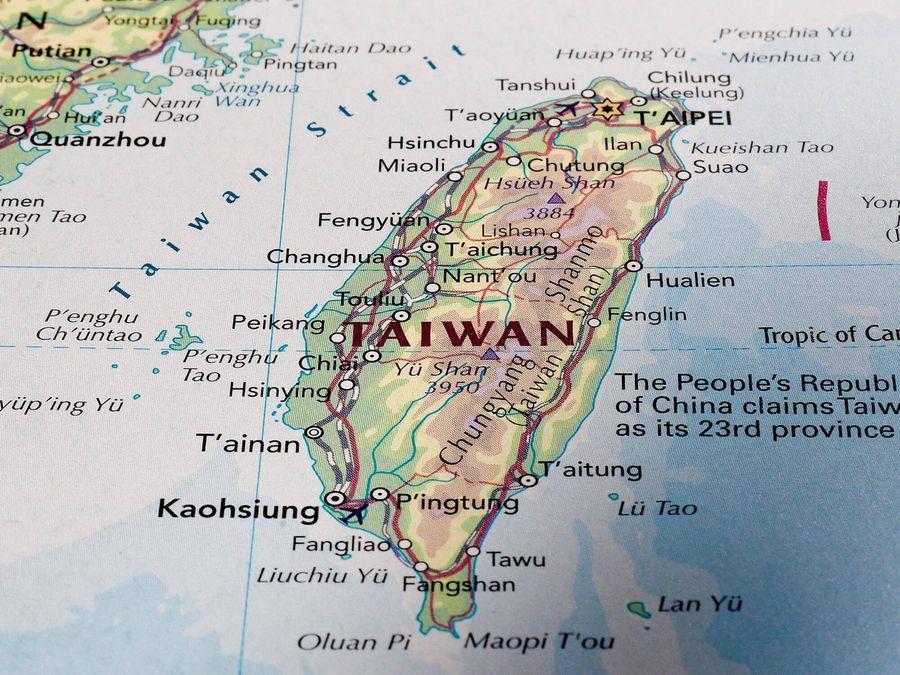
Something To Keep in Mind: China Can't Invade Taiwan Yet
Last updated 06:16 AM EDT • Read time: 4m
Let’s not get too gloomy. Despite their extensive modernisation, the Chinese armed forces still don’t have the capabilities needed for amphibious assault of Taiwan, particularly in the context of potential U.S. intervention and Taiwan’s progressive adoption of asymmetric defence.
Numerous credible evaluations find that China lacks the requisite logistics, leadership and experience to conduct a comprehensive amphibious invasion across the Taiwan Strait. And Taiwan is adopting at least some elements of a porcupine strategy, one using numerous small weapons that China would have trouble in countering.
A Pentagon assessment in December 2024 revealed that extensive corruption within the Chinese military was compromising its ability to be ready to invade Taiwan in 2027—readiness that U.S. officials say President Xi Jinping has demanded. In December 2024, open-intelligence service Janes assessed that the chance of China initiating a full-scale invasion in the next six to 12 months was just 5 percent. Janes expected that China’s military operations in 2024 would be mainly confined to intimidation and coercion rather than preparations for an offensive.
A survey in 2024 conducted by the Center for Strategic and International Studies found that only 27 percent of U.S. experts and just 17 percent of Taiwanese experts believed that China had the capabilities to execute an amphibious assault on Taiwan. Another survey, by National Defense University in 2022, underscored that, though the Chinese armed forces had achieved impressive modernisation, they particularly lacked logistics integration and joint-force training needed for an invasion.
The impressive expansion in Chinese naval shipbuilding and the induction of advanced amphibious equipment, such as landing barges, are aimed at closing capability gaps. But analysts still see performance of the landing as extremely difficult, in part due to Taiwan’s geography.
The island’s western shores, where landings might occur, are exposed to defensive fire and surveillance and are approached by shallow water. The strait, at least 130 km wide, is often rough.
Taiwan defence preparations have visibly intensified. In a recent military drill in July, which engaged 22,000 reserve personnel-among the largest such mobilisations, Taiwan showcased newly acquired U.S.-supplied Abrams M1A2T tanks and Himars rocket launcher vehicles, alongside cyber-defence simulations. This reflects not just routine equipment renewal but a deliberate move toward multi-domain preparedness.
We see some elements of a porcupine strategy in Taiwan. Examples are accelerated acquisition of sea mines and ground-launched anti-ship missiles, and arrangements for decentralised command.
But Taiwan also persists with high-value equipment, such as upgraded F-16s and large warships. While Taiwan’s armed forces are evidently evolving towards a porcupine strategy, they are still far from fully committed to one.
If invasion is impossible, Beijing has the alternatives of trying to force capitulation by blockading the island, bombarding it from the air or doing both. But these tactics would bring risk of international escalation. Prolongation of such tactics would likely invite an international response, especially from the United States.
While Taiwan’s chipmaking industry is the main feature of the island’s silicon shield—the industry whose global importance deters China from attacking. Chinese seizure of Taiwan would not guarantee control over these capabilities, and their destruction would trigger massive economic fallout.
The status quo continues to receive quiet but firm international backing. The U.S. maintains unofficial but deep economic and military ties with Taiwan though the Taiwan Relations Act. Arms shipments have recently increased, and the U.S. Congress has intensified support, mitigating concerns about President Donald Trump’s possibly transactional approach to Taiwan.
Taiwan’s friends must take notice of China’s goals, ambitions and increasing militarisation, but we must not overplay the threat.
Sriparna Pathak is a professor of China studies at O P Jindal Global University. She also serves in the capacity of the associate director of the Jindal India Institute. Gaurav Sen is a senior research fellow at Jawaharlal Nehru University and the author of "Peril of the Pacific: Military balance and Battle for Taiwan."
This article appeared originally at The Strategist (ASPI).

The Gulf of Finland’s Forgotten Islands
By Ben Poulin • RealClearDefense
NATO’s New Spending Pledge Must Buy Real Energy Resilience
By Chuck Dockery • RealClearDefense
The Army Needs a Data Logistics Discipline Before the Next Surge
By Steve Ferenzi • RealClearDefense
2949 Marine Prisoners, Hostages, and Peacetime Governmental Detainees Since Our Corps' Founding
By Jon Couch • RealClearDefense
America Must Win the Biotech Race Against China
By Rob Maness • RealClearDefense
U.S. Air Force To Arm C-17 Cargo Aircraft With Cruise Missiles
By C. Jones, Defence Blog
How Marine Vet Ernest Langdon Became a Renowned Shooter & Gunsmith
By WATM
In First, Two CCAs Fly Air Combat Maneuvers Using Autonomy Software
By A&SF
Space Force Launches Mission Operations Center
By Jon Harper, DefenseScoop
Pentagon Mulls Placing Fleet of Military Satellites Around the Moon
By Ars Technica