
Trump's Taiwan Arms Delay Reflects Old Patterns, New Instability
Last updated 08:32 AM EDT • Read time: 5m
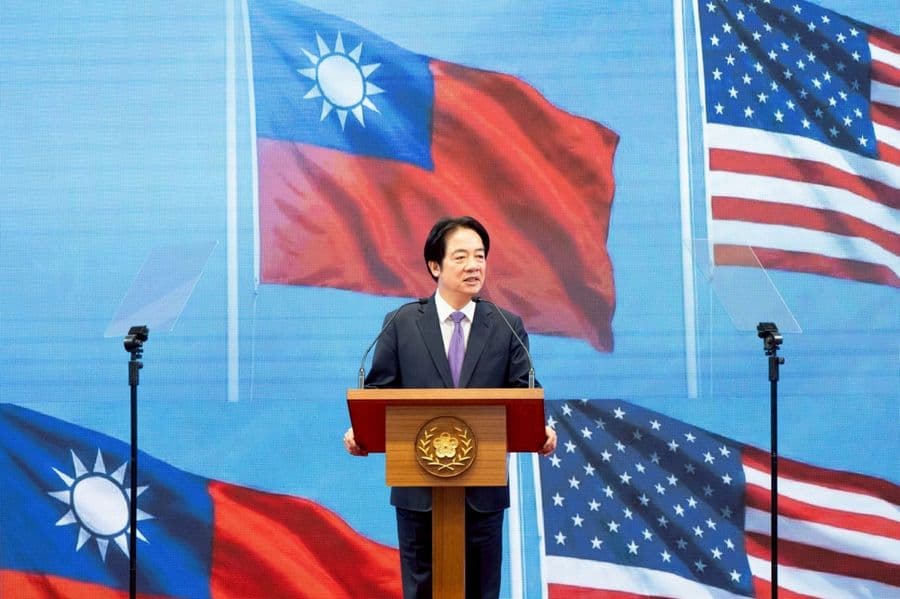
President Trump’s decision to delay signing off on a Taiwan arms package supported by lawmakers because he believed it could provide leverage with China, provoked a bipartisan backlash. Later claims by an administration official that the sale was being delayed because of weapons expenditure during the Iran War were similarly met with incredulity. The authorisation of the sale of military systems, worth approximately US$14 billion, would have followed an US$11.1 billion package announced in December 2025. Beyond the direct national security implications – including that the security of Taiwan supports the U.S. position in East Asia – many objections to the delay rest on U.S. law and pledges. The 1979 Taiwan Relations Act (TRA) requires Washington to make available defence articles and services needed for Taiwan’s self-defence, while Reagan’s Six Assurances stated that the U.S. had not agreed to consult the People’s Republic of China (PRC) on arms sales to Taiwan.
Yet U.S. arms policy toward Taiwan has oscillated since the government of the Republic of China (ROC) fled the mainland after losing the Chinese Civil War in 1949. Initial U.S. reluctance to back Taipei gave way to broad support during the Korean War, before the Nixon-era opening to Beijing and Washington’s recognition of the PRC in 1979 forced a reassessment. After increasingly restrained sales under Nixon and Ford, the Carter administration hardened this approach, including through refusing to sell advanced aircraft such as the F-4, F-16 or F/A-18 to Taiwan.
Despite the passage of the TRA and Reagan’s own pro-ROC rhetoric, elements of this restraint persisted under his administration – in part due to Washington’s desire to support a strategic alignment with the PRC in opposition to the USSR. Reagan’s Six Assurances were issued in response to the 1982 Joint Communiqué with China, in which Washington said it did not seek to carry out long-term arms sales to Taiwan, pledged not to exceed recent sales in qualitative or quantitative terms, and said sales would be gradually reduced. The TRA also afforded discretion over the sales required, stating that “The President and the Congress shall determine the nature and quantity of such defence articles and services based solely upon their judgment of the needs of Taiwan”. For much of the 1980s, military support for the ROC was conducted largely via U.S. industry.
Following the end of the Cold War, there was a strong pivot back toward supporting Taiwan, driven by the disappearance of the Soviet threat, cooling U.S.-China relations after the Tiananmen Square Massacre, and congressional pressure bolstered by the ROC’s democratisation. The domestic politics were also unmistakable: Bush announced the sale of 150 F-16A/B aircraft at the Fort Worth plant that built the aircraft during his 1992 presidential campaign.
Yet while a broad array of weapons ranging from Patriot missile systems to tanks was authorised for sale over the next thirty-five years, a degree of indirect deference to Beijing persisted. Despite the Third Taiwan Strait Crisis of 1995-1996, which saw the U.S. deploy aircraft carriers in response to China’s attempted intimidation of the ROC, the Clinton administration held back from fulfilling some of Taiwan’s most sensitive arms requests – reportedly out of fear of alienating the PRC. The G.W. Bush administration later deferred a request for Aegis-equipped destroyers even while approving platforms including Kidd-class destroyers and P-3C anti-submarine aircraft. Successive administrations also delayed or rejected Taiwan’s requests for newer F-16 variants, even as Obama approved major upgrades to Taiwan’s existing fleet.
Ironically, given the current limbo over the 2026 package, it was the first Trump administration that marked the most dramatic increase in military support to Taiwan since the 1950s, including in the form of systems that could hit targets in mainland China, such as ATACMS missiles, a trend later underscored by the December 2025 package.
Yet Trump’s recent move to stall sales approval reflects the policy opaqueness of the administration: notably, the December 2025 U.S. National Security Strategy (NSS) makes clear the importance of the defence of Taiwan to the U.S.; yet the January 2026 U.S. National Defense Strategy (NDS) does not mention the island by name despite reported interim guidance identifying denial of a Chinese fait accompli seizure of Taiwan as the U.S. Department of Defense’s “sole pacing scenario” alongside homeland defence. Adding to the confusion, it is also arguable that this difference between the documents is cosmetic, as the NDS highlights the importance of defending the first island chain of which Taiwan is a part. Overall, both documents cool previous rhetoric against China.
Ultimately, Trump’s hesitation over the latest Taiwan arms package is not an aberration in isolation. For decades, Washington has treated Taiwan’s security as both a strategic obligation and a variable in its wider relationship with Beijing. What makes the current delay especially contentious is that it is emanating from an administration that is already seen as transactional and lacking in joined-up thinking.
Rowan Allport is the author of War Plan Taiwan: OPLAN 5077 and the U.S. Struggle for the Pacific, published by Naval Institute Press. He holds a PhD in politics from the University of York, is a deputy director at the Human Security Centre, and was formerly a senior analyst at RAND Europe.
Is It Déjà vu All Over Again: The 2012 Report on Global Zero
By Peter Huessy • RealClearDefense
As Private Investment Pours Into Defense, the Clock Is Ticking
By Elaine McCusker • RealClearDefense
The First Test of Peace Lies in Ukraine's Borderlands
By Dennis T. Cosgrove • RealClearDefense
The VFW’s Gambling Addiction Victimizes Veterans
By Jack Yoest • RealClearDefense
Superintelligence Exposes a Gap in the Law of Delegated Authority
By Sue Ghosh Stricklett • RealClearDefense
When Your Navy is too Small, the Bill Comes Due Bigly
By CDR Salamander
Quo Vadis MCU?
By Marine Corps Compass Points
When the Network Goes Dark, Who Controls the Battlefield?
By Jonathan K. Corrado • RealClearDefense
Air Force Should Buy 250 Blended-Wing Tankers, as 2027 Demo Looms
By A&SF Mag.
Long Deployments to Be Navy Standard For Next Couple Years
By Mongilio, USNI News