
Why Trump Should Talk NFL With Xi
Last updated 06:45 AM EDT • Read time: 6m
When President Donald Trump meets Xi Jinping in Beijing, the agenda will focus on hard issues including Taiwan, trade, technology, military stability, Iran, and the future of U.S.-China competition. That is as it should be. The U.S.-China relationship is the world’s most consequential bilateral rivalry.
But precisely because the agenda is so tense, Trump should raise one unexpected subject with Xi. The NFL.
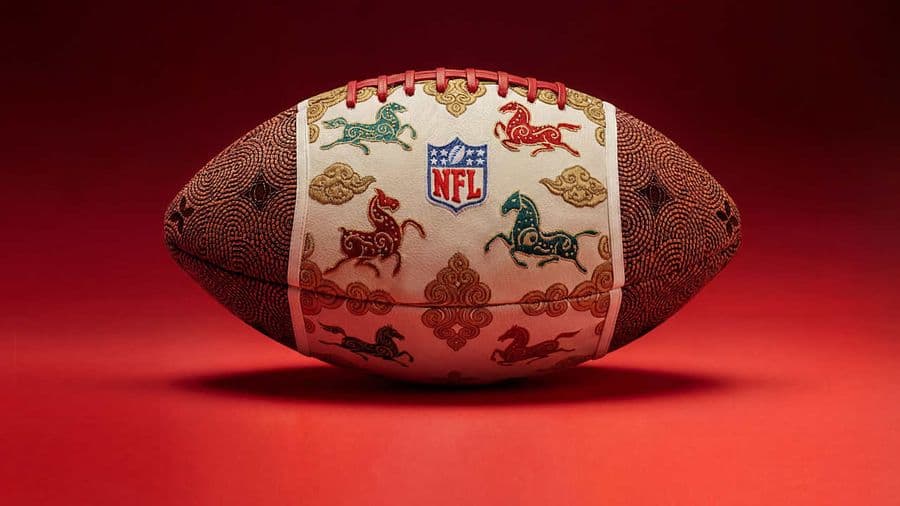
Not as a favor to a sports league or a distraction from great power competition. Trump should talk NFL with Xi because the United States should encourage China to support a formal exploratory process for hosting the first regular season NFL game on Chinese soil before the 2028 Los Angeles Olympic Games.
The proposal may sound fanciful. That is exactly why it deserves attention. U.S.-China relations run on predictable scripts including tariffs, export controls, military warnings, and crisis management. All are necessary. None is sufficient. Great power competition also requires strategic imagination. It requires identifying unexpected channels where national interests, cultural influence, private sector capability, and people to people contact can overlap.
A China game should be tactical engagement, not strategic trust building. It would not transform the relationship. It would test whether American football can generate sustained youth participation and institutional relationships inside a difficult market.
The NFL has unfinished business in China. In 2007, the league planned a preseason China Bowl in Beijing between the Patriots and Seahawks, only to cancel it in favor of launching regular season games in London. Nearly two decades later, the environment has changed. The NFL’s Global Markets Program now assigns clubs international marketing rights. All 32 teams participate, and the Los Angeles Rams hold rights in China along with several other countries.
The Rams already have the market bridge. What they lack is the diplomatic opening. A Trump Xi conversation could provide it. Trump should invite Xi to support an exploratory process involving the NFL, the Rams, Chinese sports authorities, Olympic stakeholders, and U.S. diplomatic channels.
Roger Goodell should lead the follow up. As the son of a former U.S. Senator and a two decade NFL commissioner, Goodell operates at the intersection of sports, politics, media, and global expansion. This is especially relevant because the NFL is no longer acting alone. In January 2026, the league signed a memorandum of understanding with the U.S. Department of State to advance sports diplomacy through international games, youth engagement, flag football, and embassy programming.
The American model must differ from China’s state directed approach. The State Department should provide guardrails and conditions, not direct content or turn players into envoys. Private institutions such as the NFL and the Rams should lead.
This is where Joseph Nye’s concept of soft power matters. Nye described power not only as the ability to coerce, but also as the ability to attract. American football, at its best, embodies competition, discipline, teamwork, strategy, and voluntary association. But soft power must be earned through effectual engagement, not symbolic spectacle.
A regular season game would only be worthwhile if tied to lasting outcomes including youth flag football clinics, coach development, girls’ and women’s participation, school partnerships, and a pathway to LA28. Tackle football built the NFL’s global media brand. Flag football is cheaper, safer, and more accessible, and it can build a global participation system. LA28 offers the perfect Olympic stage.
China has incentives to engage. Flag football is not arriving in China from scratch. The sport was selected for The World Games 2025 in Chengdu, and IFAF noted that more than 300,000 children in China already participate in school flag football programs. Hosting the first NFL regular season game would deliver a major international experience, boost China’s flag football push before LA28, and signal openness amid tension. Beijing should see value in accelerating youth participation. These incentives do not remove risks of propaganda or narrative control. That is why any effort must include clear terms, reciprocal programming, and measurable follow on activity.
China has seen American sport’s reach before. Kobe Bryant achieved massive popularity there and became a symbol of excellence and aspiration for over 20 years. He was even described as a “One-Man State Department.” His influence came from repeated presence, respect for the audience, and stories that Chinese fans could claim as their own. The NFL cannot manufacture another Kobe, but it can learn from those conditions.
Real risks remain. Beijing could turn the event into a prestige project. The NBA’s 2019 experience, with broadcast blackouts and lost revenue after Daryl Morey’s Hong Kong tweet, serves as a warning, not a retreat signal. Any deal must include firm red lines. No political scripts. No forced apologies. Transparent broadcasts. Player safety. A genuine willingness to walk away.
Logistical hurdles are significant. Long travel, scheduling, union buy in, stadium readiness, and market demand make China harder than established markets like London or Germany. That is why the goal now is not announcing a game, but launching a serious exploratory process to test feasibility and guardrails.
Trump should raise this as a side item. Goodell should handle operations. The Rams should anchor market efforts. Success must be measured by what remains after the teams leave. Flag football participation numbers. Trained coaches. School programs. Fan growth. A credible LA28 pathway. Not television ratings or photo opportunities.
The United States should remain firm on Taiwan, technology, deterrence, trade, espionage, and human rights. Firmness does not require cultural withdrawal. Great powers compete through pressure and attraction.
Critics might call this naïve. Concerns about propaganda and political risk are legitimate. But refusing all engagement also carries costs. Viewing China solely through military balances, export controls, and crisis management narrows strategic imagination.
This would not be another version of ping-pong diplomacy. The relationship is too suspicious for dramatic openings. Yet sports can still create practical channels below the level of confrontation.
Trump should not talk NFL with Xi because American football will transform U.S.-China relations. It will not. He should raise it because competition should not mean cultural retreat. A regular season game in China would be a test, not a concession. It would be a probe whose real value lies in the durable relationships and youth participation left behind.
Nearly twenty years after the missed China Bowl opportunity, the pieces align differently. Rams market rights. The NFL State Department MOU. Flag football’s Olympic debut. The need for channels amid rivalry.
America should be confident enough to share one of its greatest cultural inventions, and strategic enough to create conditions for effectual engagement between two great powers.
Chad Williamson is a military veteran and is currently pursuing his graduate degree in national security policy. He lives on Capitol Hill with his wife, Dr. Heather Williamson, and their two chocolate labs, Demmi and Ferg.

Is It Déjà vu All Over Again: The 2012 Report on Global Zero
By Peter Huessy • RealClearDefense
As Private Investment Pours Into Defense, the Clock Is Ticking
By Elaine McCusker • RealClearDefense
The First Test of Peace Lies in Ukraine's Borderlands
By Dennis T. Cosgrove • RealClearDefense
The VFW’s Gambling Addiction Victimizes Veterans
By Jack Yoest • RealClearDefense
Superintelligence Exposes a Gap in the Law of Delegated Authority
By Sue Ghosh Stricklett • RealClearDefense

When Your Navy is too Small, the Bill Comes Due Bigly
By CDR Salamander
Quo Vadis MCU?
By Marine Corps Compass Points
When the Network Goes Dark, Who Controls the Battlefield?
By Jonathan K. Corrado • RealClearDefense
Air Force Should Buy 250 Blended-Wing Tankers, as 2027 Demo Looms
By A&SF Mag.
Long Deployments to Be Navy Standard For Next Couple Years
By Mongilio, USNI News