
Critical Infrastructure
RealClear Context
Click below to continue reading this story, discover more Critical Infrastructure stories from over 25 years of RealClear archives, or follow this topic to stay in the know.
Indo-Pacific Nations Call On Allies to Protect Undersea Cables
Allies in the Indo-Pacific are looking for new ways to protect undersea cables in light of Chinese vessels sailing uncomfortably close to the vital...
1h agoRead it on National Defense Magazine
When a Factory Buys Air Defense, What Has It Bought?
Suppose two factories buy access to the same air-defense crew. On an ordinary night, sharing the expense makes protection affordable for both. On the night both are threatened, the value of each agreement depends on which promise can be kept.
That is no longer a hypothetical. On November 4, Ukraine's Ministry of Defence announced an expansion of its experimental private air-defense program: participating companies may now contract to protect other firms' facilities, and authorized companies may transfer air-defense assets to one another by joint decision with the Air Force Command. The program remains under military control, inside Ukraine's unified air defense. By mid-October, the ministry reported, nearly 100 companies had joined, and private groups had destroyed more than 60 aerial targets.
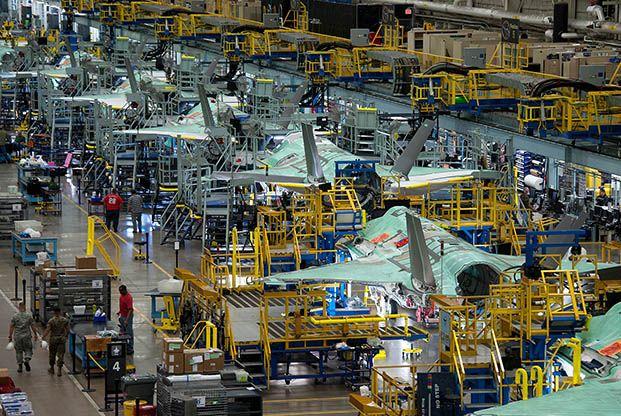
We Exported Our Arsenal Manufacturing, Now We Must Rebuild It.
In 1960, the United States was the leading global manufacturer producing over 50% of manufactured goods. By 2020, that share had fallen below 17%. Factories, once the lifeblood of the American economy, became economically uncompetitive and were instead scattered across countries offering cheaper labor and less stringent regulations.
The offshoring wave began in earnest in the 1970s and accelerated through the trade liberalization era of the 1990s and 2000s. American corporations faced a simple choice, offshore manufacturing or lose out on easy margin increases. Washington largely blessed the migration. The consensus held that globalized supply chains would deliver efficiency above all else. Taking place before the political and military rise of China. there was little, if any, appreciation for the strategic risk involved.
We Exported Our Arsenal Manufacturing, Now We Must Rebuild It.
While our prime defense contractors are proudly American, pulling the system apart reveals a wildly different setup two or three tiers below them....
1d agoRead it on RealClearDefenseWhen a Factory Buys Air Defense, What Has It Bought?
Protection that cannot be in two places at once is not a commodity. It is a promise....
1d agoRead it on RealClearDefenseBatteries Can Power a Win for America in Super Intelligence
America’s ability to stay ahead of China in the deployment of Super Intelligence (SI) will be centered around having cost-efficient energy sources to...
2d agoRead it on RealClearDefense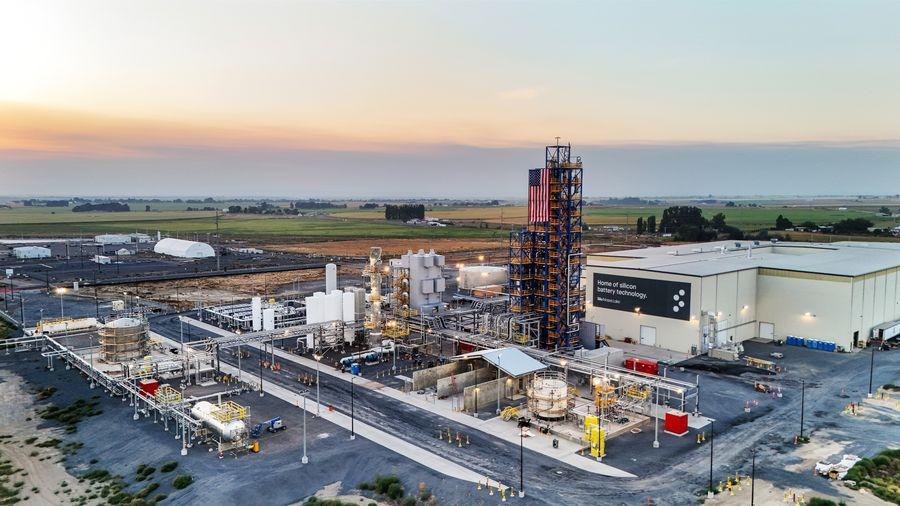
Batteries Can Power a Win for America in Super Intelligence
America’s ability to stay ahead of China in the deployment of Super Intelligence (SI) will be centered around having cost-efficient energy sources to power SI data centers. One of the leading sources increasingly utilized by data center developers and operators are batteries capable of providing flexible and fast electricity. A recent report by energy consultancy Wood Mackenzie found that, across all 43 markets studied, batteries capable of supplying four hours of electricity are the lowest-cost form of new dispatchable power.
This report is the latest sign that batteries should be considered part of the solution to the challenge of reliable, stable electricity sources needed in the SI race. Electricity is stored when there is excess electricity on the power grid and released when demand spikes and power supply is scarce. Therefore, existing power sources are effectively utilized while new sources are explored and built. By reducing strain during peak demand, batteries can also limit the need for costly infrastructure built to handle just a few hours of extreme demand each year. They won’t replace the need for new power generation, but they can help existing resources go further.
Major AI Platforms Generated Viable Plans for Terrorist Attacks
GAO: Safety guardrails on ChatGPT, Claude, Gemini, and Grok failed to prevent federal investigators from developing detailed plans....
6d agoRead it on Defense OneThe World Cup Is Over. The Drone Threat Isn’t.
This summer’s FIFA World Cup was wildly successful in many respects. For one, there was no major security incident, thanks in part to federal and...
2w agoRead it on RealClearDefenseThe World Cup Is Over. The Drone Threat Isn’t.
This summer’s FIFA World Cup was wildly successful in many respects. For one, there was no major security incident, thanks in part to federal and...
2w agoRead it on RealClearDefense
When Losing Control of AI Becomes a Weapon
By Yunus Emre Tumen • RealClearDefense
International Allied Reliability of States: Criteria and Evolution
By Sergey E. Ivashchenko • RealClearDefense
Your Military Paycheck Has an End Date
By Sean Ofeldt • RealClearDefense
Masters of Command
By Travis A. Karnes • RealClearDefense
A Sweet American Original
By Greg Maresca • RealClearDefense

Monty: Riding the Pendulum
By Zachery Thomas, DODReads
Sign of the Times: CCAs Dominate a Major Fighter Conference
By Bill Sweetman • The Strategist (ASPI)
Marines Want Naval Strike Missiles With Double The Range
By The WarZone
U.S. Navy Targets 79 New Cutter-Based FF(X) Frigates
By A. Servaes, Global Defense
The Hegseth Grenade: A Sea Change at Newport
By Robert C. Rubel, CIMSEC