
Assessing U.S. Defense Acquisition During the 2022-2023 Russian Invasion of Ukraine
Published March 30, 2023 • Read time: 7m
On 24 February 2022, the Russian Federation launched a full-scale military invasion of Ukraine. The war has displaced one-fourth of Ukraine’s total population, and tens of thousands of Ukrainians have died. Cities such as Mariupol, Lyman, and Sievierodonetsk have been completely destroyed. In 2022, Ukraine’s GDP shrunk by 32%, and economists predict that it will take trillions of dollars to rebuild the country.
Despite this devastation, the Ukrainians have held their ground. They forced the Russians out of northern Ukraine, and the Ukrainians have reclaimed territory in southern and eastern Ukraine.
This successful Ukrainian counteroffensive can be attributed to the Ukrainian spirit. Throughout the war, Ukrainian men and women have shown that they are committed to winning this war, and that they are determined to defend their homeland. International assistance has also played an enormous role in Ukraine’s success. To date, the Ukrainians have received hundreds of billions of dollars in financial, humanitarian, medical, and defense aid.
The Ukrainians have many nations to thank, one of which is the United States. When the Soviet Union collapsed in 1991, the United States was one of the first countries to recognize Ukraine’s independence. Then, in 1993, the U.S. Department of Defense and U.S. Department of State launched the State Partnership Program (SPP). The SPP assists former Warsaw Pact and Soviet states with their democratization efforts and helps them reform their defense capabilities.
Ukraine’s 30-year participation in the SPP has allowed it to learn about various Western military systems and operations. These engagements have led to the implementation of critical defense reforms, and it has strengthened ties between the U.S. and Ukraine. Outside of this SPP, the Ukrainians have participated in numerous NATO military exercises. Their cooperation with foreign military officials has led to the continued modernization of Ukraine’s military, as well as Ukraine’s ability to interoperate with other countries.
Given this relationship, it is no wonder why the United States has aided Ukraine during the war. To date, the United States has provided nearly $50 billion in assistance to Ukraine. Congress also recently passed a government funding bill for fiscal year 2023, where an additional $45 billion will be provided to Ukraine.
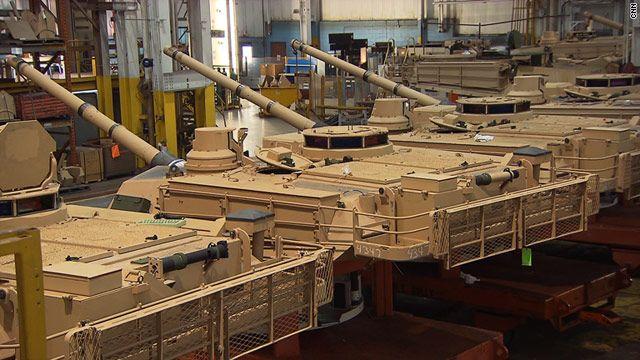
But the war has led American policymakers and elected officials to reexamine current and future aid to Ukraine. First, the demand for Western weaponry has vastly outpaced the supply. This is because some manufacturers shut down and are no longer making the defense capabilities requested by the Ukrainians. Keeping these production lines open is expensive, and it would require the Department of Defense (DoD) to shift spending priorities.
Second, as the war continues, the U.S. has sent additional types of military hardware at a faster rate. This has unexpectedly led to the need to replenish American stockpiles. To date, the U.S. does not have the staff or facilities to replenish these stockpiles in quick succession.
How can the U.S. address these challenges? Given the wide range of areas that could be addressed, this piece will provide five specific recommendations on how to overcome some of the current obstacles within defense acquisition.
First, DoD could rethink how it issues and awards contracts. For example, bipartisan legislation in Congress could “grant the Pentagon wartime procurement powers.” This would allow DoD to buy massive amounts of munitions requested by Ukraine while also replenishing American stockpiles. Furthermore, DoD could award noncompetitive contracts to the defense industry. This would help increase America’s stockpile by producing a higher volume of equipment. Congress recently approved a plan to allow for emergency spending on Ukraine aid, and contracts are underway with DoD to triple munition production between 2022 and 2025. This proposal will help the U.S. restock its inventory with current and modern equipment.
Second, the government could pursue avenues that would help expand U.S. manufacturing. During the coronavirus pandemic, millions of Americans lost their jobs and the U.S. economy “contracted by 19.2%.” Creating new manufacturing plants would help boost the American economy, and it would lead to job growth. A larger workforce would result in the faster production of military hardware. It would shorten the time needed to build these items, and it would allow the United States to deliver this equipment faster. Modernizing outdated wartime facilities is also under consideration.
Third, DoD could consider expanding its military cooperation by sharing various military technologies with its allies. Greater cooperation between these parties would increase the military strength of the U.S. and its allies. Information sharing could also help America’s allies with their stockpile issues. This, in turn, would lessen the burden on the American defense industrial complex. To date, there is a growing interest in technological cooperation and information sharing between the United States and its allies. The Biden administration is currently working to establish a plan to set rules and shape norms that “govern the use of technology.” It is hoping to do this in conjunction with other technologically advanced countries across the globe. Should this program gain traction, it could be the start needed to assist these allies as they increase their defense posturing capabilities.
Beyond reforming defense acquisition, the United States should encourage its allies and partners to contribute more to Ukraine’s defense efforts. To date, American aid has exceeded that of the European continent. The BBC recently published a chart of the top ten NATO countries that have provided aid to Ukraine. According to the table, the United States sent over $18 billion in defense aid to Ukraine between January and November 2022 (it did not include humanitarian aid). Germany ranked second on the list, where the Germans only provided $2 billion in aid. This suggests that the Europeans do not have the same excess compared to the Americans, and that the Europeans rely heavily on the Americans. This is why the United States should cooperate with its European allies on defense strategy and military capabilities. It would increase the security of these countries, provide the Ukrainians with equipment from a variety of sources, and reduce an overreliance on the United States.
Finally, the Russian invasion of Ukraine forced European nations to rethink and prioritize their defense spending. For example, Estonia, Latvia, Lithuania, and Poland have spent a considerable amount of their GDP to help supply Ukraine. Many other European countries are now rethinking their national security policies. Sending the Ukrainians the tools they need to win the war will result in a quicker Ukrainian victory. It will also lead to a stronger and more secure European continent. But if several European countries continue to delay or block assistance to Ukraine, this will only allow Russia to prolong the war. That is what Russian wants.
Overall, the United States, its allies, and its partners will need to evaluate how they will continue to provide aid to Ukraine in 2023. The war has highlighted current challenges within defense acquisition, and these obstacles need to be addressed. Shortages will delay future Ukrainian advancements, and it will allow the Russians to regroup and re-strategize their efforts.
But if the United States, its allies, and its partners increase the production of the weapons and ammunition requested by the Ukrainians, this will end the war more quickly. New manufacturing plants will create job opportunities for American citizens, and it will boost the American economy. Production of new military equipment will replenish American stockpiles. The swifter creation of these goods will mean that the Ukrainians are receiving the materiel they need at a faster rate. Finally, if the United States and its allies cooperate on military technology and other matters within the defense space, this will lead to a stronger and safer continent.
Options and opportunities to enhance the defense industrial complex exist. But it is up to policymakers to determine how they will pursue them.
Mark Temnycky is an accredited freelance journalist covering Eastern Europe and a nonresident fellow at the Atlantic Council’s Eurasia Center. He can be found on Twitter @MTemnycky
The information and data cited in this article are from non-government sources and open-source material in the public domain. The views, analyses, recommendations, and conclusions expressed in this piece are solely those of the author. The article does not reflect the views or positions of the Department of Defense or the United States of America.
Prior to publication, this piece was submitted to and reviewed by the Department of Defense’s Office of Prepublication and Security Review (DOPSR). It was approved by DOPSR and cleared on March 23, 2023. Reference 23-S-1561.

End the Jones Act Waiver
By Mark H. Buzby • RealClearDefense
Prediction Markets Are Becoming a New Frontline for Military Operational Security
By Yang Yunke • RealClearDefense
Can Robots Bring Maneuver Warfare Back?
By Ayeza Areej • RealClearDefense
Buy Smarter, Fly More
By Jeff Kojac • RealClearDefense
Stop Gutting the Conventional Army
By R.D. Hooker, Jr. • RealClearDefense
Hung Cao Facing Contentious Confirmation To Become Navy Secretary
By Konstantin Toropin • Associated Press
U.S. Marines Expand M27 Rifle Contract
By Inder Singh Bisht
Kadena AFB Gets First F-15EX Eagle IIs
By Emily Ryan Miller, Defence BlogHung Cao Facing Contentious Confirmation To Become Navy Secretary
By AP
Fair Winds, Peacoat and Desert Camo: Navy Makes Big Changes to Seabag
By MTimes